As the ongoing conflict in the Middle East drives the global fuel crisis, critical minerals have become increasingly strategic not only for climate transition efforts, but also for energy security. This transitioned energy system, however, requires more minerals, which eventually increases demand to extract these raw materials. Many of these minerals key to global transition are found in the Global South including Southeast Asian countries.
Southeast Asia boasts large reserves of several key minerals, including nickel, tin, rare-earth elements, copper, and others. While this presents opportunities for the region in terms of economic growth, this is also marred with massive social and environmental costs. Ironically, most Southeast Asian countries historically have the least contribution to the global emissions that brought us to where we are now. Yet they are under pressure to produce the so-called “critical” or “transition” minerals to address the global problem. In addition to this, the Southeast Asian region deals with economic vulnerability and fragile environment exacerbated by the climate emergency.
This web dossier provides Southeast Asian perspectives through articles, analysis, infographics, video documentaries and other materials by looking into different facets of critical minerals in the region. The discussion ranges from experiences and struggles of communities affected by mining of critical minerals to policy discourse including accountability, supply chain due diligence, and financing.
This dossier will be updated with new contributions from time to time.
Note: In order to accommodate the on-going debate on criticality, we allow the use of the terms “transition minerals” and “critical minerals” interchangeably. Most of our partners in Southeast Asia however prefer the term “transition minerals” to the term “critical minerals” which is perceived as driven by the Global North.
Southeast Asia's Growing Supply of Critical Minerals
Southeast Asia is becoming a key player in the global minerals sector with its resources extraction supplying essential materials such as nickel, cobalt, rare earths, tin, graphite, and more for clean energy technologies.
Nickel mining in Southeast Asia has surged in recent years, attracting significant attention for its impact on environment and local communities, million hectare of deforestation and a rapid scale of industrial expansion. Indonesia’s nickel sector, for instance, experienced a 300% surge in investment from 2016 to 2023, amounting to $6.6 billion, following the Paris Agreement (compared to the 2009-2015 period). Southeast Asia remains at the centre of global nickel supply chains. In 2025, Indonesia and the Philippines together account for more than 70% of the world’s nickel production which is equivalent to 2.8 million metric tons. Nickel production is becoming increasingly concentrated in Indonesiaas the country supplying 62% of global output in 2025.
In the cobalt sector, despite the Democratic Republic of Congo’s dominance, with 75% global supply in 2025, Southeast Asian countries such as Indonesia rank second with a 9,6% supply, while the Philippines rank fifth globally. Myanmar is also becoming a key player in the rare earths market, coming in fourth in terms of world supply (10%), behind China, the US, and Australia.
Southeast Asia is also a heavyweight in the tin sector. In 2025, the region supplied around 31% of global output. China remains the largest tin producing country, followed by Indonesia and Myanmar.
Southeast Asia Holds Vast Reserves of Several Key Minerals
Southeast Asia’s vast reserves are poised to meet the increasing demand driven by the global energy transition effort to tackle climate change. Indonesia has not only established itself as the world’s largest nickel producer, but also as the dominant reserve holder. Recent estimates by the USGS suggest that Indonesia now accounts for around 42% of global nickel reserves. Over the past few years, Indonesia has rapidly expanded mining and downstream industrial capacity, although much of this expansion remains heavily reliant on coal-powered smelting.
As its market dominance has grown, Indonesia has also moved to tighten nickel production quotas, reducing them by around 30-34% in response to oversupply and weaker prices. More recently, Indonesia announced the latest centralized export plan through its latest sovereign wealth fund, Danantara, aimed at capturing greater domestic value.
Myanmar, despite ongoing political turmoil, ranks fourth in global rare earth reserves, while Vietnam, remains one of the world’s largest reserve earth reserve holders. Indonesia and Myanmar are also among the world’s top tin reserve holders.
These critical minerals spread across the region could still be a double-edged sword; either as a potential source of prosperity or a potential risk for ground conflict.
Southeast Asia's Critical Minerals at the Crossroads
With the rising demand for critical minerals needed for clean energy technologies amid the energy crisis and push for net-zero emissions, Southeast Asia's critical minerals resources will become more than economic assets. It will be an increasingly important flashpoint in the shifting geopolitical dynamics between the Global North and Global South.
According to the International Energy Agency (IEA), global demand for critical minerals to the clean energy shift is set to surge, with an average increase roughly double by 2050.
Southeast Asia is at a crucial crossroads. The region’s approach to critical mineral resource extraction and governance will shape the future of global energy transition. Southeast Asia has the potential to show that the shift towards renewables can lead to genuinely transformative changes that are more sustainable and equitable.
Otherwise, it could fall into the trap of perpetuating the same path as the fossil fuel-led development model that has led to social, economic, and environmental harm that communities have long endured.
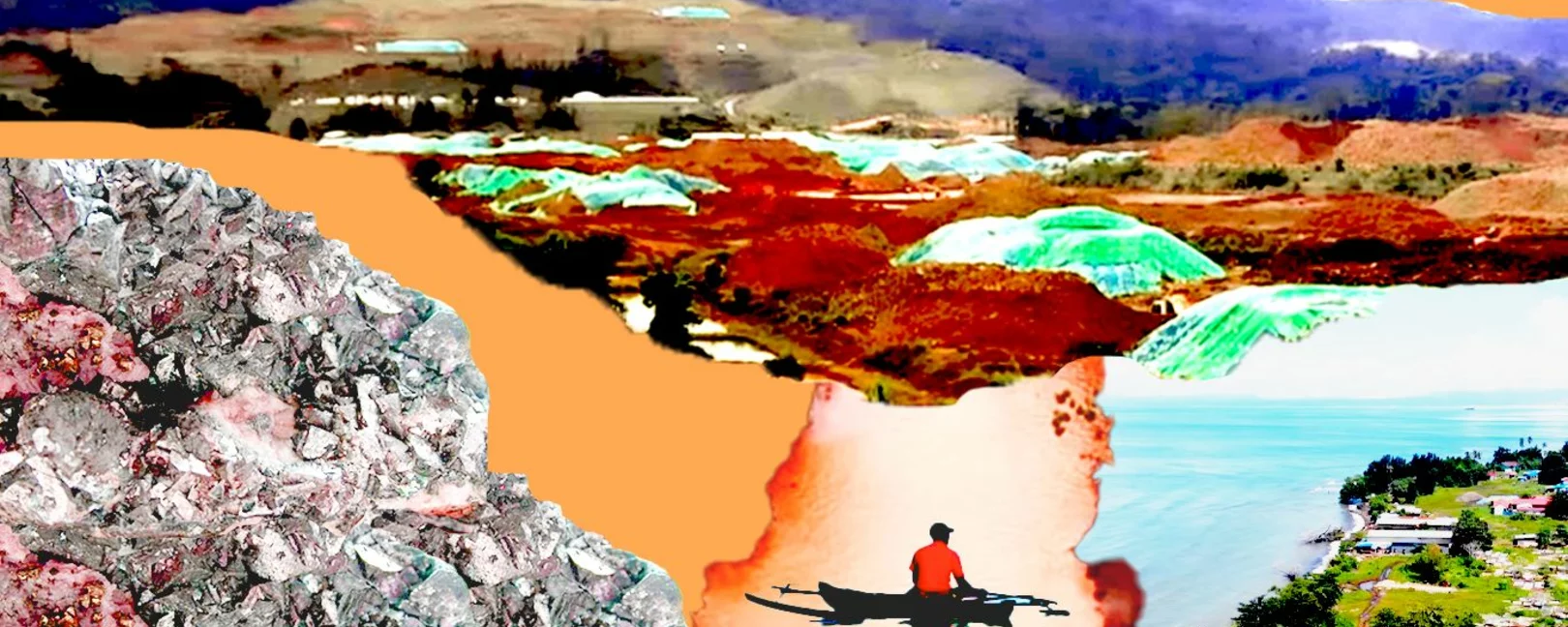
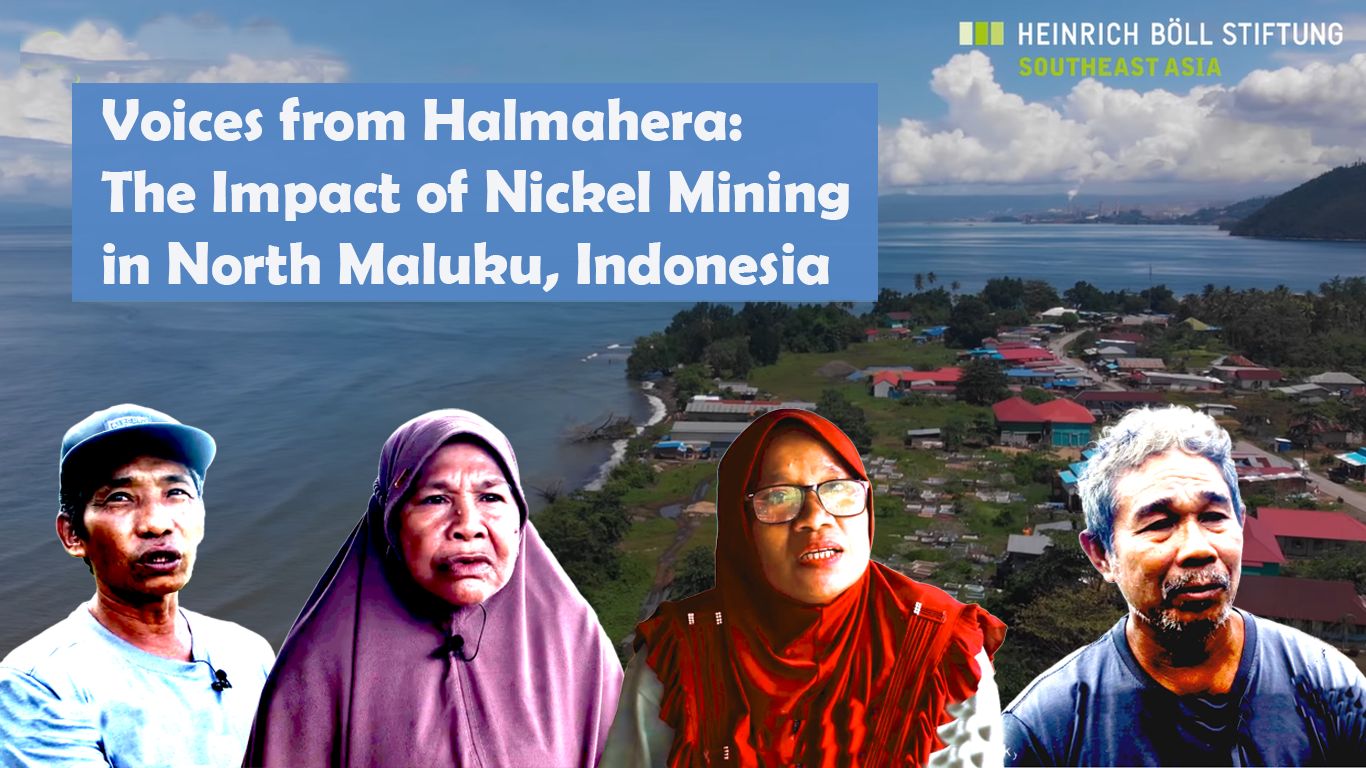
Halmahera Island is located in North Maluku Province and is the largest island in the Maluku Islands, in eastern Indonesia. In the 16th century, Halmahera Island was one of the islands in Maluku which was famous for producing spices, especially nutmeg and cloves. Nickel ore reserves that were discovered in Halmahera in 1996 have slowly changed the face of this island.
This video is a recording of an online roundtable, organized by our partner NGO Forum on ADB and anti-mining advocates on 2 April 2025. It critically examined MDB-supported critical minerals models and their impact on communities, the environment, and the broader energy transition agenda. The discussion also serves as a lead-up activity to the 58th ADB Annual Governors Meeting in May 2025.