
Article
From Sarawak forests to global cafés, the story of Liza A. Ahngau traces Liberica coffee, memory, and resilience in challenging market-driven narratives and reconnecting coffee with land, community, and climate survival beyond a simple cup of coffee.
This article is part of web-dossier "Brewing Resilience: Coffee and Climate Change in Southeast Asia"

Coffee is often discussed in the language of markets, whether it is about its origin, pricing, flavor notes, and global demand. But long before it became a commodity, coffee was something else entirely: a way of living with the land.
I learned this not from textbooks or cafés, but from my grandmother in Padawan, a small farming community in Sarawak.
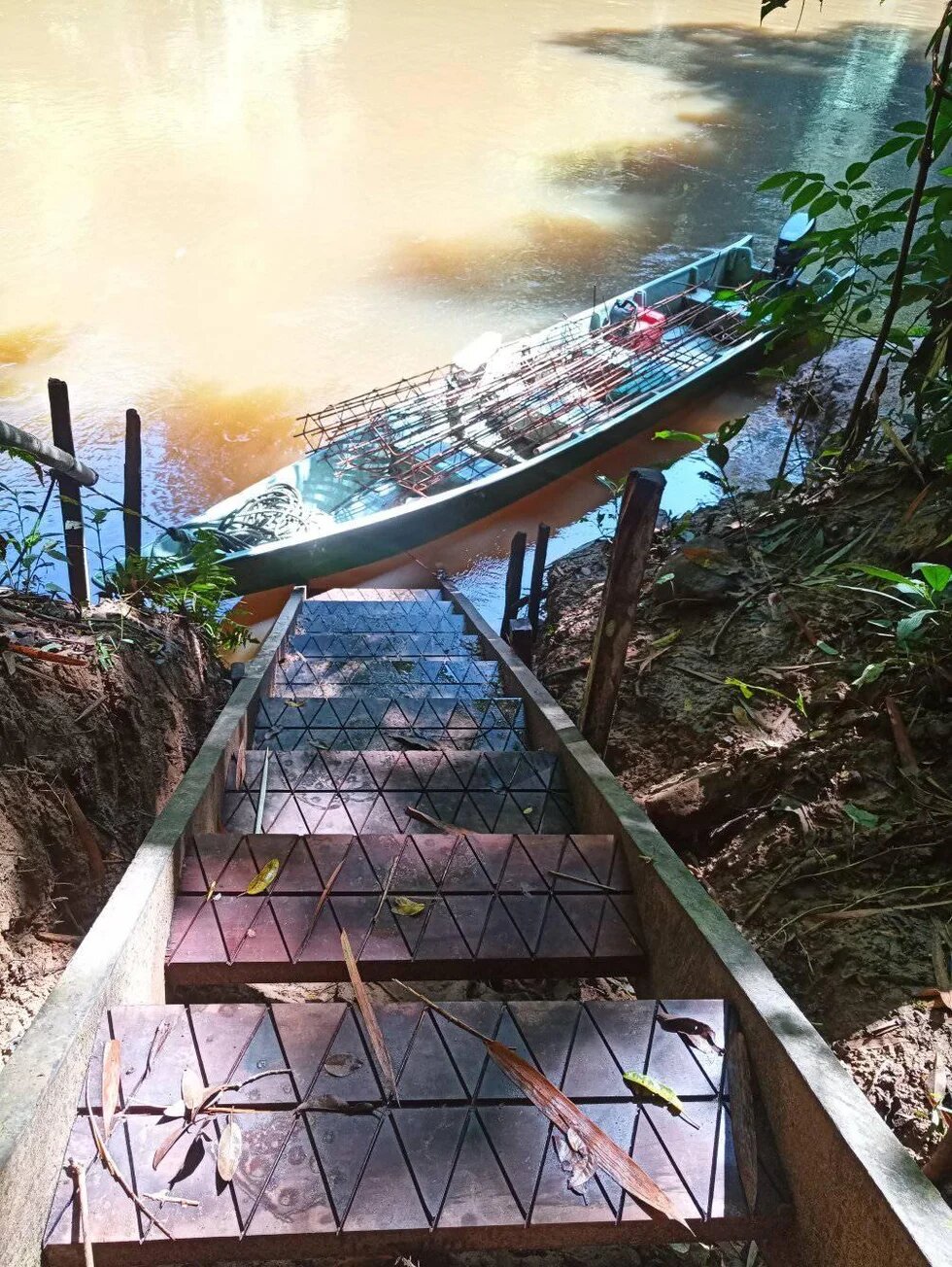
Located on the island of Borneo, Sarawak sits in eastern Malaysia, separated from the mainland by the South China Sea and surrounded by vast rainforests and river systems. Its capital, Kuching, is a quiet riverfront city, but much of Sarawak stretches into rural landscapes where Indigenous communities like the Iban and Bidayuh live in close connection with the land. For many unfamiliar with Southeast Asia, Sarawak is less about cities and more about forests, longhouses, and traditions passed down through generations.
In Padawan, coffee was never just coffee... This is a perspective that feels increasingly absent in today’s global coffee industry. - Liza A. Ahngau
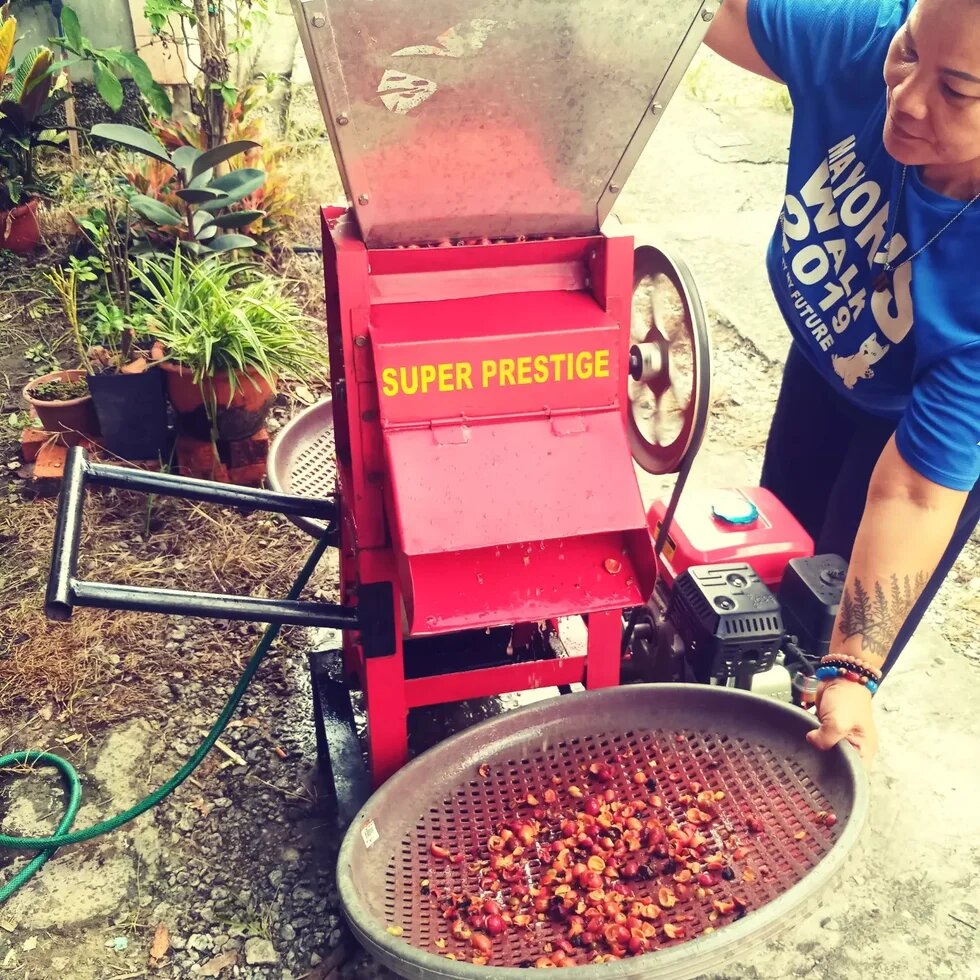
In Padawan, coffee was never just coffee. It grew quietly around our home, shaping our routines and anchoring our memories. We harvested cherries by hand, washed them in the river, dried them under the sun, and pounded them in a wooden mortar. We boiled the leaves into tea, used what remained, and wasted nothing. Coffee was not a product we consumed, it was part of how we understood care, labor, and survival.
This is a perspective that feels increasingly absent in today’s global coffee industry.
Years later, working in a café in Norway, I encountered coffee in an entirely different form. It came with precision, vocabulary, and hierarchy. For instance, Arabica celebrated for its delicacy, acidity, and complexity. I learned to identify flavors, to brew with intention, to appreciate nuance. But I also began to question the distance between this world and the one I came from. Where did Liberica or the coffee I grew up with, fit into this narrative? Why was it unfamiliar, even marginal, in conversations about quality?
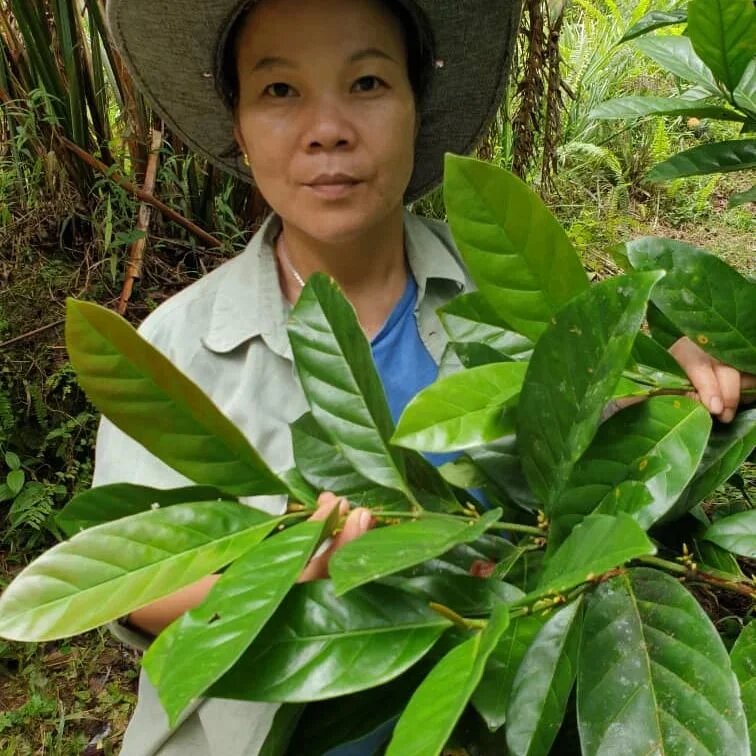
Liberica coffee (Coffea liberica) or Kopi Liberika, Kopi Borneo, Kopi Nangka, Kapeng Barako is a lesser-known coffee species grown mainly in Southeast Asia, including Malaysia, the Philippines, and Indonesia, known for its bold, smoky flavor and large, irregular beans.
Top 3 climate-resilient qualities:
- Heat tolerance – thrives in hotter lowland climates where Arabica struggles.
- Disease resistance – naturally more resilient to pests and fungal diseases.
- Deep root system – better at accessing water, making it more drought-tolerant.
Returning home made that question more urgent. Together with my partner, I opened a small homestay surrounded by wild Liberica trees and began serving our own coffee. Guests were often surprised. Some found it bold, others unusual. But all were curious. That curiosity revealed something deeper: the global coffee conversation has drifted far from the landscapes and communities that sustain it.
Now, as climate change reshapes agriculture worldwide, this disconnect is no longer just cultural, instead, it is structural.
Rising temperatures, erratic rainfall, flooding, and disease outbreaks are already affecting coffee production. Arabica, the industry’s most prized species, is also one of its most vulnerable. In contrast, Liberica which has been long overlooked. it is naturally more resilient. It tolerates heat, resists common diseases, and survives in conditions that would challenge other varieties.
Choosing Liberica today is not about nostalgia. It is about adaptation grounded in memory.
For many communities like mine, this is not new knowledge. It is inherited understanding. Decades ago, when Robusta was introduced to Sarawak as a commercial crop, many smallholders struggled with coffee leaf rust. The promise of export markets did not match the realities of the land. But our elders already knew which plants could survive here. Choosing Liberica today is not about nostalgia. It is about adaptation grounded in memory.
The same is true for how coffee is grown.
What is now promoted as “agroforestry” in a sense of integrating crops within forest ecosystems. Actually, it has long been a way of life in Indigenous and rural communities. In Padawan, coffee grows alongside fruit trees, medicinal plants, and wild vegetation. These systems protect soil, regulate temperature, and support biodiversity. They also provide economic stability: when coffee yields fluctuate, other crops sustain livelihoods.
In contrast, monoculture farming which is designed for efficiency and scale, often strips away this resilience. It simplifies ecosystems, depletes soil, and increases vulnerability to climate shocks. As the climate becomes more unpredictable, such systems are not only unsustainable, furthermore they are risky.
This is not an argument against innovation.
It is a call to broaden where we look for solutions.
Yet much of the global response to climate change in coffee still focuses on technological fixes or market adjustments. While these have their place, they often overlook something essential: many of the answers already exist in traditional practices, local knowledge, and ecological relationships that have been sustained for generations.
This is not an argument against innovation. It is a call to broaden where we look for solutions.
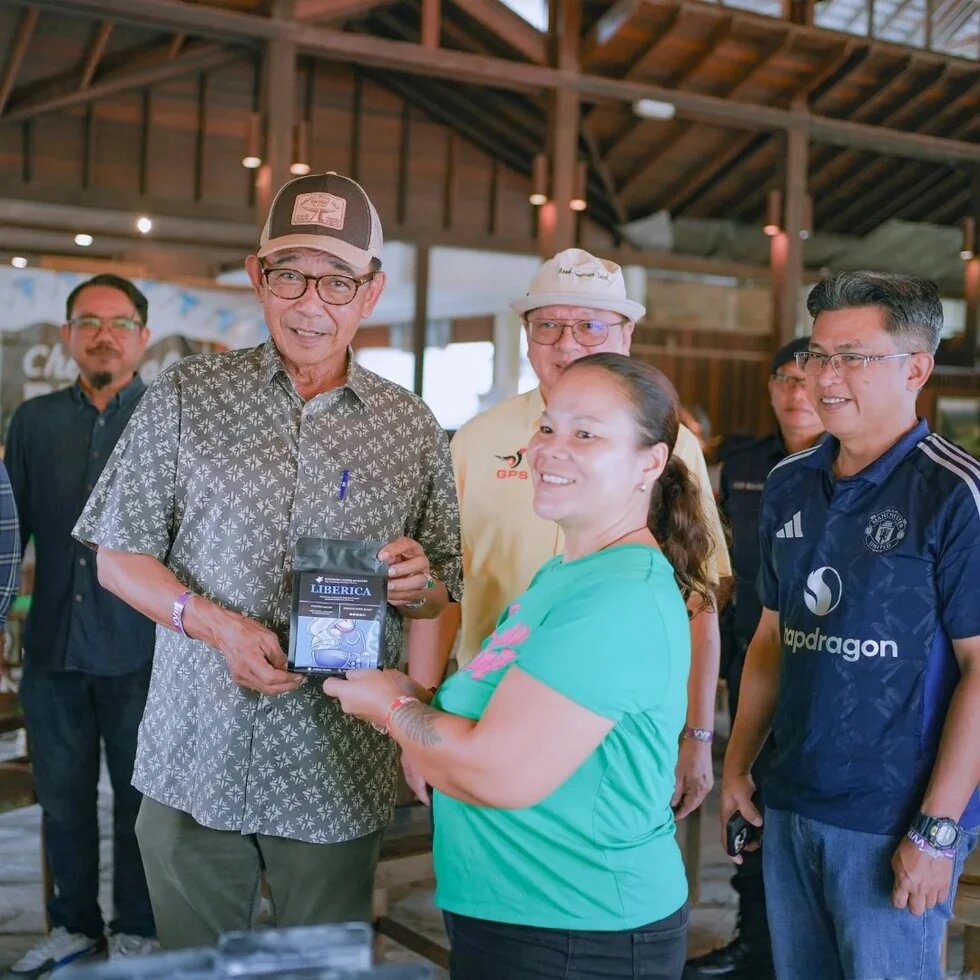
Liberica may never dominate global markets like Arabica. It does not need to. Its value lies elsewhere, in its resilience, its history, and its connection to landscapes that have long resisted standardization. In a changing climate, these qualities matter more than uniformity or perfection.
For me, coffee remains deeply personal. Every time I roast or brew Liberica, I am reminded of my grandmother, of the forest paths we walked, and of the quiet knowledge embedded in those practices. But it is also a reminder of responsibility for us to carry that knowledge forward, and to question systems that overlook it.
If the future of coffee is to be sustainable, it must move beyond taste and profit alone. It must reconnect with the people and ecologies that make coffee possible in the first place.
Because sometimes, the most important solutions are not new.
They have been there all along — waiting, like coffee trees in the forest, for us to pay attention.
__
Liza A. Ahngau is a smallholder coffee farmer and community based entrepreneur from Padawan, Sarawak, Malaysia. Rooted in Bidayuh traditions, her work centers on Liberica coffee, cultivated through forest based agroforestry systems that integrate biodiversity, soil care, and local ecological knowledge.
Disclaimer: This published work was prepared with the support of the Heinrich Böll Stiftung. The views and analysis contained in the work are those of the author and do not necessarily represent the views of the foundation. The author is responsible for any liability claims against copyright breaches of graphics, photograph, images, audio, and text used.
For Photo Essay "Brewing Resilience with Liberica Coffee" you can click here


