
Article
Recent super typhoons in Southeast Asia starkly illustrate the urgent reality of Loss and Damage caused by the climate crisis, with communities facing devastation and increasing vulnerability. Adaptation limits are being breached, and the impacts of extreme weather extend across generations. This article examines the cross-temporal effects of Loss and Damage, emphasizing how today’s climate crisis not only threatens current livelihoods but also compromises the futures of marginalized communities in Southeast Asia, particularly the Philippines. There is an urgent need to advocate for targeted interventions that address both economic and non-economic losses, safeguarding the rights and futures of those most affected.

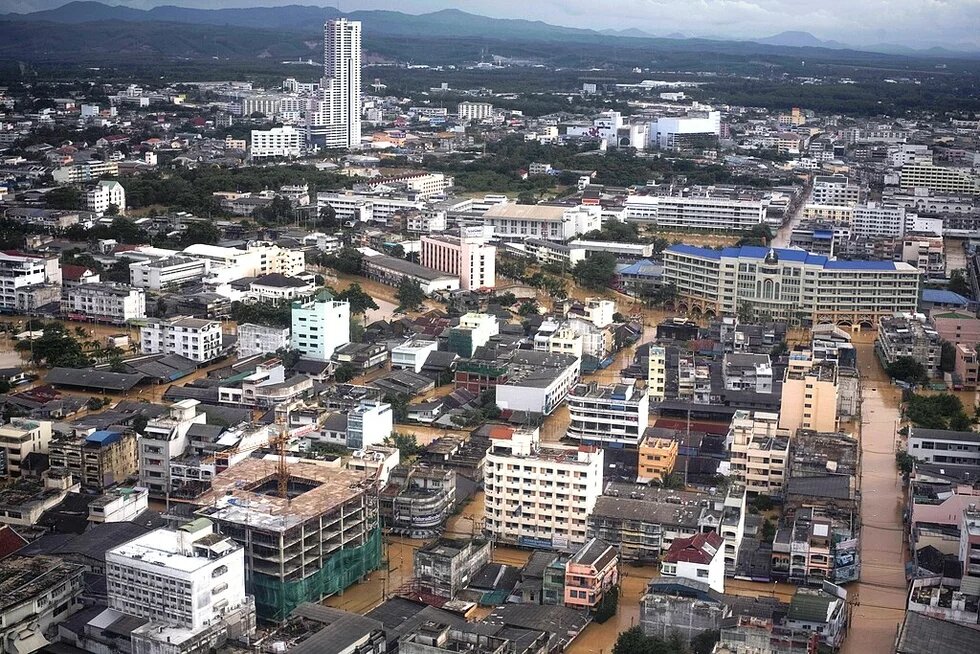
Loss and Damage (L&D) has rightfully gained prominence in international negotiations in recent years. As countless communities are devastated by the impacts of climate change, it cannot be denied that adaptation limits have been breached and mitigation efforts have largely been insufficient. Right before the 30th Conference of the Parties (COP30) in Brazil, Typhoon Kalmaegi inflicted immense L&D in Southeast Asia: at least 224 Filipinos were killed,[1] over a hundred thousand Vietnamese houses were submerged,[2] and the total economic damages amounted to millions of dollars in both countries.[3][4] Meanwhile, the tourism hub of Hat Yai in Thailand was also severely impacted weeks later, prompting the government to declare the area as a “red-flag disaster zone.”[5] In Indonesia, the death toll from the unprecedented flooding breached the 1,000-mark, signifying that these extreme weather events have devastating impacts on villages. L&D, then, is neither just a concept nor a framework at the heart of climate advocacy; rather, even before its inclusion in the Paris Agreement, it is a reality that communities and cultures are forced to live with. As the recently-concluded COP30 marked the 10th year since the recognition of L&D as the third pillar of climate action, this cannot be more pertinent and urgent.
Much has already been written about Loss and Damage. Although the United Nations Framework Convention on Climate Change (UNFCCC) has not put forward an official definition,[6] L&D “can generally be understood as the negative effects of climate change that occur despite, or in the absence of, mitigation and adaptation.”[7] This means that despite efforts to lessen greenhouse gas emissions and enhance the resiliency of societies, there are tangible consequences of the warming climate that are already being felt. Some are caused by extreme weather events that inflict immense L&D within a short period of time, such as typhoons, droughts, and wildfires. Meanwhile, L&D is also attributed to slow-onset events that gradually, but concretely impact communities, such as increasing sea levels, melting glaciers, and acidifying oceans. Bulacan Province (32 miles north of Manila) in the Philippines, for instance, has been threatened by the encroachment of coastal waters into its villages.[8]
These consequences are often characterized in quantitative terms: flooding in Bali amounted to almost two million dollars worth of damages,[9] droughts in the Philippines damaged over 13,600 hectares of agricultural crops,[10] and disasters in Thailand led to over 3.21 million displacements between 2008 and 2023.[11] Also known as economic L&D, these quantitative impacts on societies are typically measured in monetary figures, as these refer to goods and services that can be exchanged and appraised in the market setting.[12] While these quantitative assessments are helpful indicators for humanitarian agencies and governments, Losses and Damages are also apparent in unquantifiable or non-economic dimensions. Non-economic Losses and Damages (NELD) refer to those that cannot easily be assessed in financial valuations, but nevertheless have immense value for individuals and societies. Displacing communities means a loss of heritage and culture, experiencing immense flooding leads to insurmountable trauma, and losing even just one life induces much grief for their family - all these cannot be quantified, but are real impacts of the climate crisis.[13]
Adding to the discourse on Loss and Damage, this article examines the cross-temporal dimension of economic and non-economic L&D. Significant Losses and Damages are already being incurred at present around the world. However, several research projects have also highlighted the loss of heritages due to climate change, especially among indigenous communities. In the highland municipality of Atok in Northern Philippines[14], for example, indigenous practices and knowledge systems are being threatened as the warming climate alters their relationship with their ancestral lands. As agricultural practices become more precarious due to unpredictable weather conditions, some indigenous farmers have shifted to other livelihoods, consequently threatening farming practices that have been passed on for generations.[15] This case illustrates that L&D is inflicted not only on present populations, but also on past generations whose legacies and traditions are being erased by climate change. This article explores how current L&D also extends to future generations, consequently reaffirming that the youth must be allowed to be heard in international climate negotiations.
Losing and Damaging the Future: The Lasting Impacts of the Climate Crisis on Futures
Global temperatures are expected to breach the 1.5°C climate threshold, ultimately reaching 2.3-2.5°C even if all countries comply with their Nationally Determined Contributions.[16] With the United States rescinding the Paris Agreement[17] and climate finance still insufficient and deceptive,[18] the world is anything but on track to avert the worst effects of the climate crisis, consequently placing the Futures already lost and damaged. The science is clear: while L&D is already occurring at the current warming levels, climate hazards are expected to increase in frequency and worsen in severity. Thus, one can only imagine how drastically different the Futures will be for the succeeding generations: heatwaves and flooding events will be common, while biodiversity will be deteriorated due to ocean acidification and urbanization. As much as communities strive to mitigate emissions and embark on adaptation projects, not all L&D can be avoided. The Futures, then, is a salient example of L&D.
This cross-temporal reality of Loss and Damage, however, becomes even more complex when L&D today already have repercussions tomorrow. As the climate induces livelihood losses, health concerns, and school drop-outs in the present, the Futures of these affected sectors are already compromised. That is, because the effects of climate change are often encompassing and acute, implicating key institutions such as schools and livelihoods, some consequences of current climatic events extend to succeeding generations. It is difficult, for example, for displaced and affected farmers to resume their livelihoods and support their families, thus making their Futures more precarious and vulnerable. Another example: among children who face tidal floods in the Tirto Districts of Indonesia, more than 90% of them experience moderate anxiety,[19] which may have long-lasting consequences as they continue to face these hazards.
It is widely recognized that climate aftermaths are unequally distributed: the Intergovernmental Panel on Climate Change notes that L&D is “disproportionately experienced by developing countries and by vulnerable groups.”[20] When already-marginalized communities feel the brunt of climate extremes, it only follows that these climate-induced impacts reinforce and worsen existing inequalities, making these unfair structures more embedded in the years to come. The climate crisis thus exacerbates structural inequalities, making the Futures of urban poor communities, small-island societies, and other marginalized sectors even more perilous. While developed countries and richer socio-economic classes have the means to adapt to the warming climate, the Global South and poor demographics are unable to do so, leaving them acutely susceptible and exposed in the present and the future. Case in point: air conditioning units. Higher income groups can purchase these cooling technologies to respond to the heat, while the peripheries are forced to continue working and living in poor conditions without respite. Thus, the climate crisis reproduces this Global Divide and further imposes this unjust structure on future generations.
In short, L&D today is already L&D tomorrow, as many of these impacts ripple across generations. To further explore this point, we take a deeper dive into the case of the Philippine Education Crisis, and how this is further reproduced by climate change.
How Climate Change Exacerbates the Philippine Education Crisis
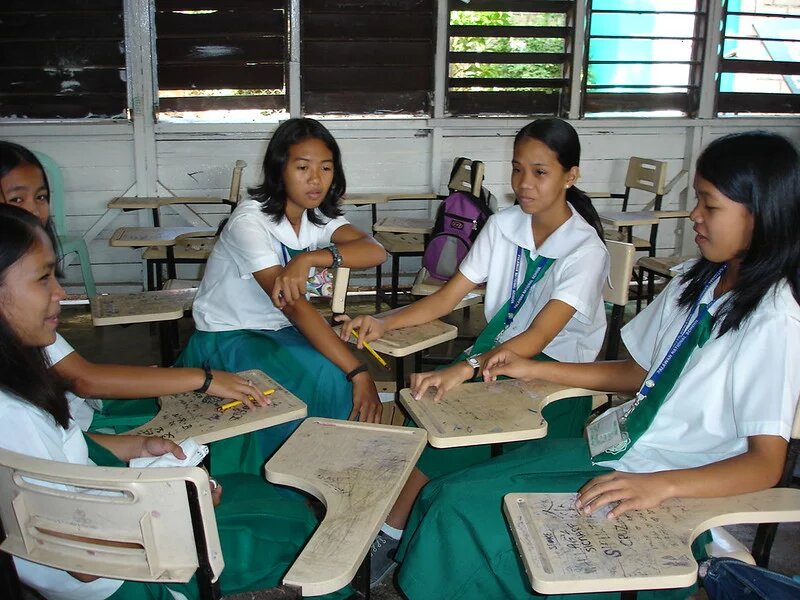
The Philippines is experiencing a severe educational crisis. 24.8 million are functionally illiterate,[21] 91% of Filipinos aged 10 find difficulty in reading simple texts,[22] and 40% of college students opt to drop out.[23] These are accentuated by severe classroom deficiencies, reaching a deficit of 165,000 classrooms,[24] and extreme shortages in teaching personnel, with estimates ranging from 56,000 to 150,000 teachers needed to close the gap.[25] Thus, while education is a basic human right that ought to equip all children with the necessary skills for their future, the Philippine education system is currently in an abysmal state that traps them without basic literacy. Instead of capacitating young Filipinos to have a decent future, the future of hundreds of thousands is already compromised due to poor education.
While the schooling system is already terrible, climate change further exacerbates the education crisis in the Philippines.[26] Extreme weather events force universities and cities to frequently suspend classes for prolonged periods, which massively affects the learning capacities of students. It is already common to hear that regional directives are issued to suspend classes due to flooding or heatwaves: in May 2025, 7,000 schools cancelled in-person classes due to dangerous heat levels.[27] Moreover, as the Philippine government implemented a new academic calendar that sought to advance internationalization and avoid the monsoon season, the initiative also forced schools to operate during the extremely hot months of April and May. Thus, as existing classrooms are poorly equipped with cooling technologies, this program inadvertently compromised the quality of education and the health of students and teachers alike.[28] On the other extreme, public school facilities are widely used as evacuation centers during flooding events, and public school teachers often play a role in managing and cleaning up these facilities. The flood-prone city of Marikina, for instance, lists 35 evacuation centers, of which 30 are public school campuses.[29] Thus, as communities may take weeks to recover from typhoons, education is once again imperiled. These extreme climate impacts force the country, already grappling with a severe education crisis, to make decisions that further worsen the learning gap. A study reveals that in the old and new academic calendars alike, students will either have to face extreme rainfall events or heatwaves.[30]
Losing and damaging education not only affects the present. Rather, it can be argued that its full impacts will only be felt in the future, when poorly-educated Filipinos are unequipped with basic proficiencies to adapt to the warming climate. Even worse, as the Philippine education system is chronically unequal and inequitable, marginalized Filipinos will be most burdened by the compounded effects of the climate crisis. While higher income classes can afford well-equipped private schools with sufficient cooling technologies, enough teaching personnel, and safe campuses, poor demographics are forced to study in cramped, poorly-ventilated, and overburdened public schools. While private schools can resume teaching when class suspensions are lifted, public schools can only do so once they cease to operate as evacuation centers. Thus, while the rich have access to quality education that will propel their future, the poor are trapped in this unequal education system. Their Futures is lost and damaged.
The severe impacts of extreme weather events on education, however, are not limited to the Philippines. Countries around Southeast Asia have already suffered considerable learning gaps due to the immense heat[31] and devastating flooding events.
COP30 and Climate Action
Responding to Loss and Damage, then, cannot be a retroactive process. Governments, climate practitioners, and communities must commence and accelerate climate action even before L&D is inflicted, avoiding response in a posthumous manner. In efforts to avert these occurrences, however, there must be an acknowledgement that climate impacts are inherently cross-temporal, recognizing that current climatic events have profound consequences in the future. L&D erases past traditions and heritages, impacts modern societies and communities, and alters the Futures of generations to come.
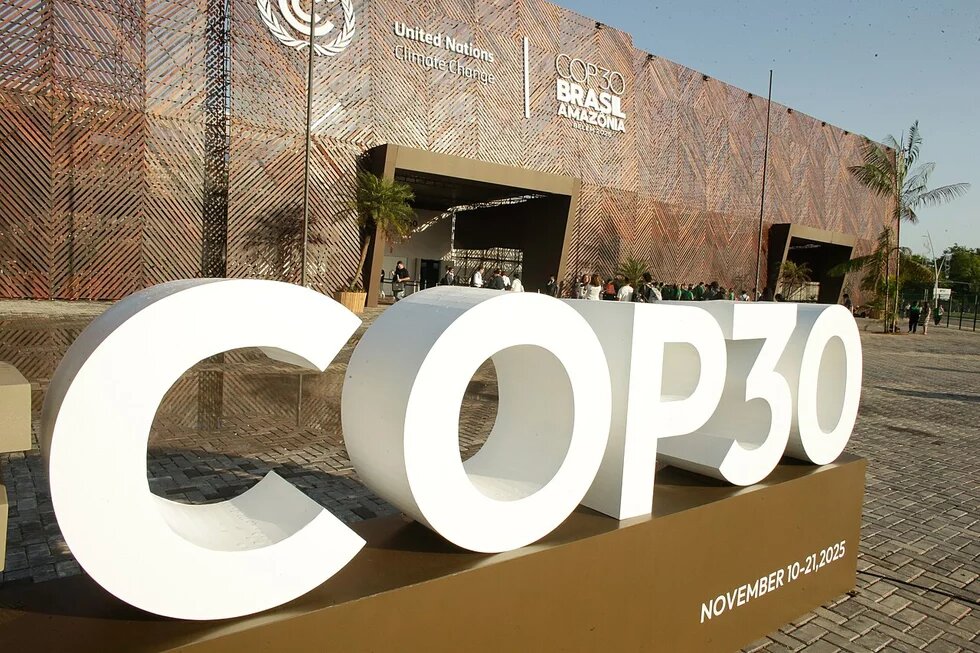
COP30 was widely framed as an “implementation COP,” with the presidency promising that commitments will finally be translated into tangible action.[32] Though the annual gathering was able to produce key developments such as the Mutirão Decision and the Global Implementation Accelerator,[33] many left Belém disappointed due to the failure to adopt a clear set of adaptation indicators and include text that would move away from fossil fuel, among others.[34] Thus, although the event showed signs of progress, it cannot be denied that much still has to be done to avert the worst impacts of the climate crisis.
It has been said time and again: as the Conference of Parties (COP) gathers world leaders, activists and advocates, and climate funders, discussions must go beyond superficial exchanges that are devoid of concrete impact at the grassroots. For COP and the UNFCCC process to have real impact, implementing climate action must take into account nuances and complexities on the ground. Failures today lead to real, tangible, and consequential Losses and Damages in the present and extends to the Futures.
___
Francis Uldric San Juan is a climate researcher specializing in loss and damage, climate education, and the decolonization of climate science and sustainable development.
Jameela Joy Reyes is a climate justice activist and lawyer. She is currently a Policy Officer with the Grantham Research Institute working on climate law and evidence, as well as reparations and Loss and Damage, a Technical Advisor of the Klima Center of Manila Observatory and a Research Assistant at the University of Warwick on critical climate finance and equitable policy.
Disclaimer: This published work was prepared with the support of the Heinrich Böll Stiftung. The views and analysis contained in the work are those of the author and do not necessarily represent the views of the foundation. The author is responsible for any liability claims against copyright breaches of graphics, photograph, images, audio, and text used.
References
[2] Typhoon Kalmaegi slams into Vietnam after unleashing deadly destruction in the Philippines | CNN
[5] Flood-stricken Hat Yai declared disaster zone; Thai authorities step in to help stranded tourists - CNA
[9] Bali takes massive economic hit from worst flooding in years - Asia News NetworkAsia News Network
[13] Download an online guide published by UNFCCC, providing a concise introduction to Loss and Damage
[14] https://th.boell.org/en/2025/01/15/address-loss-and-damage-climate-change-philippines-lived-experiences-indigenous-farmers
[21] https://www.philstar.com/headlines/2025/11/01/2484the 069/functional-illiterate-pinoys-reach-248-million
[22] The cost of illiteracy: Why the education system in Philippines is failing millions DevelopmentAid
[25] Manila Bulletin - Gov’t neglect, persistent shortages worsen education crisis as SY 2025–2026 opens, says group
[30] http://philjournalsci.dost.gov.ph/pdf/pjs_pdf/vol146no3/climatic_insight_on_academic_calendar_shift_in_the_Phils_.pdf
[31] Asia heatwave: Record temperatures cancel classes, widening learning gaps across Southeast Asia | CNN


