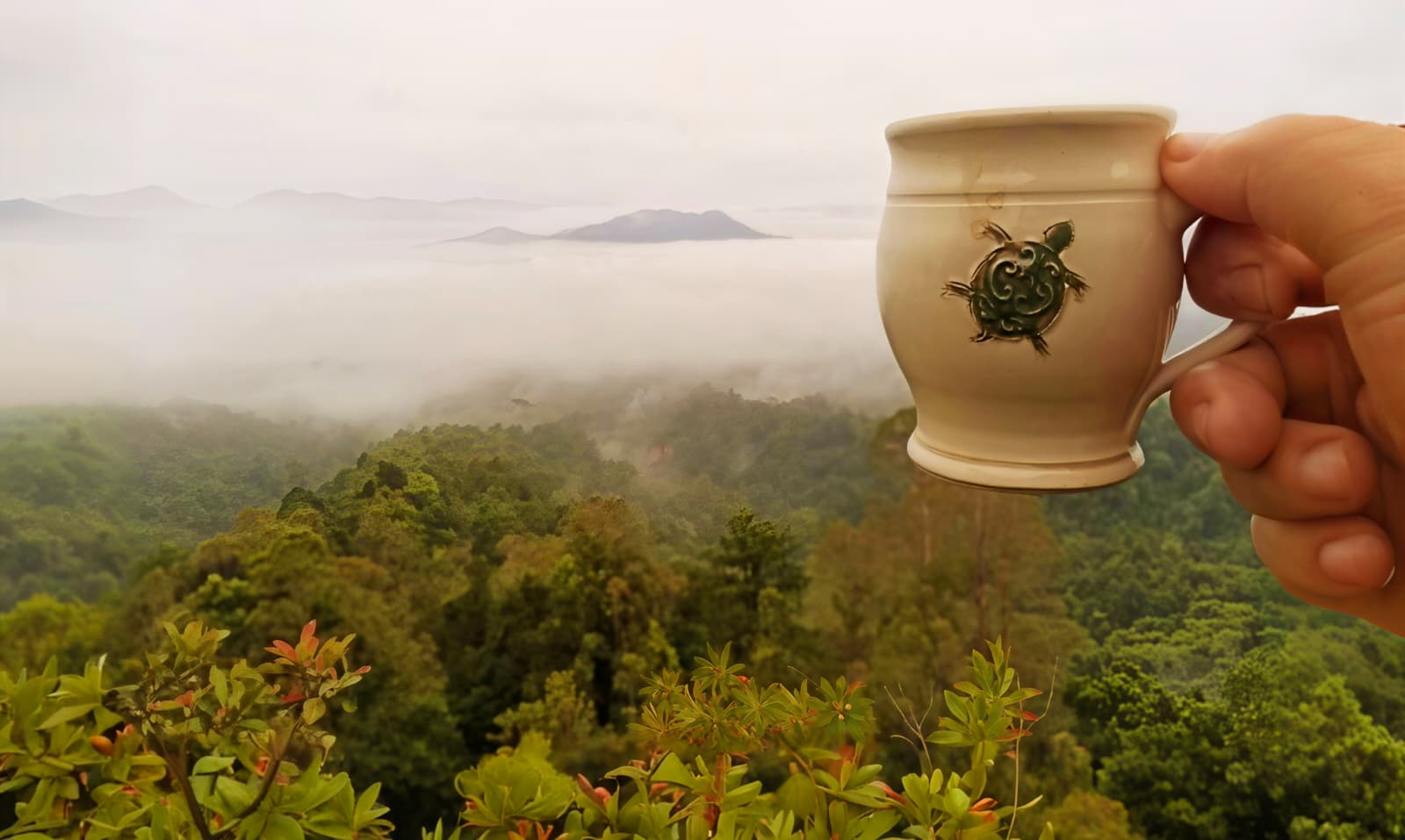
Morning mist settles over the forest as Liza lifts a cup of Liberica. Here, coffee is not a commodity, it is part of the landscape. As climate patterns shift, forests like this become the last refuge for crops that can still survive.

Brewing Resilience with Liberica Coffee

A Photo-Essay by Liza A. Ahngau

Introduction


Padawan sits in the humid lowlands and forest edges of Sarawak, East Malaysia, Southeast Asia, where rising heat and erratic rain challenge conventional crops, Liberica coffee endures.

Coffea liberica stands out as a climate-resilient coffee species. Unlike Arabica, which prefers cooler highlands, Liberica thrives in 24–30°C, humid, low-altitude environments. Its trees can grow 15–20 meters tall, with deep roots and large leaves that help withstand climate stress.
Though it makes up less than 2% of global production, it remains important for smallholder farmers. Its flavour is distinctive: bold, smoky, and often fruity with floral or jackfruit notes, reflecting the resilient landscapes where it grows.

Through the hands of Liza A. Ahngau, this photo essay follows a cycle. From seedling to cup, revealing how an overlooked species carries ecological memory, resilience, and community survival.
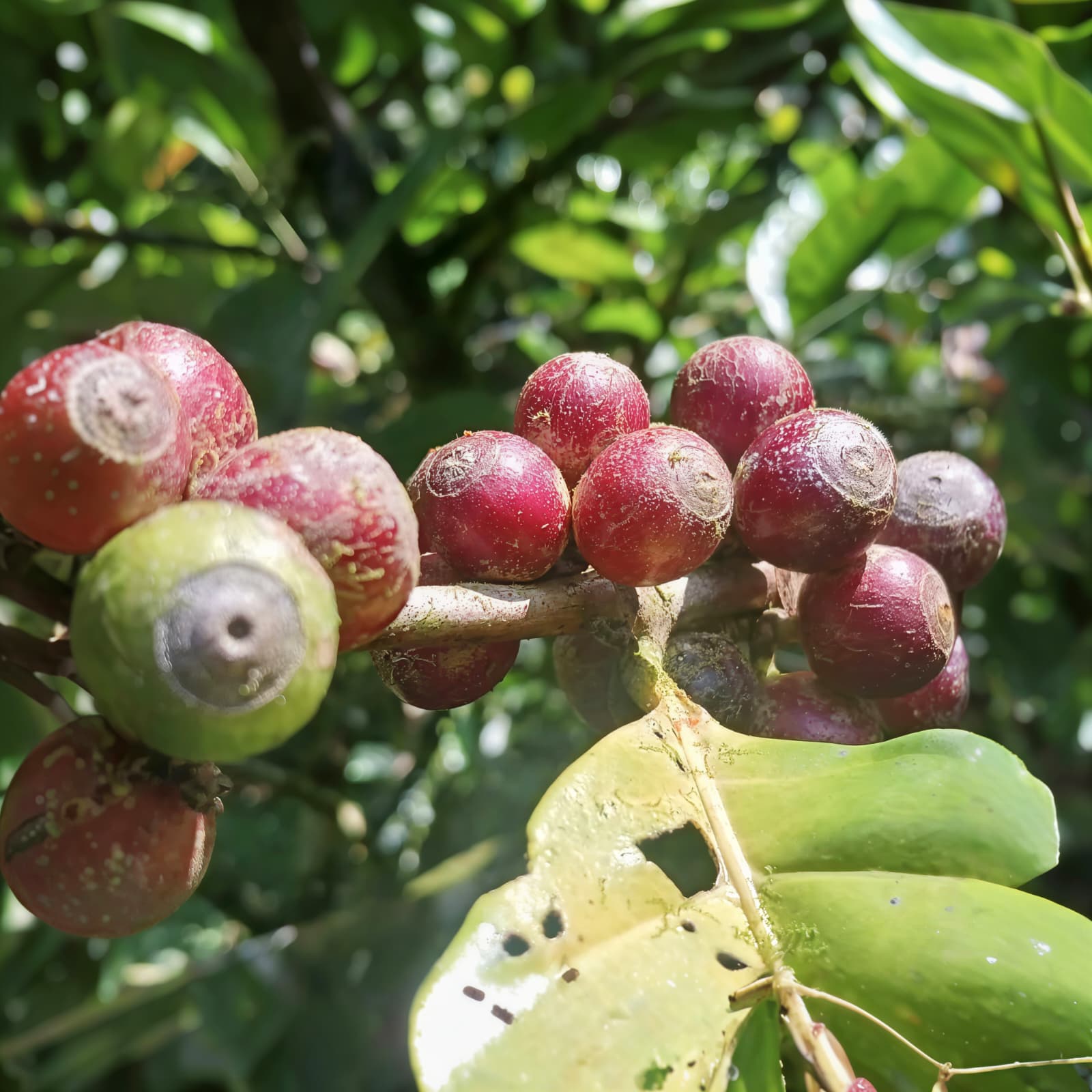
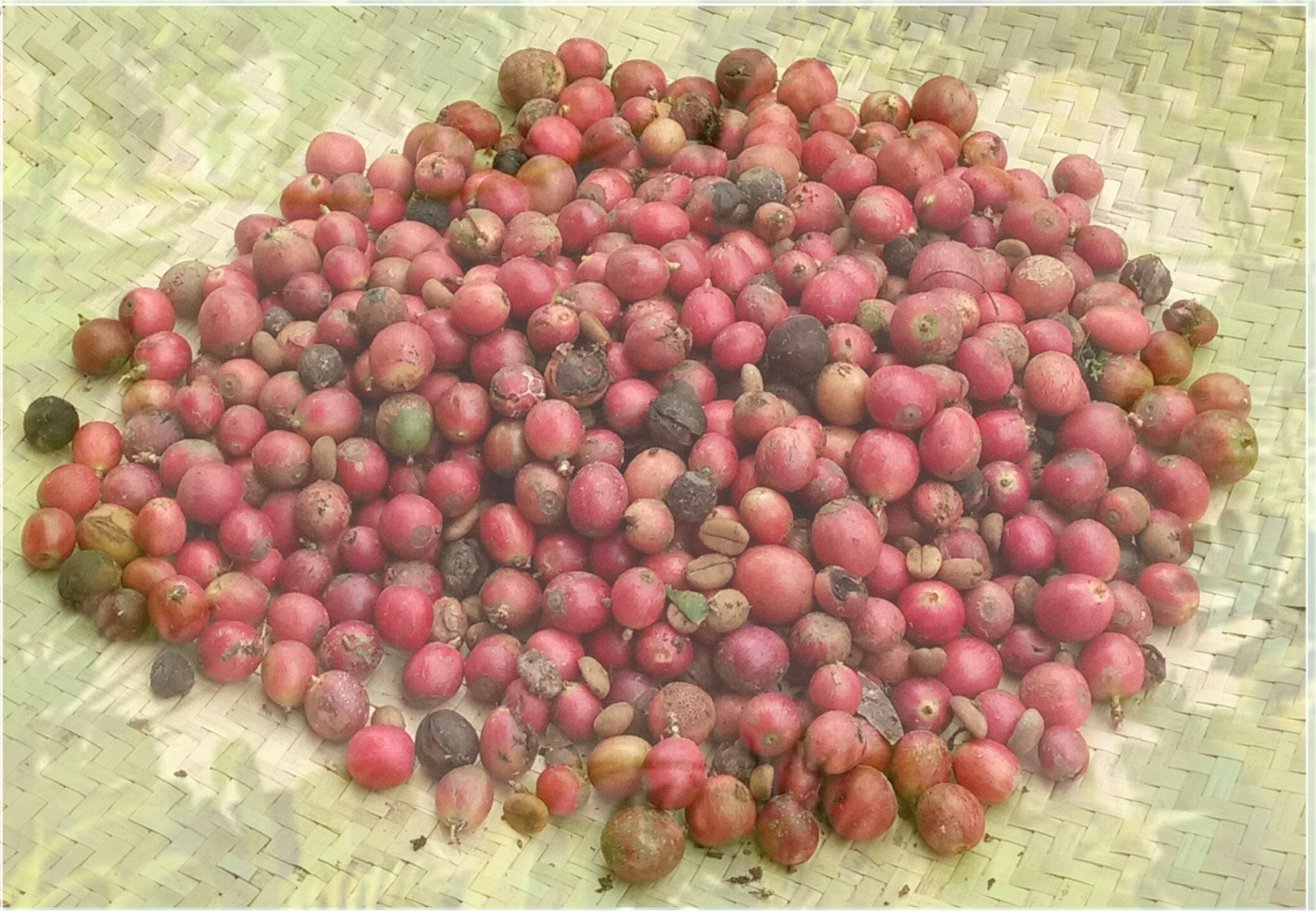
Liberica fruits ripen unevenly, adapting to unpredictable weather. Unlike Arabica, it tolerates heat and longer dry seasons, making it viable where other coffee fails.
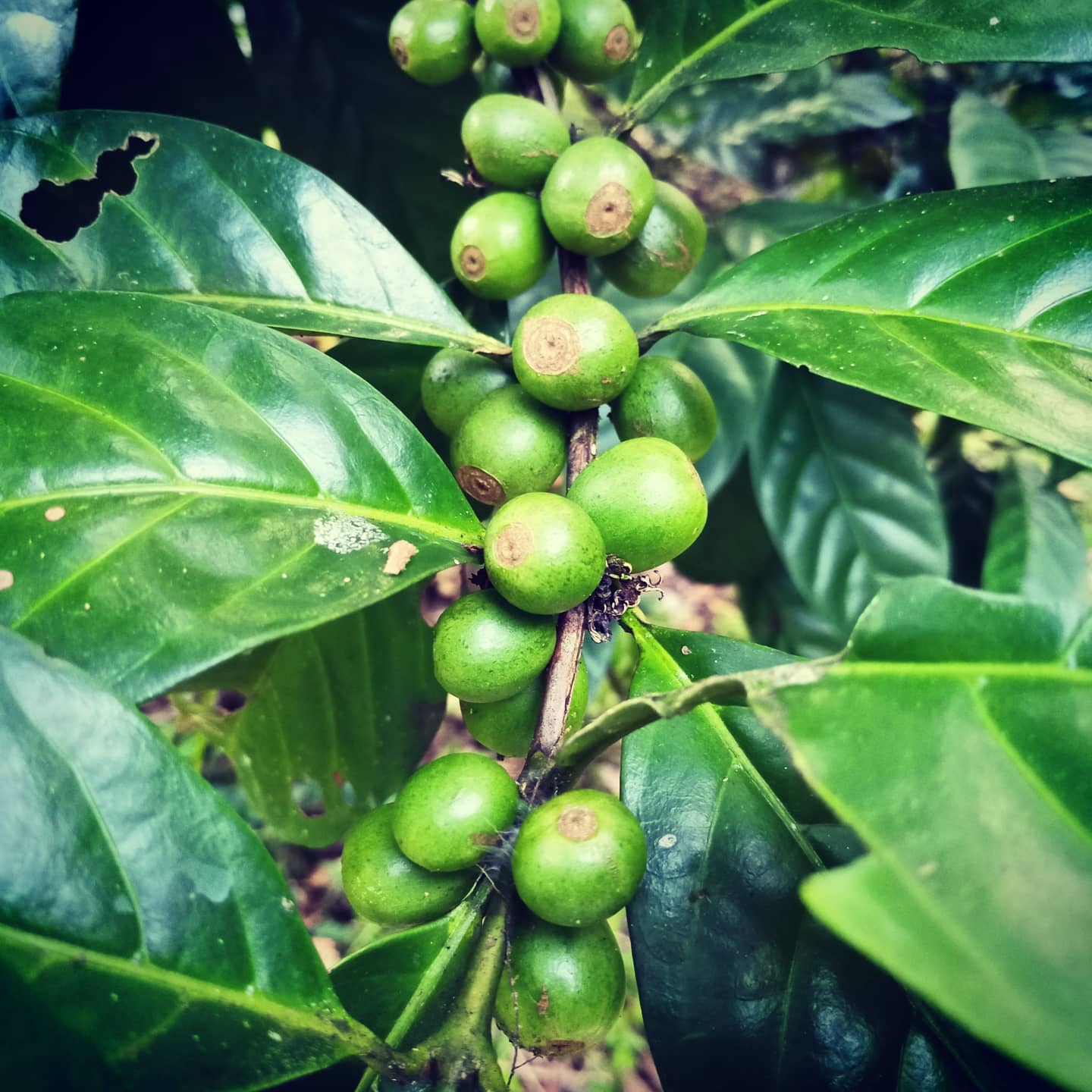
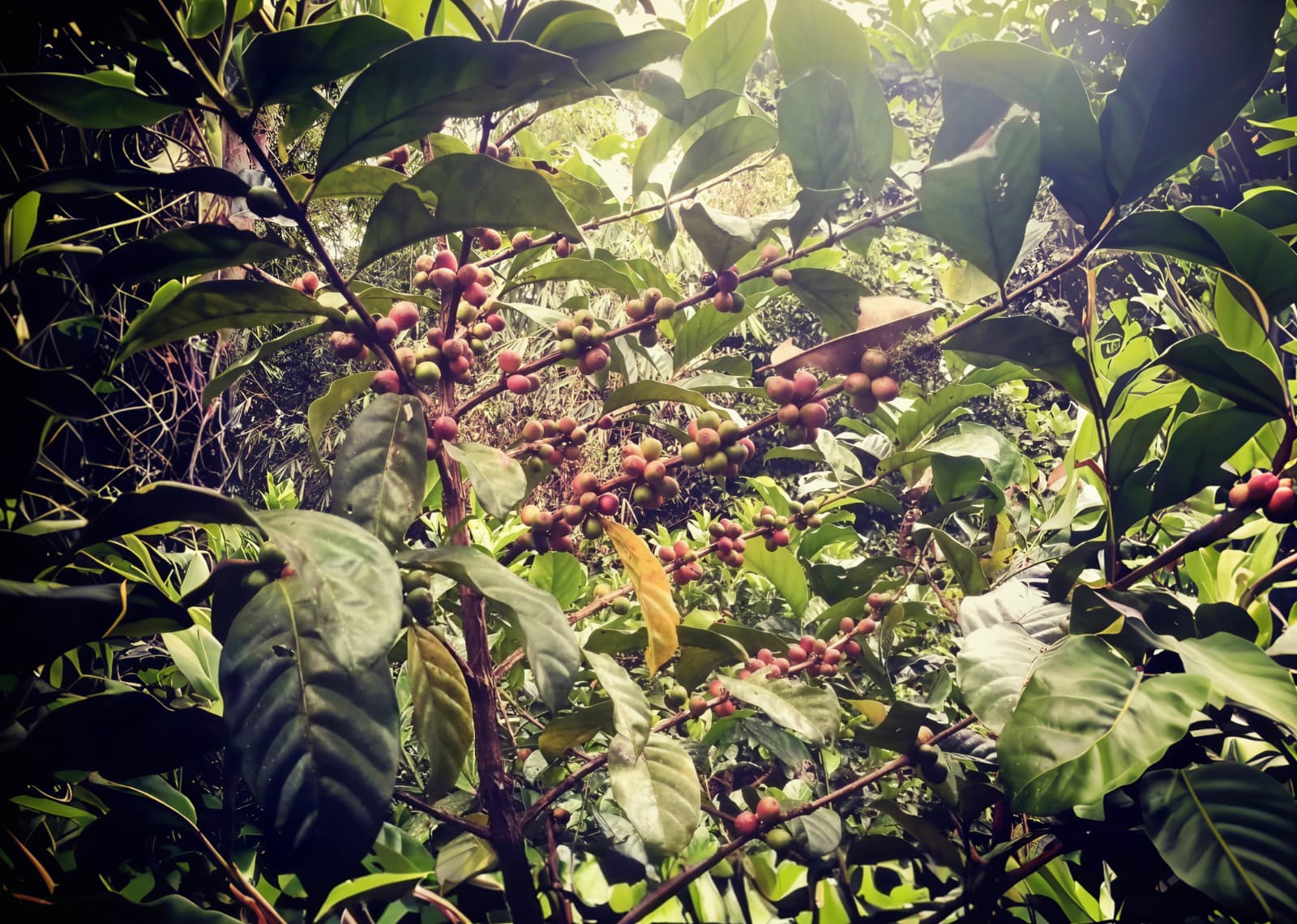
Still green, still resilient. Liberica thrives in lowland tropics and withstands higher temperatures, condition like this increasingly common under climate change.
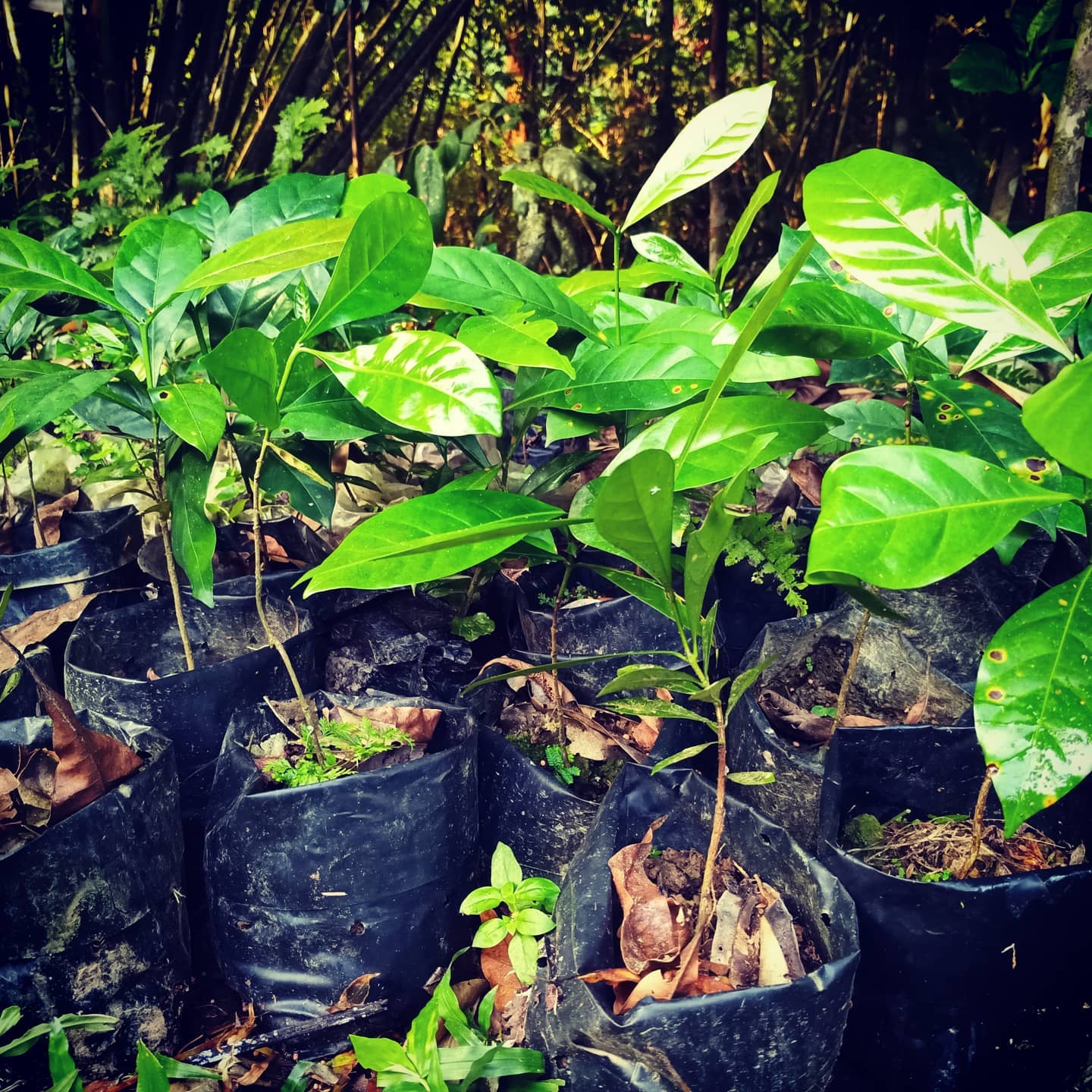
New life begins under shade. Farmers like Liza invest in Liberica not for trend, but for survival. Its tolerance to drought and poor soils offers a future where climate uncertainty grows.
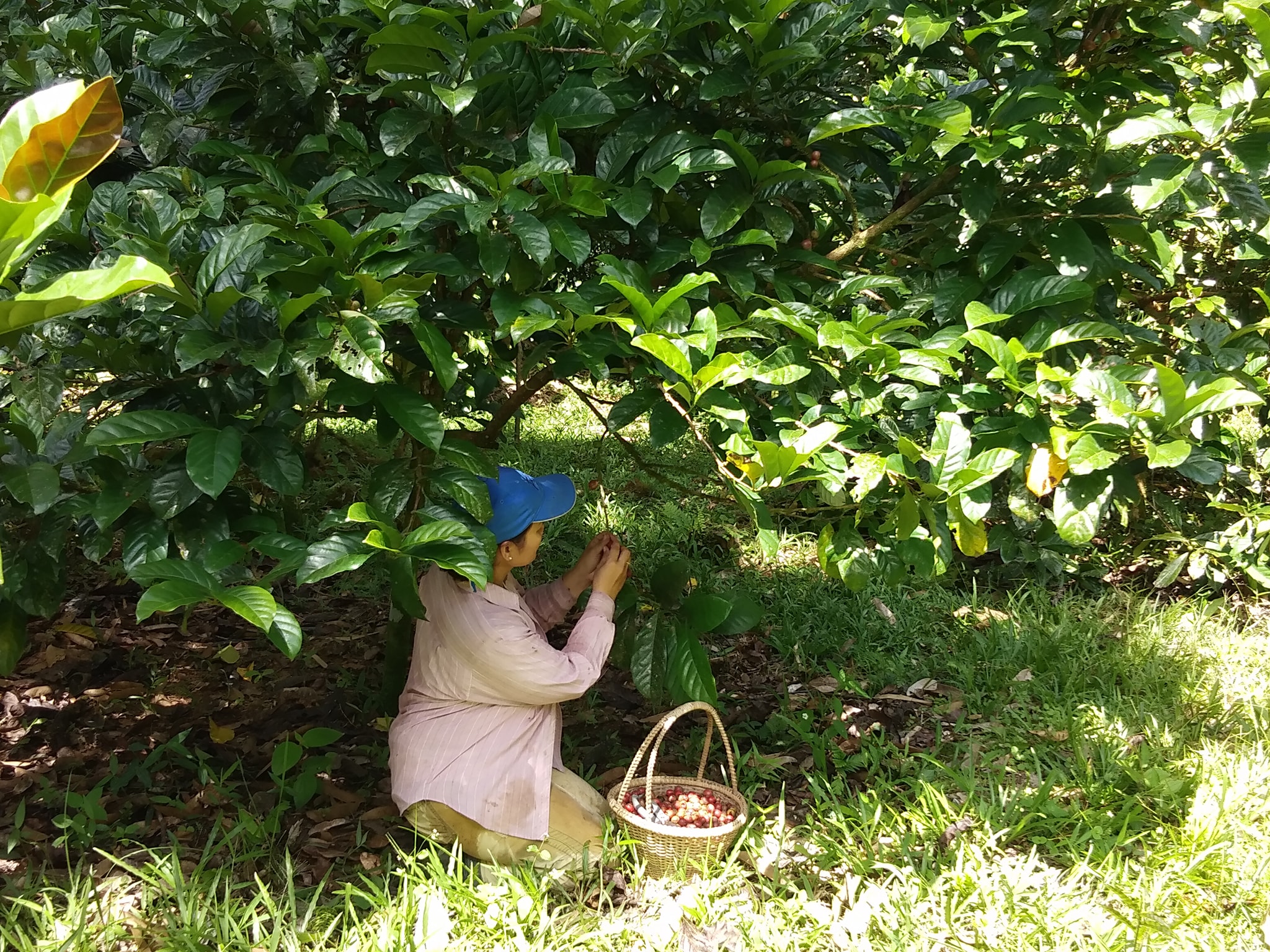
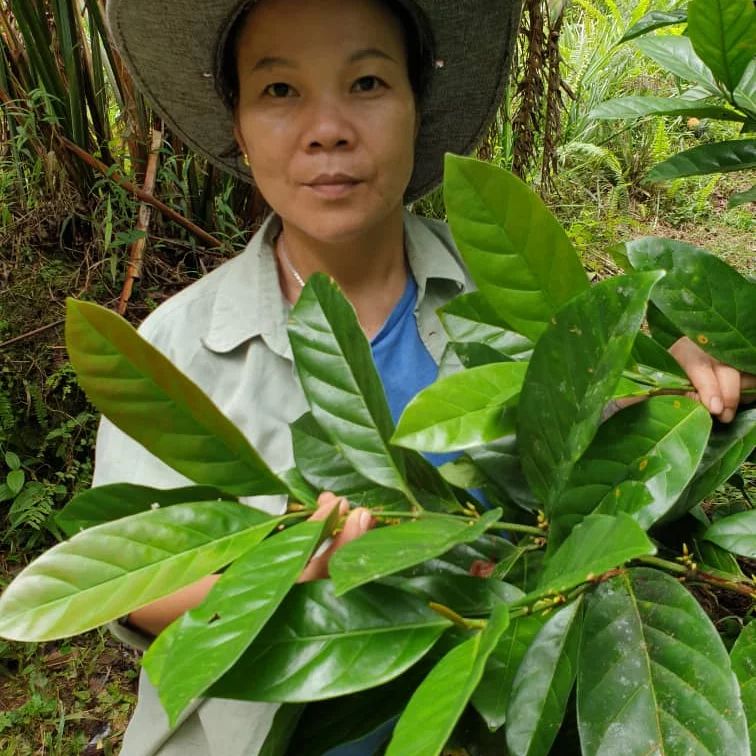
Under dense foliage, Liza handpicks each cherry. Liberica trees grow tall and strong, rooted deep, traits that help them endure extreme weather and shifting rainfall patterns.
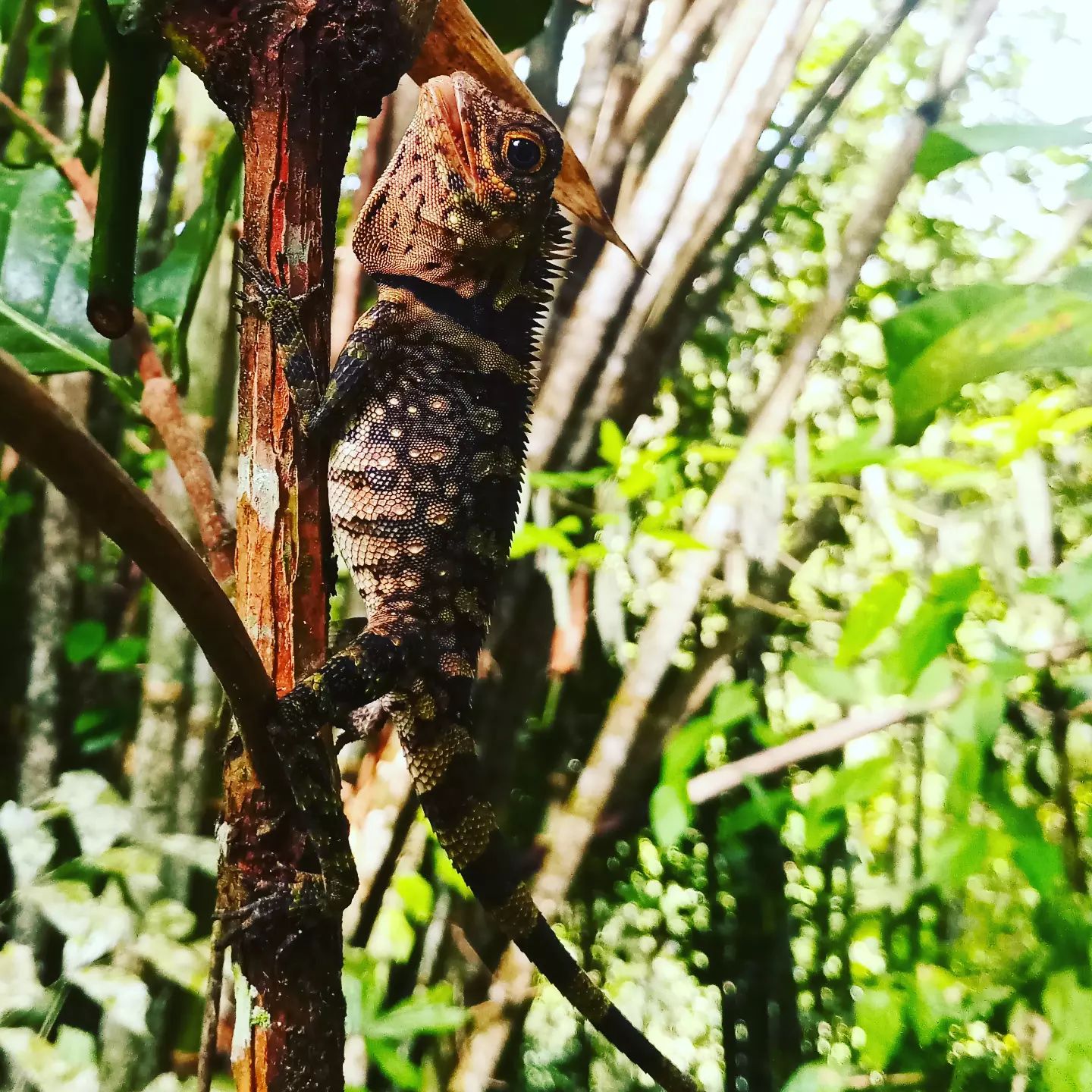
Local residents, like this Borneo Forest Dragon (Gonocephalus bornensis), quietly share the harvest space. Reminding us that coffee landscapes are also living ecosystems.
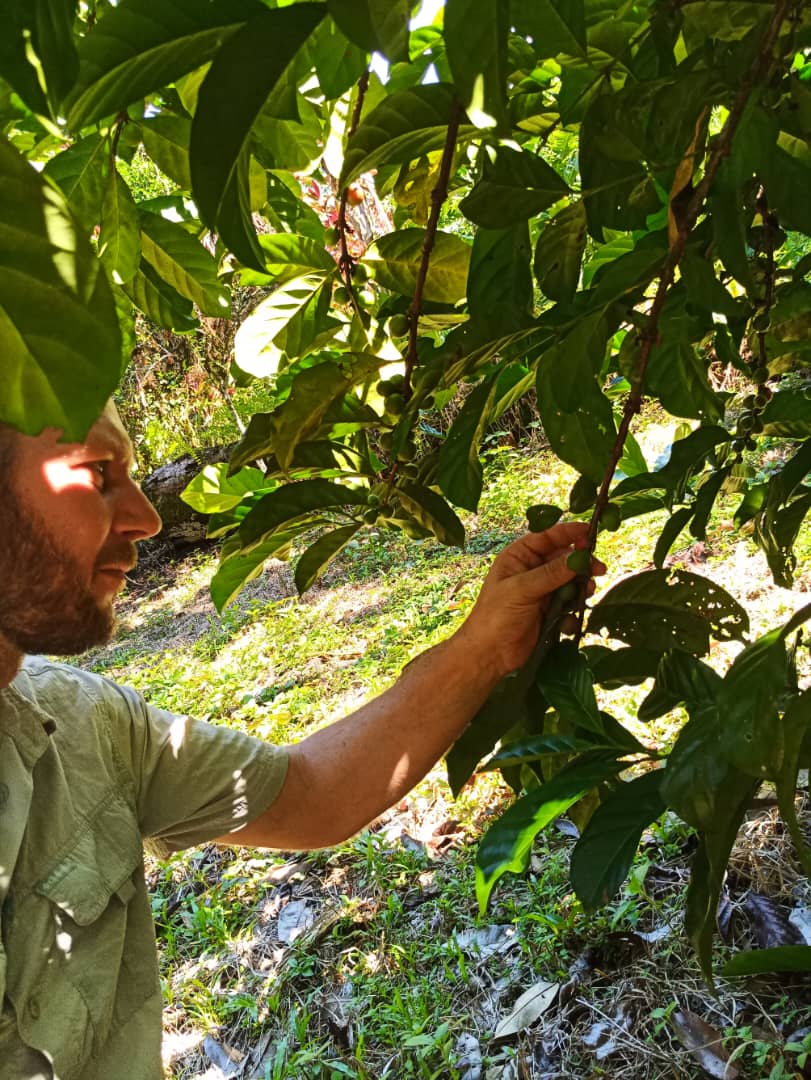
Lars Larsen, Liza's husband and co-founder of the coffee farm, inspects a Liberica tree—an everyday practice to safeguard the harvest from disease.
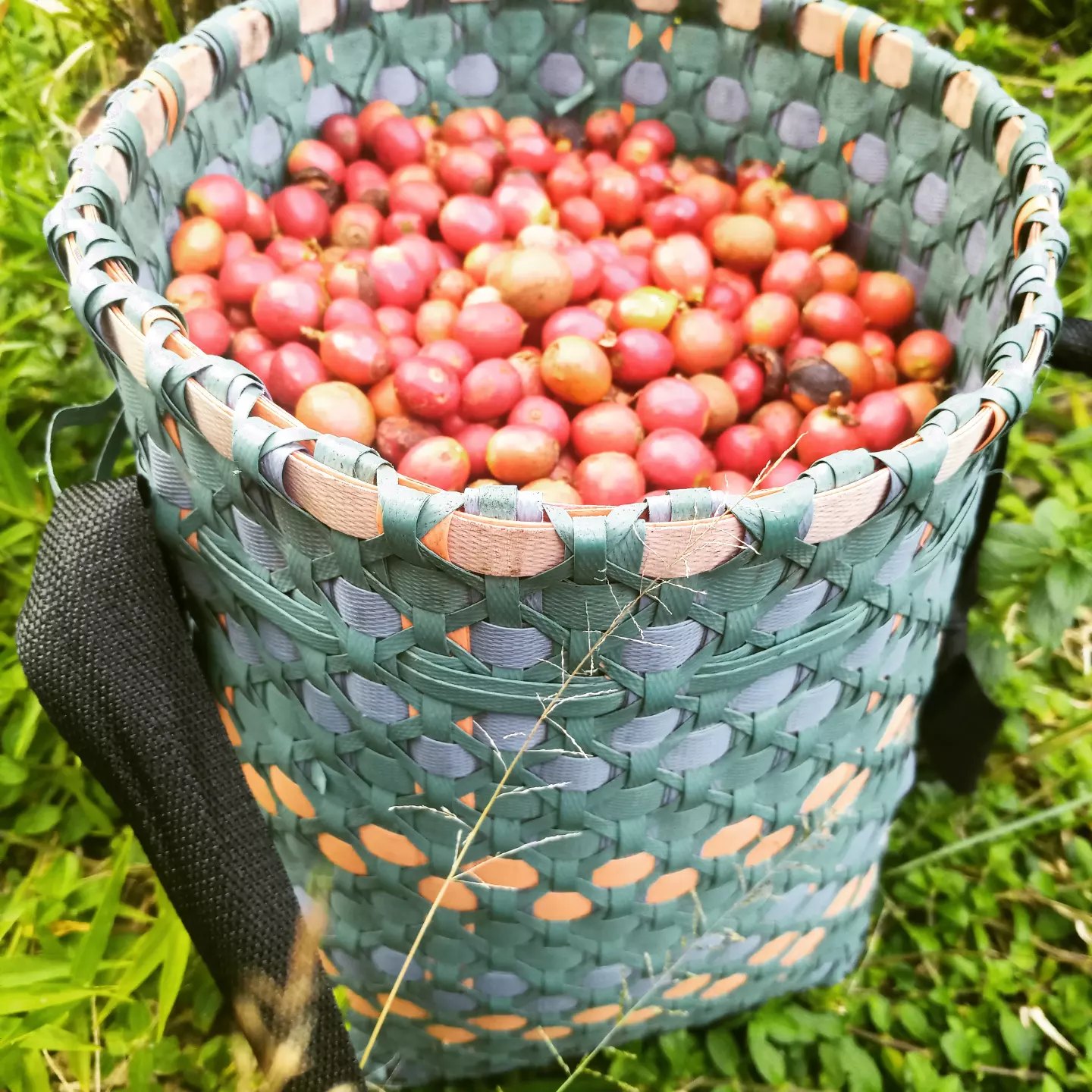
The day’s harvest reflects diversity (ripe, unripe, imperfect). Liberica’s resilience lies in this variability, adapting to uneven climate conditions rather than depending on uniformity.
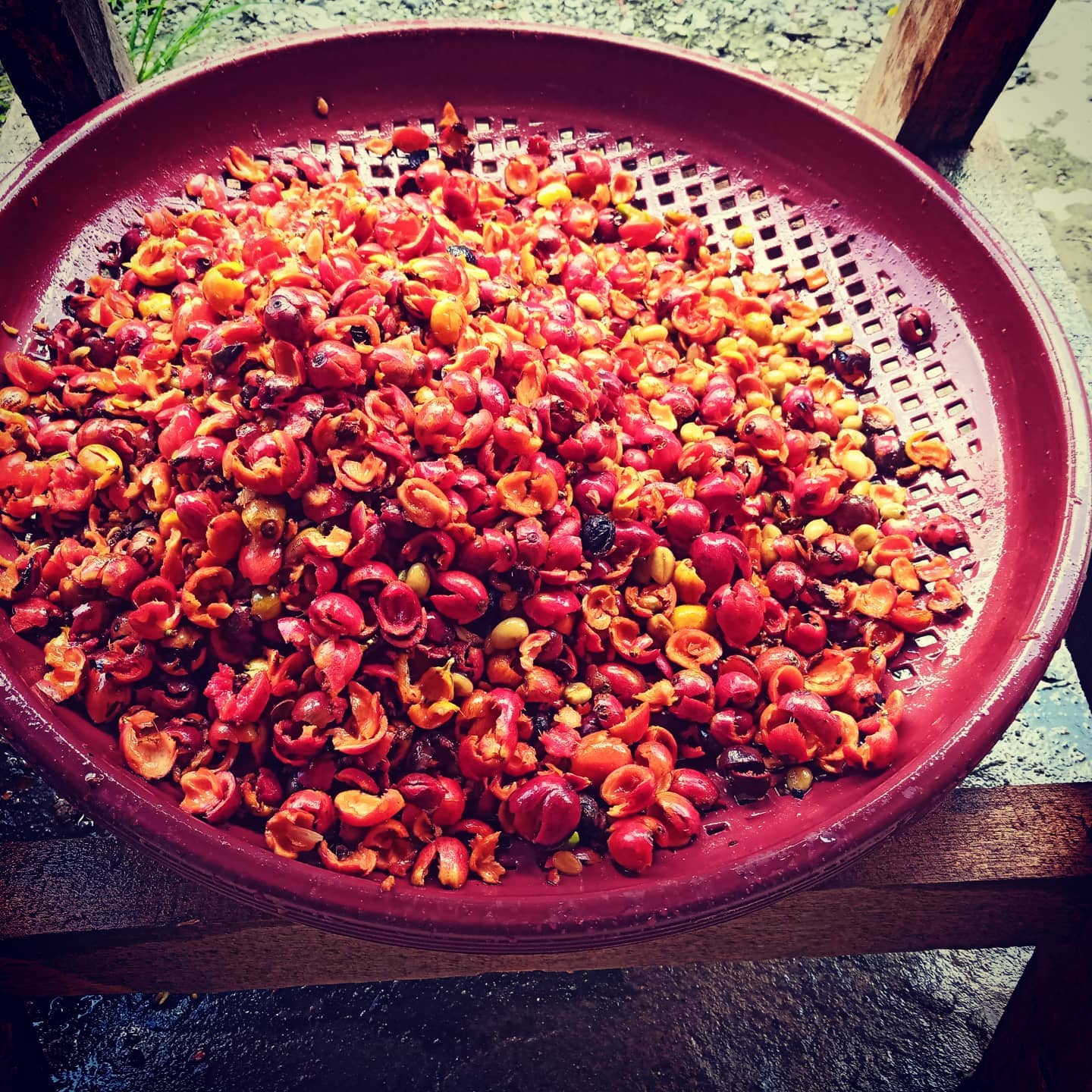
Cascara, the dried skin/husk from the coffee cherry, it will be dried, brewed, and transformed into a delicate Cascara tea with notes of hibiscus, rosehip, and red berries.
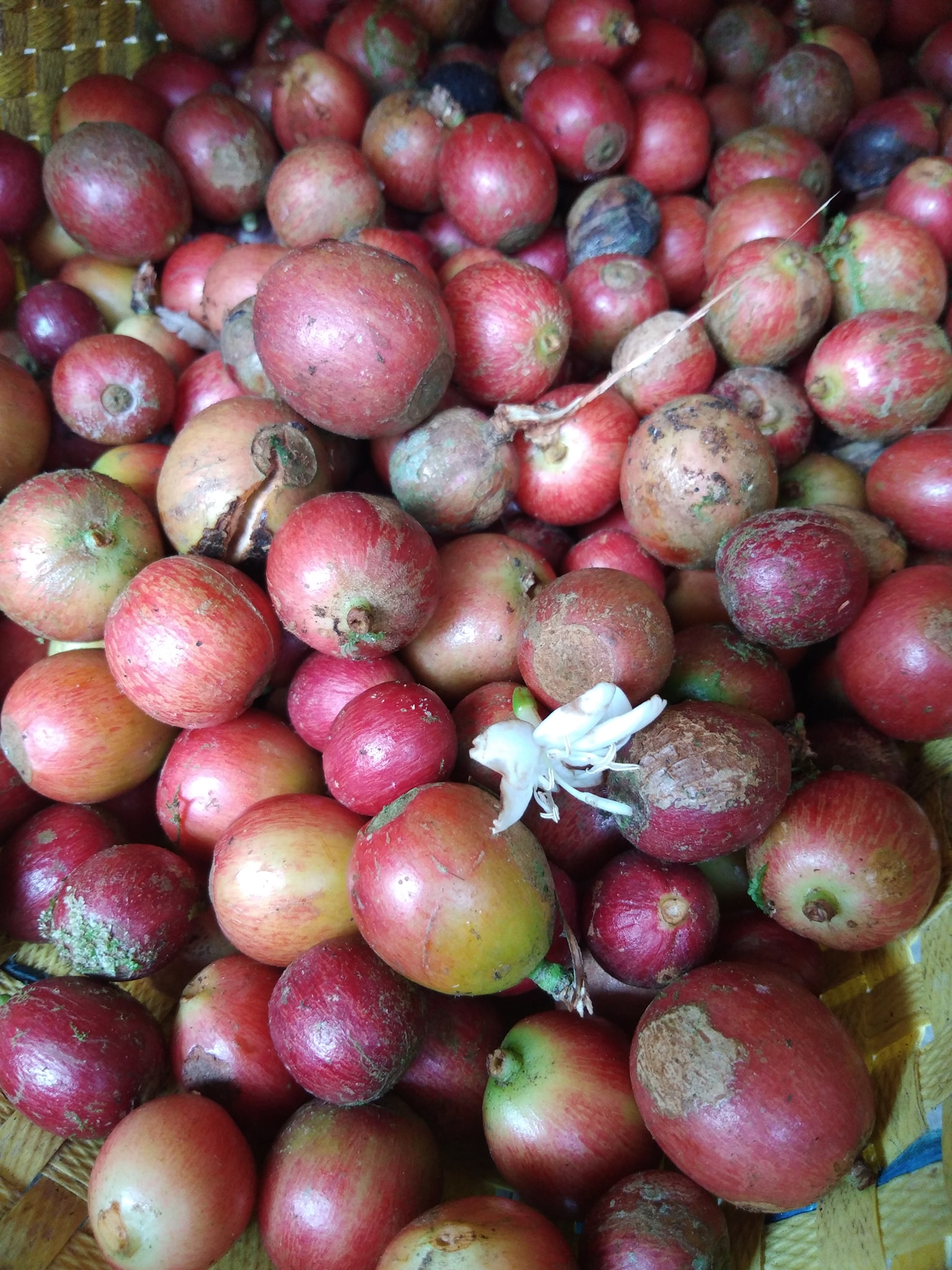
Not all cherries are perfect. Climate change shows itself in scars and inconsistencies, but also in survival.
In every leaf of Liberica, the forest teaches us how to survive heat, resist disease, and grow with the land.
Sorting is the first step of care. Even as climate stress increases defects, Liberica remains productive, less vulnerable to pests and diseases than many commercial varieties.
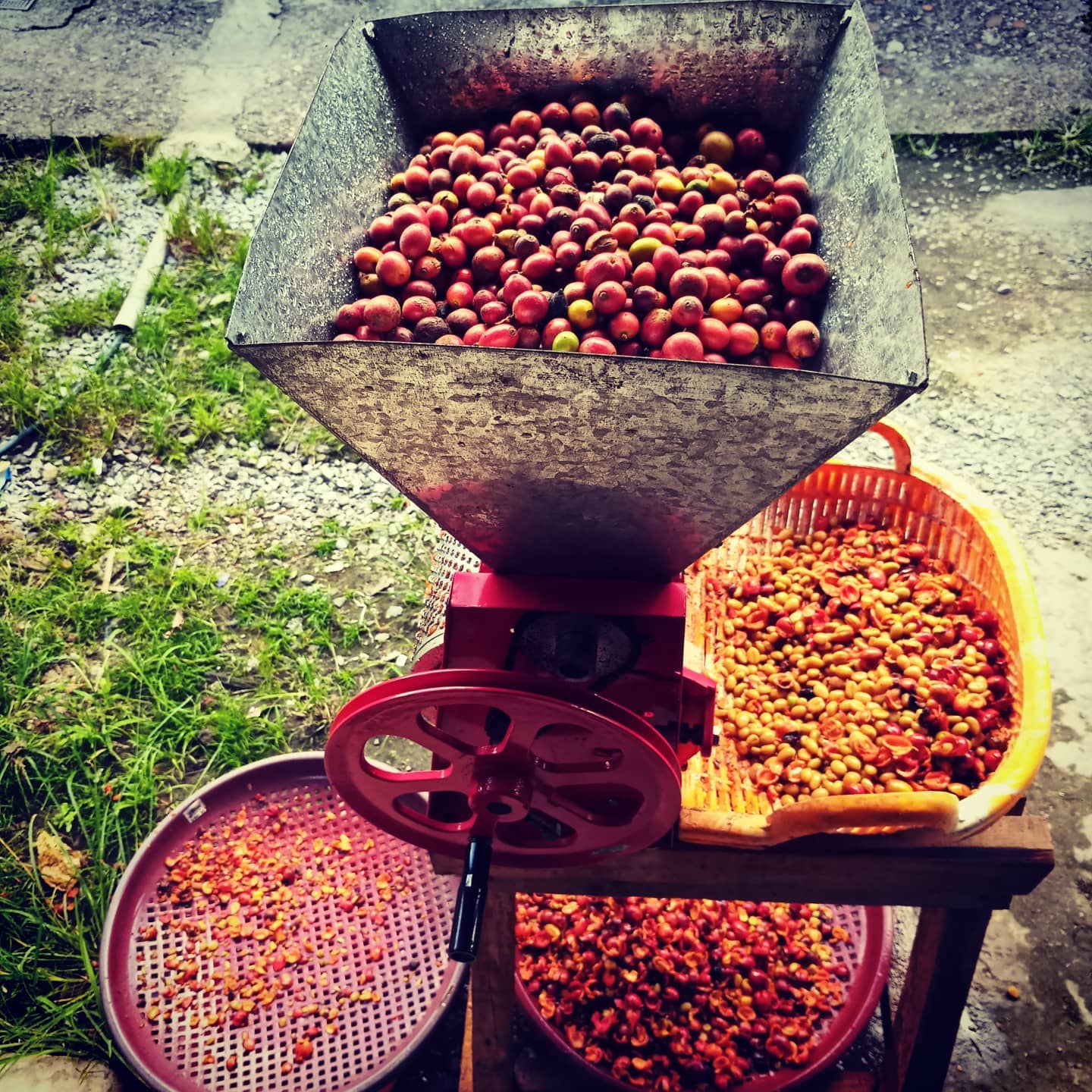
Mechanical and manual methods coexist. Processing Liberica is labor-intensive, yet it sustains livelihoods where other coffee species can no longer grow.
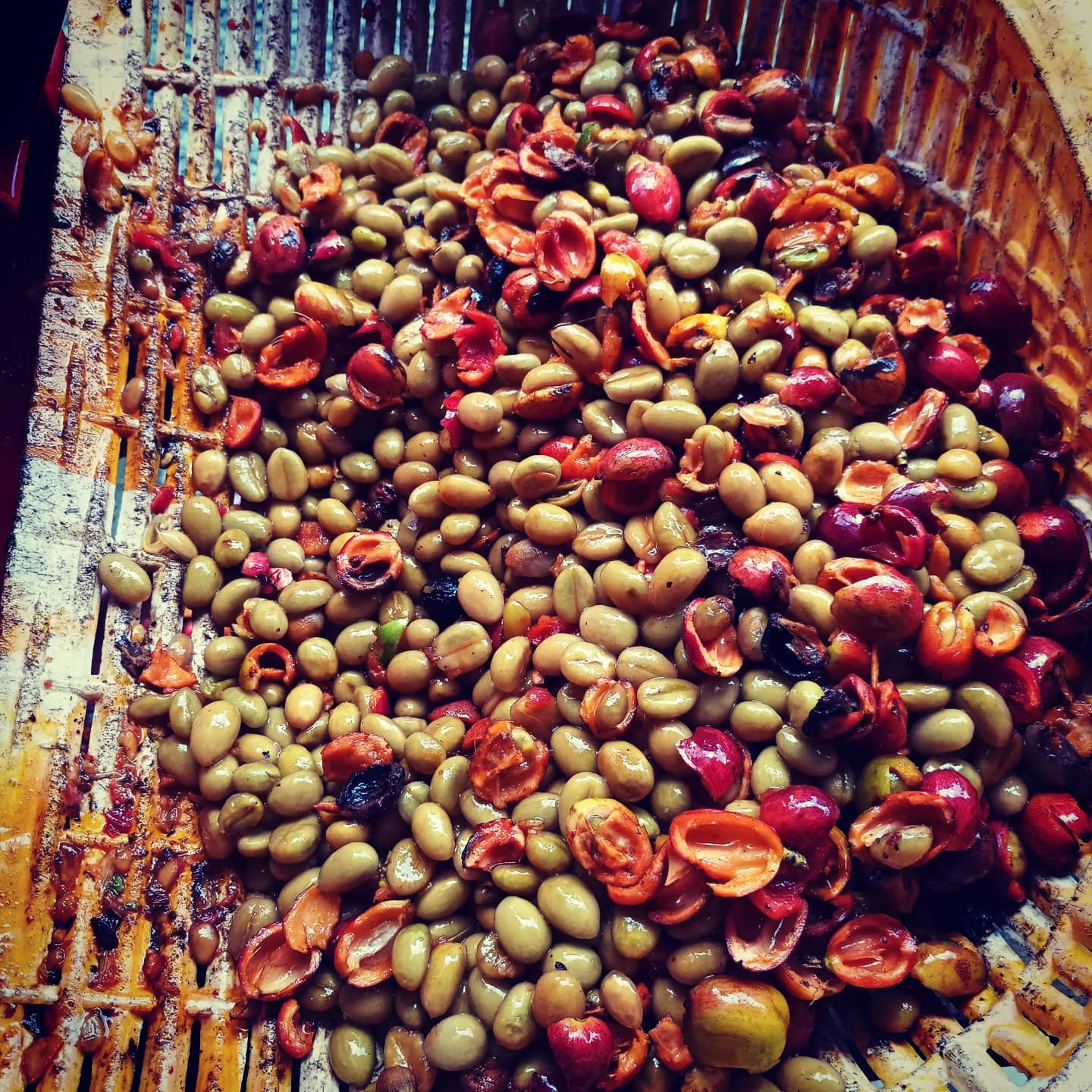
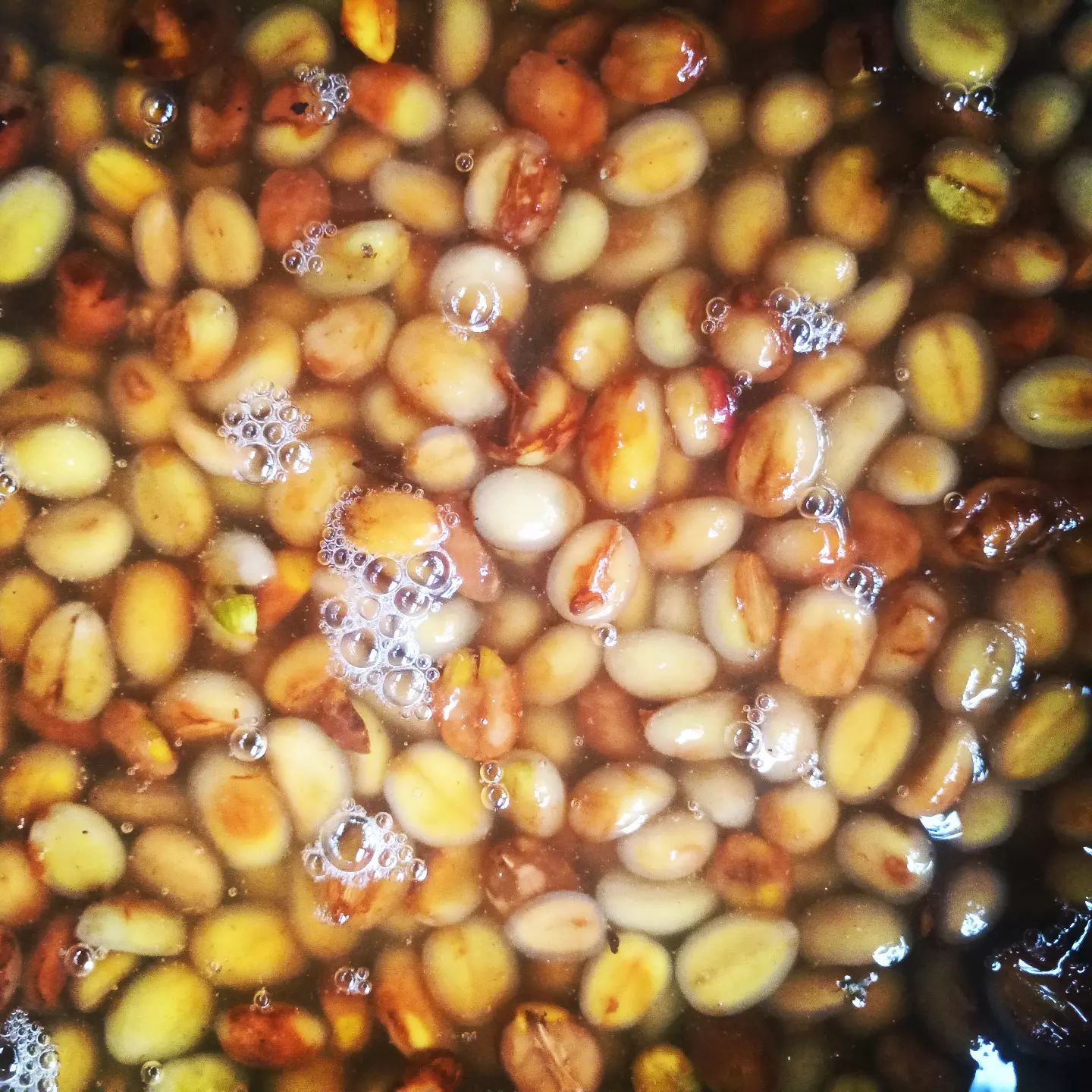
Fresh beans, still coated in mucilage. Liberica’s large size and thick skin reflect its evolutionary adaptation, built to withstand harsher environments.
Fermentation transforms the harvest. Even under fluctuating temperatures, Liberica maintains stable processing outcomes compared to more climate-sensitive varieties.
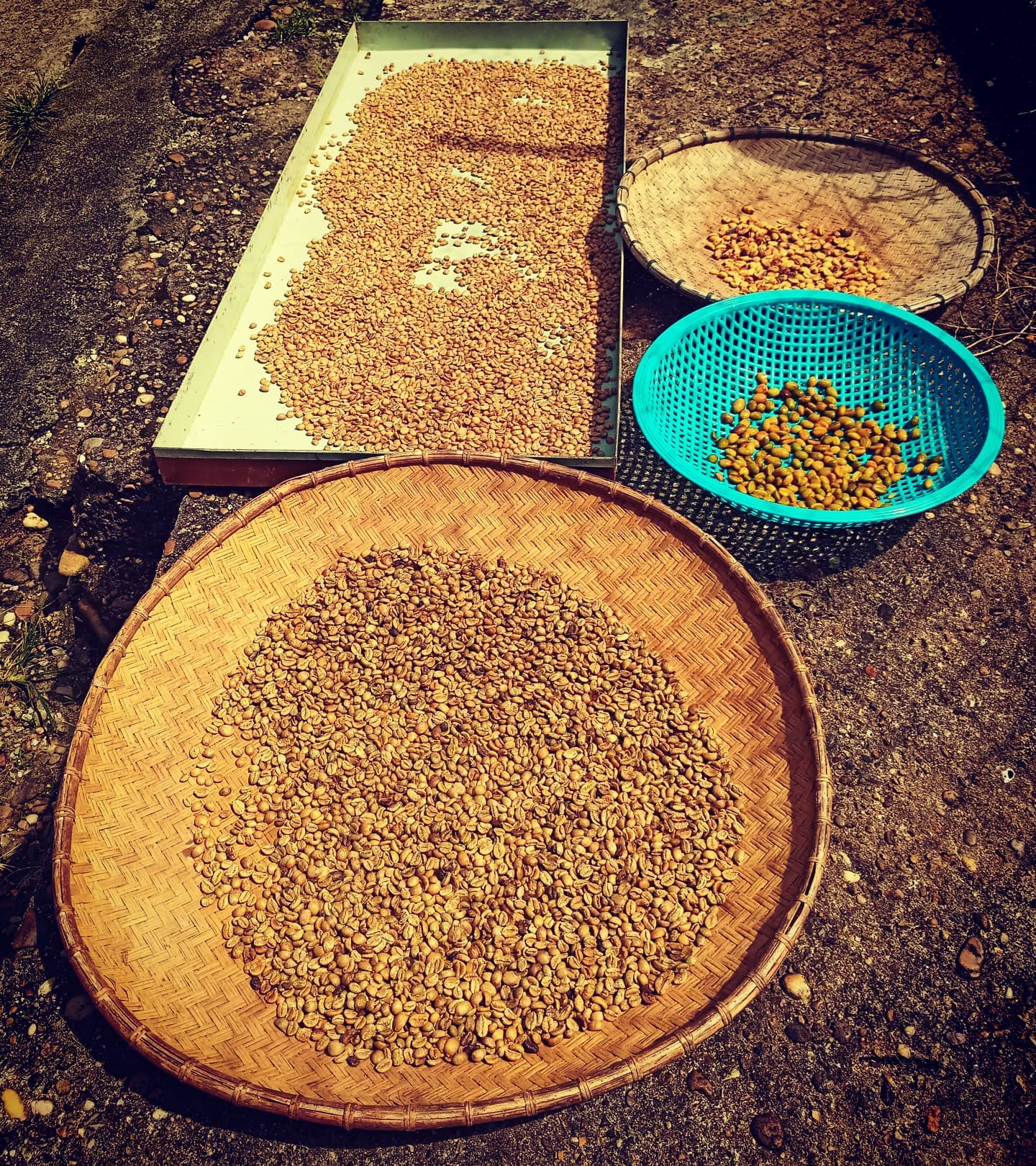
Under the sun, beans dry slowly. Liberica tolerates inconsistent drying conditions better than Arabica, making it suitable for smallholders facing unpredictable weather.
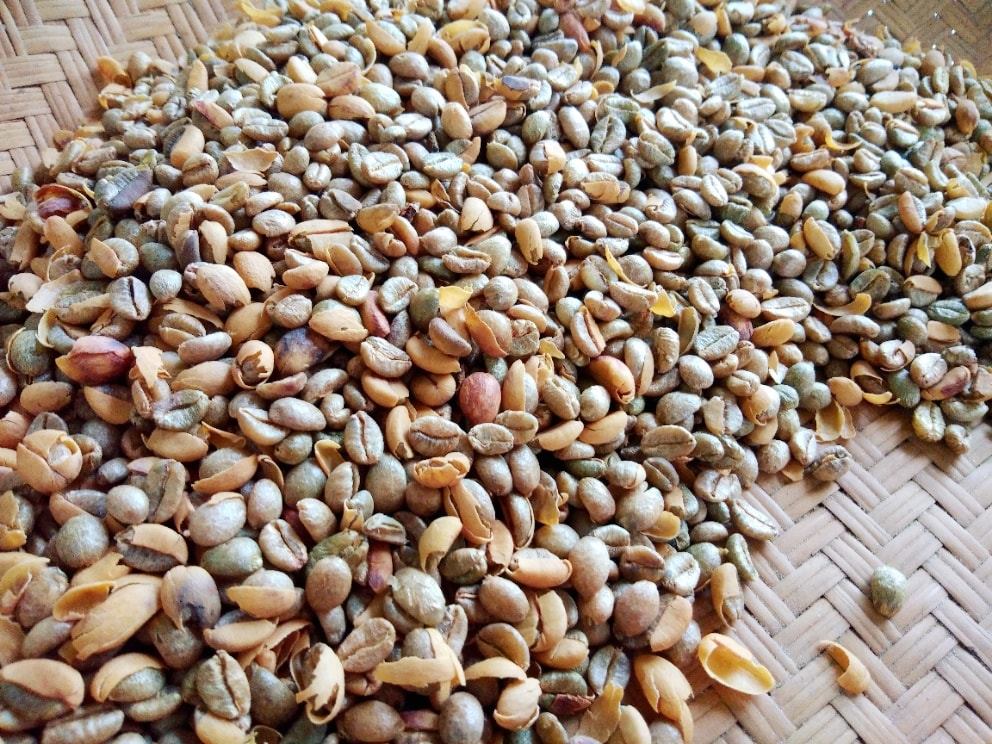
Green beans carry the memory of the landscape (heat, rain, soil). Diversifying into species like Liberica strengthens resilience in the global coffee system.
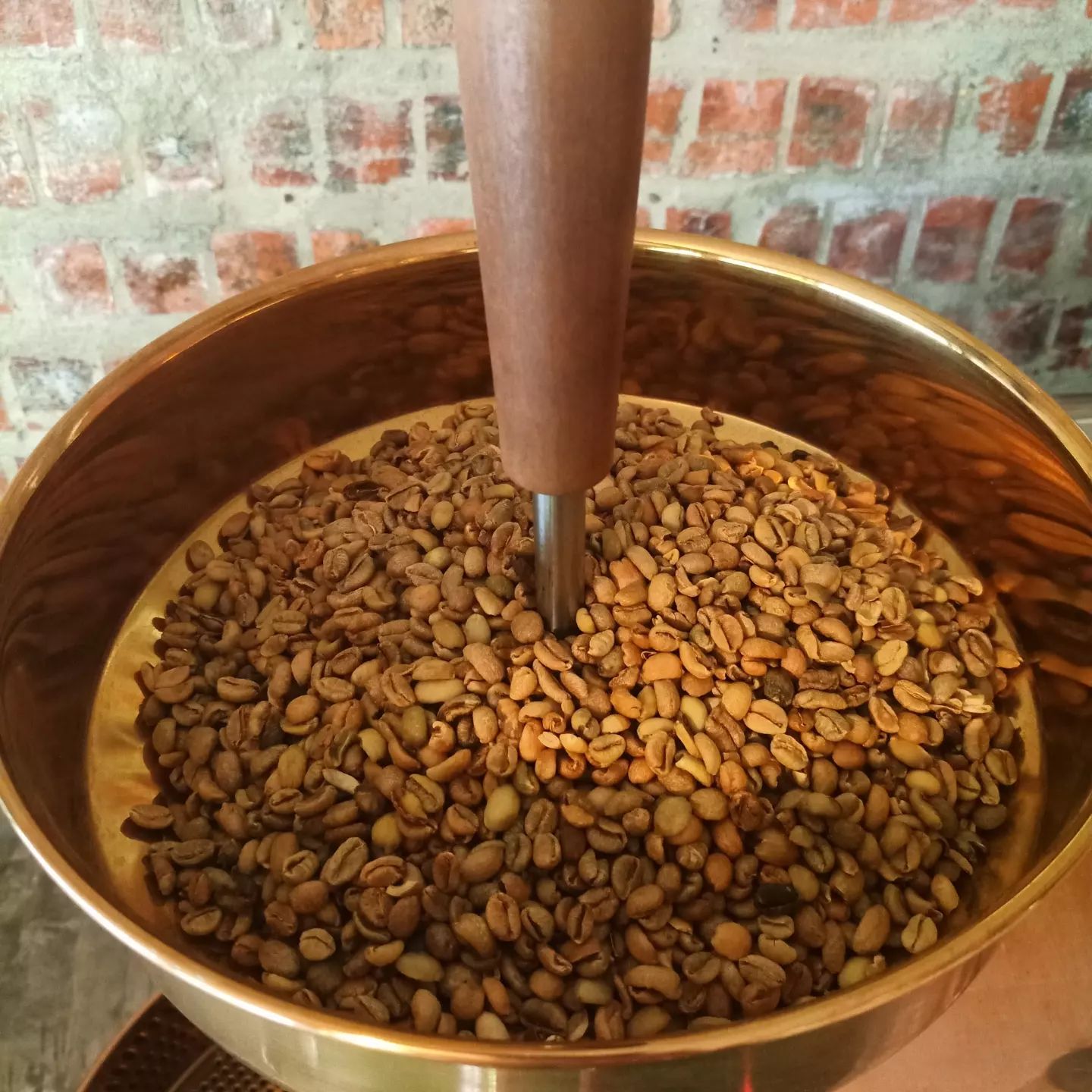
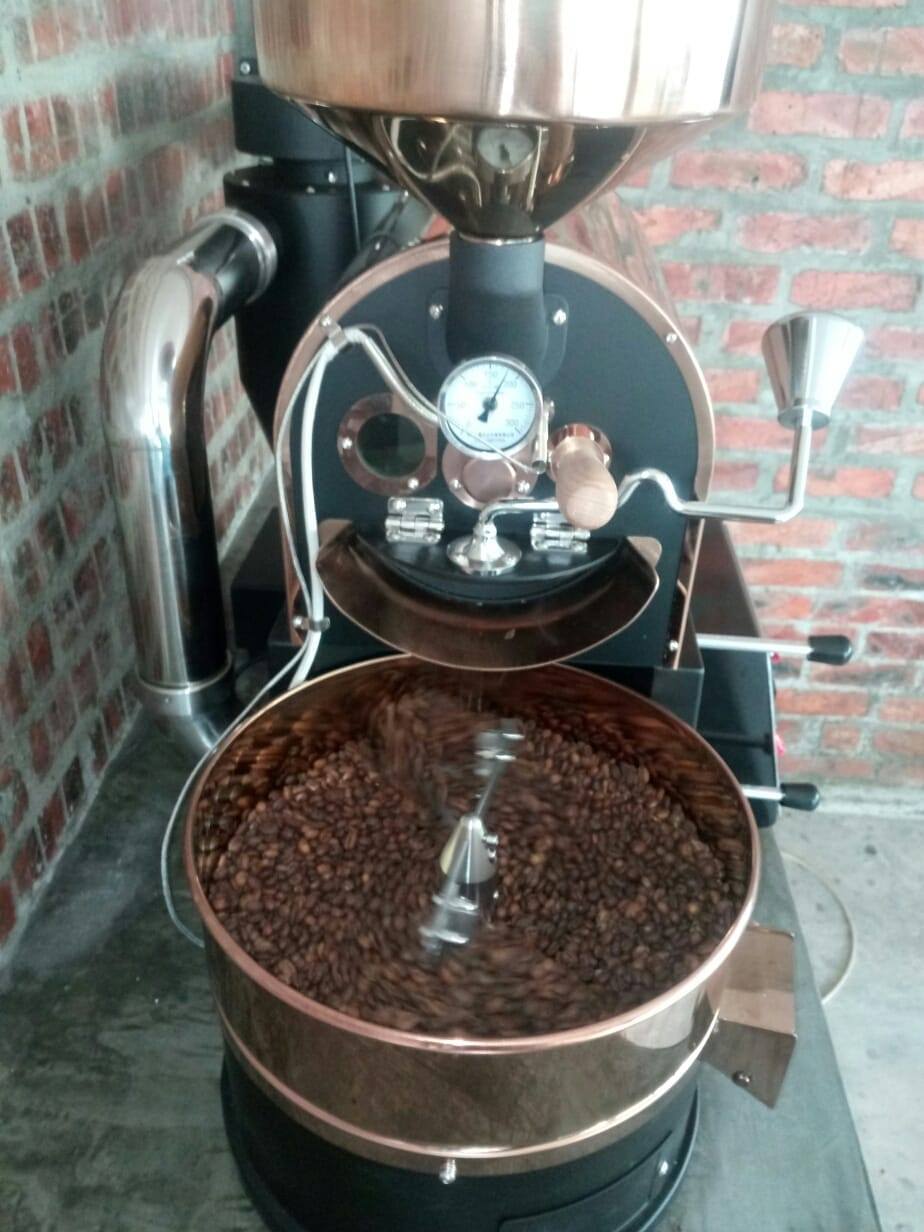
Heat transforms resilience into flavor. Once overlooked, Liberica is returning as climate pressures force a rethinking of what coffee can be.
Roasting reveals bold, smoky, and fruity notes. What was once considered unconventional is now a signature of adaptation.
A dense crema forms. The cup reflects not only taste, but survival. Liberica endures where other coffees struggle.
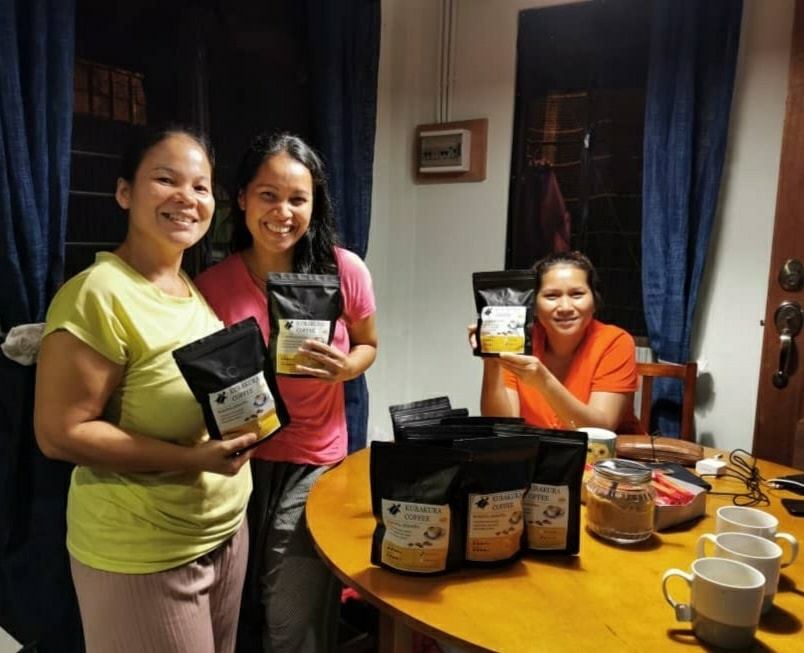
Liza and her community bring Liberica to market. Climate resilience is not just ecological. It is social, sustaining livelihoods and local economies.
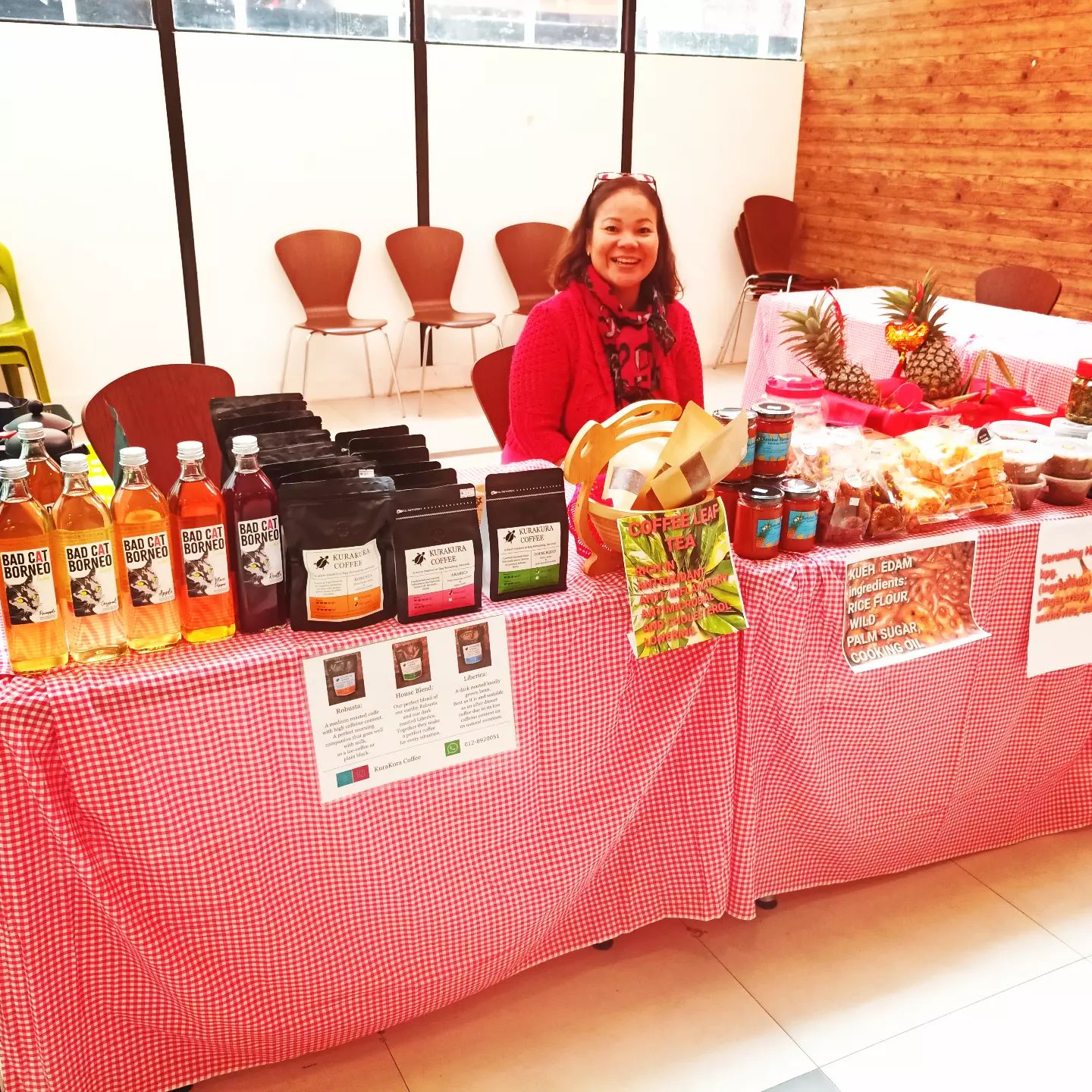
Liza brings Liberica beyond the farm, into jars, bottles, and packaged coffee. Diversifying products strengthens resilience, allowing farmers to adapt economically as climate impacts reshape harvests.
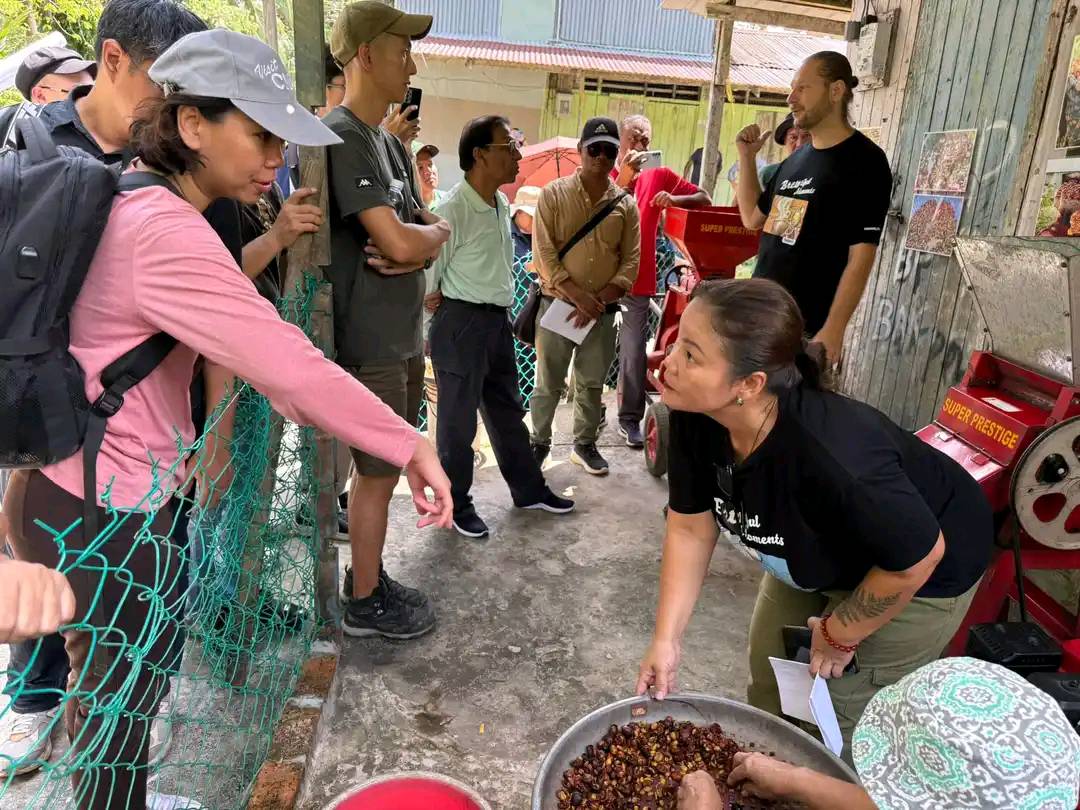
Liza shares the story of Liberica with visitors, turning practice into knowledge. Climate resilience is not only grown but it is taught, exchanged, and carried across communities.
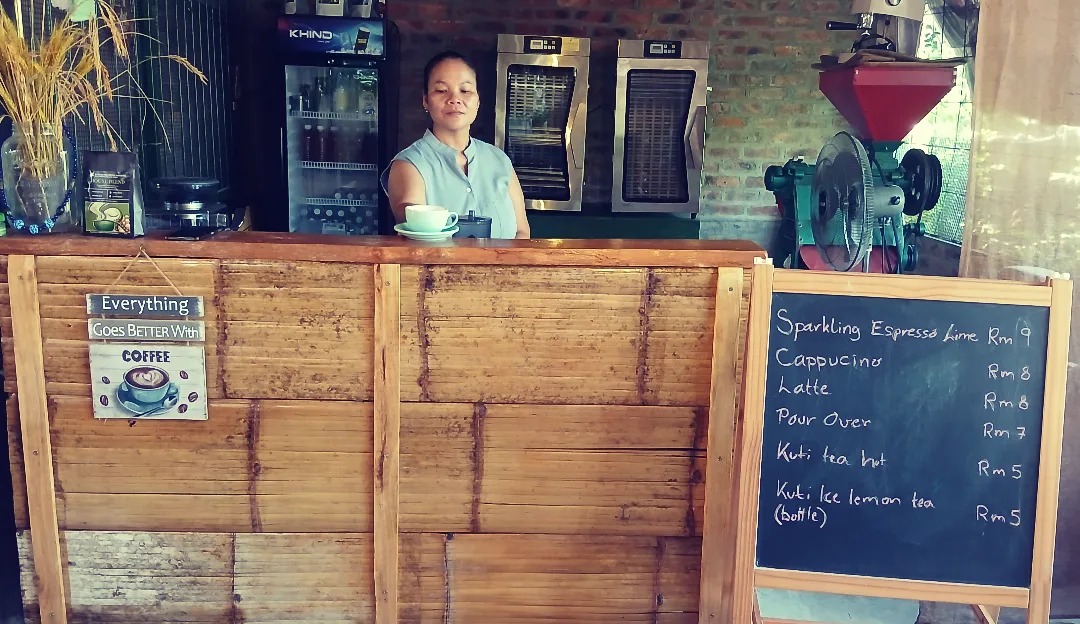
At her small café, Liza serves a cup rooted in the forest. Liberica connects land to livelihood, showing how climate adaptation can sustain both culture and economy.

Credit and Contributor

All photos are under Creative Commons
Attribution-NonCommercial-NoDerivatives 4.0 International (CC-BY-NC-ND 4.0)

Concept and Creator: Liza A. Ahngau and Fransiskus Tarmedi
Photo Credit: Liza A. Ahngau

Responsible: Fransiskus Tarmedi & Marion Regina Mueller

Published by: Heinrich Böll Stiftung Southeast Asia on 27 March 2026

Permanent Link: <https://th.boell.org/en/brewing-resilience-liberica-coffee>

This photo-essay is part of Regional Dialogue Programme. 
Heinrich-Böll-Stiftung Southeast Asia Regional Office, 2026.