
Article
The Philippines, one of the world's most cyclone-prone nations, faces escalating climate risks, highlighted by the recent onslaught of super typhoons. As climate change intensifies storm impacts, vulnerable communities, especially in farming sectors like Atok, are at greater risk of poverty and food insecurity. While community-based risk management has long sustained farmers through shocks, these informal systems now show limitations in a changing climate. The urgent need for targeted interventions is clear: supporting these resilient communities is crucial for safeguarding livelihoods and ensuring food security amidst the growing challenges of climate change and globalized economy.

The Philippines, one of the most cyclone‑prone countries in the world, experiences an average of 20 tropical cyclones each year. In the final quarter of 2025 alone, the nation was struck by two successive super typhoons, leaving widespread devastation in their wake. Although experts say climate change is not expected to increase the overall number of cyclones, hurricanes, or typhoons globally, it is intensifying their impacts. Warmer oceans and a hotter atmosphere driven by climate change, provide more energy for these storms, making them potentially stronger and more destructive. This can result in higher wind speeds, heavier rainfall, and an increased risk of coastal flooding, amplifying the vulnerability of communities across the archipelago.
These escalating risks highlight the urgent need to address the social dimensions of climate change. The United Nations’ Sustainable Development Goals prioritize poverty eradication by 2030, recognizing that the poorest households are most vulnerable to climate-related and socio-economic shocks. Climate change affects all, but its impacts are disproportionately severe for coastal, rural, and upland communities.
Among these, the agriculture sector stands out as one of the most vulnerable, since it is the primary source of livelihood for the poorest households. In many rural communities, climate-induced agricultural shocks not only undermine food security but also deepen livelihood precariousness. Over time, repeated exposure to climate stresses erode household coping capacities, increasing the risk of shifting from transient to chronic poverty.
Community-based risk management arrangements have long been essential to the survival of farming households in vulnerable regions. In Atok, Benguet, one of the Philippines’ key suppliers of semi-temperate vegetables, these informal systems have enabled farmers to endure recurring shocks such as typhoons, monsoon rains, frost, hailstorms, and market volatility. Rooted in trust, reciprocity, and necessity, they embody a form of resilience that has sustained upland communities for generations.
However, in today’s climate-challenged and globalized economy, these arrangements show their limits. While they offer immediate support and strengthen social bonds, they may also entrench dependency, reinforce unequal power dynamics, and fail to shield farmers from escalating climate risks.
Understanding risk in agriculture
The early development of agriculture was, in part, a response to the inherent risks associated with relying on hunting and gathering for food. In seeking greater stability, early farmers endeavored to reduce uncertainty by exerting more control over production processes. Nevertheless, risk remains an unavoidable aspect of their economic life. Through experience however, farmers have come to recognize this reality and have developed adaptive strategies to manage agricultural precariousness in their own ways.
The absence of accessible government support in many farming communities around the world forces farmers to rely primarily on themselves and their local networks to manage production and market risks. Social safety nets such as agricultural insurance schemes or credit markets are often lacking due to limited state capacity and institutional weaknesses. In some cases, the government itself may become a source of risk, particularly through political instability or abrupt policy changes that adversely affect agricultural livelihoods.
Farming households often rely on informal, socially rooted mechanisms to manage risks. Community-based risk management arrangements (CBRMAs) are collective strategies that help mitigate adverse effects. While effective for individual (idiosyncratic) shocks, CBRMAs tend to fail under widespread (covariate) shocks. Climate change, which brings more frequent and severe disruptions, challenges these systems. Understanding these dynamics can help design more robust support systems that address both individual and collective vulnerabilities in increasingly volatile environments.
Community-based risk management in an upland agricultural community
Atok, a fourth-class municipality, is a key supplier of semi-temperate vegetables nationwide. Its high-altitude terrain supports cool-climate crops but also exposes farmers to extreme weather. Even before external disruptions, Atok faced frequent agricultural shocks. Now, climate change, globalization, and unfavorable policies intensify pressures on farmers already burdened by rising input costs. This geographic and economic vulnerability underscores the urgent need for targeted interventions that build climate resilience and safeguard upland livelihoods. Supporting these communities is essential to sustaining agricultural productivity and ensuring food security amid growing environmental and socio-economic challenges.
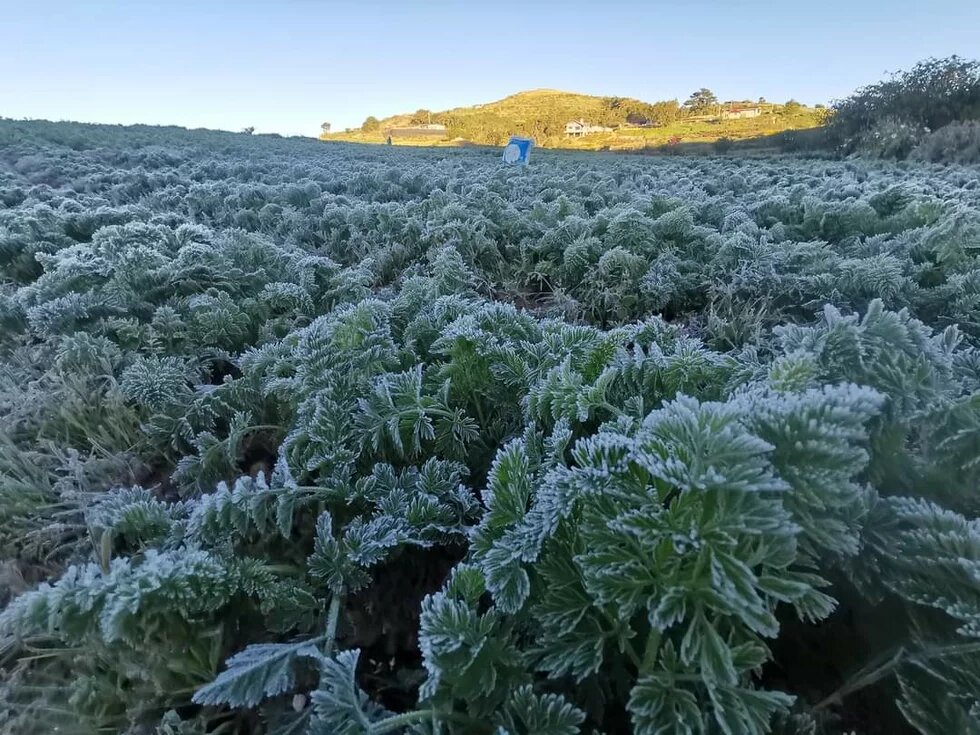
Local researchers have documented that local farmers regularly face extreme weather events such as puwek (typhoons), habagat (monsoon rains), andap (frost), and lanti/dalallo (hailstorms). These harsh conditions often lead to poor-quality harvests or, in some cases, complete crop failure resulting in little to no income for farming households. Looking ahead, climate projections for Atok suggest rising temperatures and prolonged dry spells, coupled with fewer but more intense rainfall events.
Conventionally, local farming households have relied on informal community-based risk management arrangements to cope with these agricultural shocks. While these arrangements take many forms and vary in practice, two primary systems with distinct characteristics are most relevant for discussion in this article.
The boon: strengths of community-based arrangements
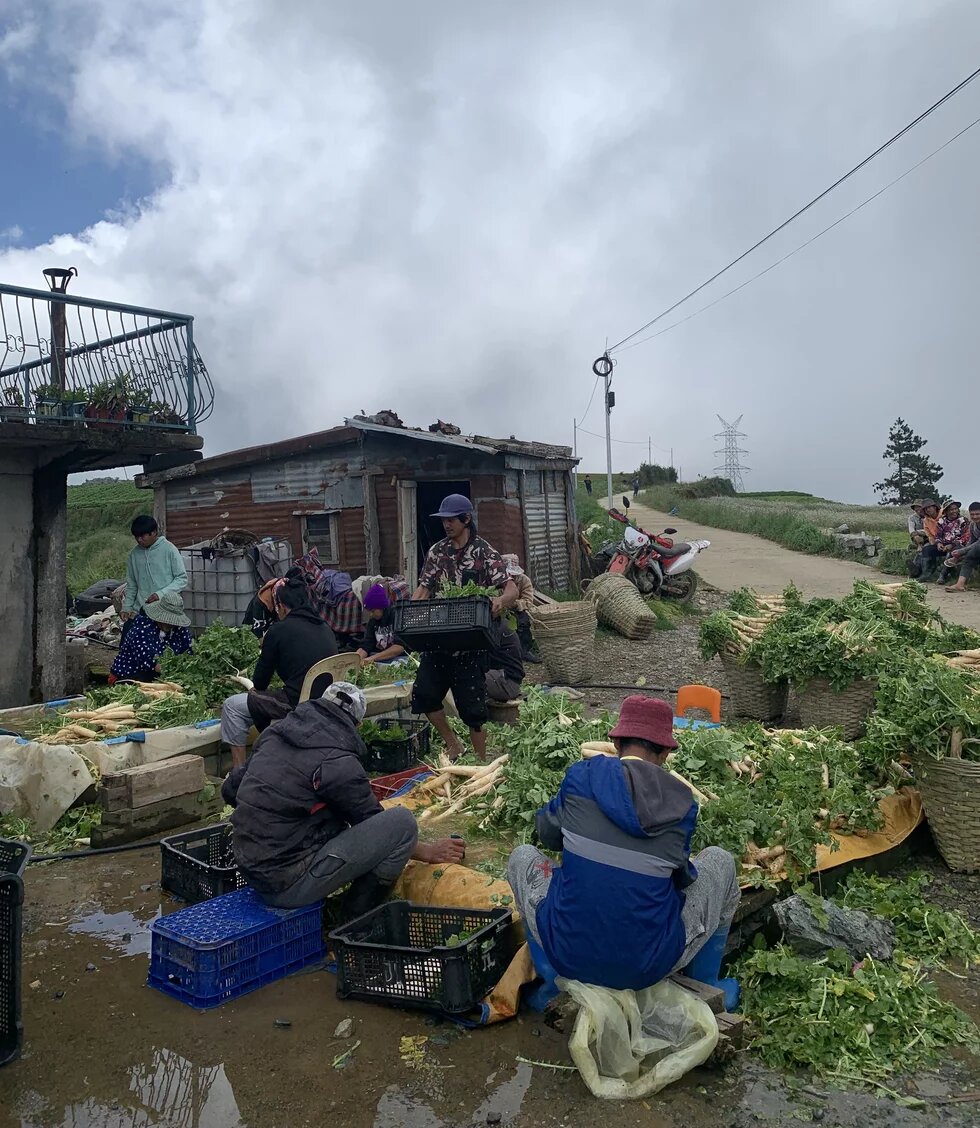
The first system is the mutual help labor system, which is predominantly utilized during planting and harvest periods. Through this arrangement, households pool labor resources to ensure timely farm operations and reduce individual production costs. This system reflects the embedded social capital within upland communities and demonstrates the effectiveness of collective action in addressing labor constraints.
Typically, neighboring famers assist a household in need, especially during harvest. The host farmer provides meals to those who comes to help. But as one farmer shared, in recent years it becomes increasingly common to offer cash compensation as well, either based on mutual agreement or based on the profitability of the harvest. In cases when the farmer is unable to sell at a favorable price, withholding cash payment is considered acceptable under prevailing community norms.
The second arrangement is the supply system, which operates under two distinct modalities. The first involves a network of local traders, commonly referred to as disposers, who extend production credit to farmers, typically secured against future harvests. The second modality is a modified tenancy arrangement, wherein landowners not only lease land to tenant farmers but also provide production inputs and other forms of credit. These may include food supplies or cash advances to cover essential household expenditures such as health care or education.
A landowner and supplier recounted a situation where he received no returns on his investment after farmers failed to sell produce for two consecutive cropping seasons due to typhoons and market volatility. He had no other recourse but to accept it as part of the inherent risks in such informal systems.
Despite the absence of formal contracts or codified rules, these community-based arrangements albeit informal are largely self-reinforcing. This is due to the fear of social sanctions and the effectiveness of peer-monitoring. Because farmers live in close geographical proximity, their economic conditions and exposure to shocks are easily observable. As a result, these community-based systems benefit from low information and transaction costs thereby contributing to their overall resilience and sustainability.
The bane: limitations and risks
While community-based arrangements such as the mutual help labor system and the supply system offer critical short-term support, they also embed structural dependencies that shape farmers’ long-term agency and resilience in complex ways. The mutual help labor system is rooted in reciprocity and collective solidarity. Farmers assist one another during peak agricultural periods, pooling labor to reduce costs and ensure timely operations. This system fosters strong social cohesion and reflects the embedded social capital in Atok. However, as economic pressures mount, the arrangement is gradually shifting from purely reciprocal labor to semi-compensated exchanges, with food and occasional cash incentives becoming more common. Households with greater resources may inadvertently attract more support, subtly reinforcing informal hierarchies and expectations.
The supply system, by contrast, is more transactional and hierarchical. While this enables continued production in the absence of formal financial services, it also entrenches asymmetrical power relations. Disposers and suppliers who are often seen as economically well-off and influential in the community consistently earn higher incomes, while farmers must rely on chamba, or stroke of luck in market prices, to turn a profit.
This imbalance is not lost on the farmers. Several studies have documented their awareness of the exploitative nature of these relationships. Yet, constrained by limited alternatives and the absence of institutional support, many feel they have no choice. The cultural norm of utang-na-loob, a deep sense of moral indebtedness also further reinforces the farmers loyalty to disposers and suppliers, even when the terms are unfavorable.
Another important note is that these community-based risk management systems typically operate ex-post, responding to crises after they have already occurred. Mutual labor support is mobilized when a farmer is in distress, and credit is extended when income falls short. While this is effective in managing idiosyncratic risks or those affecting individuals or households, such as illness or crop failure, these systems are far less equipped to handle covariate risks, which affect entire communities simultaneously. Climate change, with its increasing frequency of typhoons, prolonged droughts, and erratic rainfall, represents a covariate threat that overwhelms the capacity of informal, reactive systems.
This article shows that what is needed in the context of climate change is ex-ante support or proactive measures that build resilience before disaster strikes. This includes early warning systems, climate-adaptive infrastructure, diversified income sources, and institutional safety nets. Without these, farmers remain trapped in a cycle of vulnerability, relying on systems that may no longer be sufficient.
Sadly, despite recognizing the inequities, farmers continue to patronize these arrangements. Perhaps this reflects the growing risk aversion of farmers, a survival strategy shaped by repeated exposure to shocks. In a world marked by increasing precariousness, even an unfair system that offers some degree of predictability may be preferable to the unknown. The question then becomes: have farmers become more risk averse not because they trust the system, but because they fear what lies beyond it?
Dr. Doreen Allasiw teaches science communication and sustainable development at Benguet State University. She is a faculty at the Department of Development Communication, College of Information Sciences and Deputy Director of the International Relations Office.
Disclaimer: This published work was prepared with the support of the Heinrich Böll Stiftung. The views and analysis contained in the work are those of the author and do not necessarily represent the views of the foundation. The author is responsible for any liability claims against copyright breaches of graphics, photograph, images, audio, and text used.


