
Article
Development is a double-edged sword for developing countries such as the Philippines and Cambodia. While institutions like the World Bank Group (WBG) and their clients engage in business activities intended to drive growth, affected communities often bear the social and environmental costs and struggle to secure accountability and remedy. As WBG institutions reform their safeguard and accountability systems, the experiences of affected communities, together with the work of civil society organizations, are crucial to ensuring that development finance respects rights and delivers meaningful protection against harm.

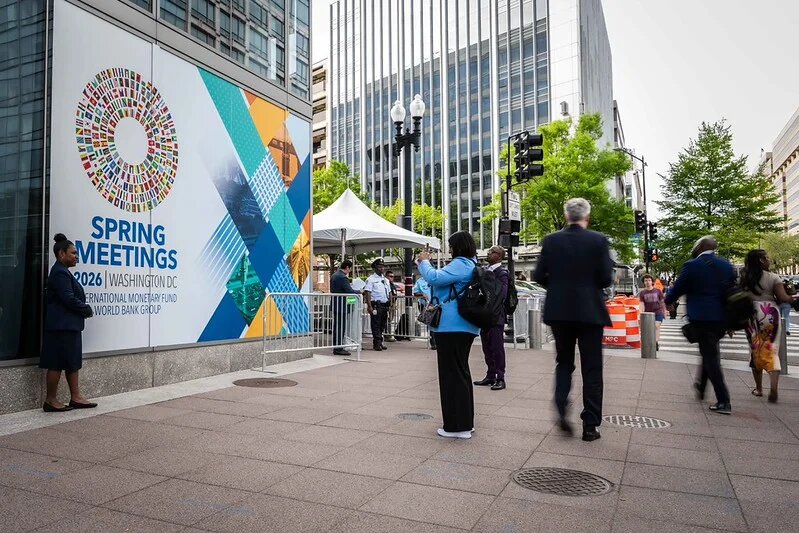
Thailand will welcome some of the world’s most influential development finance actors to Bangkok for the International Monetary Fund (IMF)-World Bank Annual Meetings from 12-18 October 2026. As the first meetings held in the Asia-Pacific region in almost a decade, they offer Southeast Asian communities affected by harmful investments an opportunity to bring regional cases before decision-makers and highlight the extent to which access to remedy depends on the World Bank Group’s (WBG) evolving interpretation of its responsibilities and commitments.
In June 2026, the Board of the International Finance Corporation (IFC), WBG’s private sector arm, rejected independent findings of safeguards failures in microfinance lending in Cambodia. Meanwhile, communities affected by coal plants financed by an IFC-backed bank in the Philippines are still seeking remedy after IFC sold its remaining shares in the bank last year. As the WBG promotes mobilizing private capital at the Annual Meetings and increasingly aligns government lending with private investment, its handling of these cases will undoubtedly weigh on its credibility, particularly given its already spotty human rights record and the historical marginalization of vulnerable communities by its investments.
However, there is reason for cautious optimism amid the development of a new policy for the WBG’s merged independent accountability mechanism and the review of the Sustainability Frameworks of the IFC and the Multilateral Investment Guarantee Agency (MIGA). Together, these processes could help safeguards and accountability keep pace with the WBG’s evolving financing models and strengthen communities’ ability to seek redress for the environmental and social harms these investments may cause.
In approving the merger in June 2026, the WBG Boards pledged non-regression, or existing protections should not be weakened as the Inspection Panel, Dispute Resolution Service, and Compliance Advisor Ombudsman (CAO) are brought into a single mechanism. The pledge will also be tested through the IFC/MIGA Sustainability Frameworks review, which will determine the responsibilities the new mechanism can examine. Its policy must also preserve independent scrutiny and ensure that findings carry sufficient decisional weight to secure action against investment-driven harms.
Disputed safeguards and the weight of accountability findings
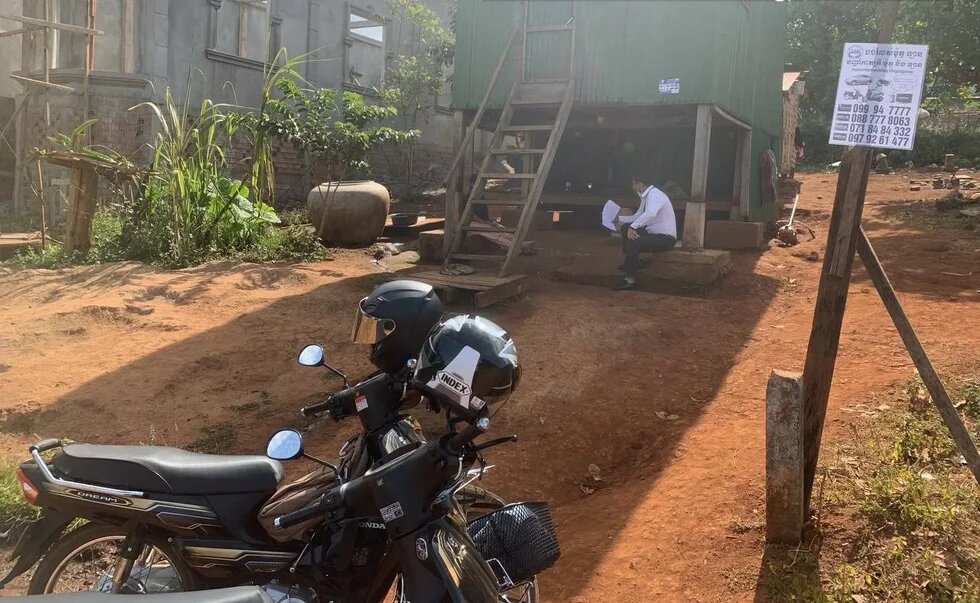
In Cambodia, a CAO investigation found failures in IFC’s assessment of vulnerable borrowers and social risks in investments involving six microfinance lenders, whose pressure on borrowers to repay unaffordable loans has also drawn media scrutiny. The 18 complainants reported land loss and food insecurity; families also reported children leaving school to help repay debts, while Indigenous complainants documented losses affecting their land and livelihoods. IFC management argued that its Sustainability Framework addressed how borrowers used loan proceeds, while receiving and repaying loans fell under Client Protection Principles. CAO disputed this interpretation, finding that existing safeguards were applicable.
In June 2026, the IFC Board declared no policy noncompliance, approving a Special Management Action Plan (MAP) for the complainants, subject to CAO monitoring, while suspending ongoing financial consumer protection cases in microfinance and barring new ones. The Special MAP provides for a facilitator to help complainants seek loan restructuring or adjusted repayments, assistance that the Board authorized on an exceptional basis. By referring coverage of these issues to the ongoing Sustainability Framework update, the Board made other borrowers’ access to accountability contingent on a future policy decision. More than 100 organizations and experts challenged the decision, questioning the credibility of an accountability system whose independent findings the Board had overridden while simultaneously restructuring that very system.
Meanwhile in the Philippines, community representatives, supported by the Philippine Movement for Climate Justice (PMCJ), filed a complaint in 2017 concerning coal plants financed by Rizal Commercial Banking Corporation (RCBC), an IFC client, citing pollution, displacement, livelihood losses, and broader climate concerns. Following the CAO’s findings of gaps in IFC’s assessment and supervision of the investment, the Management Action Plan (MAP) committed to assessing impacts at ten coal plants and supporting measures through RCBC to address identified harms.
In its final Management Progress Report, released in March 2026, IFC reported that 12 of the 22 commitments in its MAP had been effectively implemented and argued that it had exhausted all available means of influencing RCBC. The client declined to make IFC standards binding on high-risk borrowers and did not consent to sharing the final environmental and social gap analysis reports with complainants. After selling its remaining shares in December 2025, IFC reported its MAP implementation complete. Yet, despite spending USD 3.5 million on the MAP implementation, CAO rated the work addressing the ten coal plants as “not effective,” finding no material improvement for affected communities and keeping the case open for engagement with the Board.
IFC’s unfulfilled commitments in the RCBC case in the Philippines illustrate the broader pattern of uneven implementation of commitments in cases involving harmful bank investments. Examining closed complaints filed through 2022, Accountability Counsel found 277 completed commitments out of 553 arising from CAO cases, while interviews with affected communities showed that even completed commitments may still leave substantial harms unresolved.
While the Cambodian microfinance dispute concerns the reach of safeguards, and the RCBC coal case concerns IFC’s unfulfilled commitments under a Board-approved action plan, in both cases, communities rely on management to act on findings and on the Board to ensure effective implementation. In its April 2026 feedback on the draft report of the independent Task Force appointed by the Boards to evaluate integration of the accountability mechanisms, the Bank Information Center (BIC) identified management obstruction and inadequate action plans as problems that restructuring those mechanisms alone would leave unresolved. Giving the findings of these mechanisms decisional weight therefore requires publicly reasoned Board decisions and action plans developed with complainants, while preserving independent monitoring through the merger so that management’s account of its efforts can be assessed against the harms communities continue to experience on the ground.
Aligning safeguards and financing
The IFC and MIGA anticipate consultation on the first draft of their revised Sustainability Frameworks between October and December 2026. The Task Force’s final report proposed an indicative timetable for drafting and consulting on the merged mechanism’s policy in the first half of 2027, ahead of the new mechanism beginning operations in early 2028. At the Annual Meetings in Bangkok, Civil Society Policy Forum sessions on IFC standards and accountability in Asia, alongside the independent, CSO-led International Peoples Assembly and related gatherings, will provide opportunities to bring regional experiences into these discussions as communities and their allies seek to shape the policies and the protections they provide.
The Cambodian and Philippine cases illustrate why clarifying IFC’s responsibilities for harms linked to financial intermediary lending must be accompanied by a merger policy that safeguards independent scrutiny – especially when management contests the safeguards or claims that its commitments are fulfilled. The Task Force’s final report, which found the existing mechanisms generally effective, recommended “upward harmonization” toward established good practice, including authority to recommend remedial action and independently monitor implementation.
Published in August, the WBG Independent Evaluation Group’s (IEG) assessment of IFC’s 2012 Sustainability Framework examines how its safeguards have worked in practice. While it recognizes improvements in IFC’s environmental and social performance, it finds that favorable assessments of intermediary banks can coexist with limited visibility of the projects they finance. Its call to clarify IFC and client responsibilities for those projects speaks directly to the RCBC experience in the Philippines, where reliance on the client’s cooperation has left measures addressing the coal plants’ impacts unimplemented.
Building on the IEG assessment, 116 civil society organizations called in September 2026 for safeguards to follow financing through intermediary banks and to remain effective after project closure. They also urged the IFC to secure and use its influence over clients throughout the investment cycle, including by linking disbursements to environmental and social outcomes. In questioning the management’s reported aim of no “net” regression, the CSO signatories rejected harmonization with other institutions as a justification for weakening protections and raised concerns over possible limits on Indigenous Peoples’ rights to free, prior, and informed consent. These concerns arise as the first draft of the updated Sustainability Framework is being prepared for consultation and as decisions on its scope will also determine the safeguards against which the merged accountability mechanism will assess future complaints.
Securing remedial action
In the Philippines, IFC’s explanation for leaving RCBC rests partly on its small shareholding and RCBC’s limited influence over the coal plants, with the IFC management arguing that staying invested would yield little further progress. The constraints the IFC now cites should have been considered before the investment was made, with binding commitments in place to address harm and provide communities with access to the coal plants’ gap analysis reports needed to pursue their claims. The IEG assessment, which found that progress on MAPs sometimes slowed after IFC’s exit, reinforces the importance of using IFC’s influence during an investment to secure remedial commitments that remain effective after its financial relationship with the client ends.
In Cambodia, the CAO investigation also recommended binding covenants in IFC’s agreements with clients and due diligence attentive to vulnerable borrowers, recommendations that remain relevant to the Sustainability Framework review despite the Board’s rejection of the underlying findings. CAO also found that IFC had not reassessed whether lenders’ complaint mechanisms were accessible and culturally appropriate, or whether borrowers could use them without fear of retaliation.
The IFC and MIGA’s interim Remedial Action Framework, approved for a three-year period in 2025, already recognizes the importance of preparing for remedy, although the institutions’ own contributions remain voluntary – a limitation the Sustainability Framework review will need to address. Preserving independent monitoring of the Cambodia microfinance case’s Special MAP and the unfulfilled RCBC commitments in the Philippines through the merger would keep communities’ experience of unresolved harm in view. This would be consistent with international human rights standards like the UN Guiding Principles on Business and Human Rights, which call for grievance mechanisms to deliver rights-compatible outcomes and remedies. Legal scholar Johanna Aleria P. Lorenzo’s analysis takes this argument further, proposing that accountability mechanisms be empowered to direct reparation for harms caused by development banks’ breaches of their own policies, even where a breach of international law has not been established.
In the Philippines, the RCBC complainants have already urged the IFC to work with the International Bank for Reconstruction and Development (IBRD), a WBG lender to governments, and the Philippine government to provide remedies including health and livelihood support, resettlement, pollution control, and early coal-plant retirement. With the IFC maintaining that its own influence is exhausted, this proposal calls on the WBG to apply its commitment to closer coordination across its public and private arms to deliver remedies for communities already harmed by its investments. Meanwhile in Cambodia, IFC has also committed to supporting a financial ombudsman and improving responsible lending certification, measures whose value for affected borrowers will depend on whether they help address existing harms alongside preventing new ones.
In the region, as elsewhere, vulnerable communities have long borne the costs of investments that fail to prevent or address harm. For those who have spent years documenting and seeking accountability, the promise of safeguards has often proven fragile. For the Boards, the challenge is to demonstrate how closer WBG integration will protect vulnerable communities, especially when cases reveal disputed safeguards coverage, as in the Cambodia case, or unresolved remedial commitments, as in the Philippines case.
In the midst of the Annual Meetings in Bangkok, ahead of respective public consultations on the accountability mechanisms merger and the Sustainability Framework review, Southeast Asian civil society has reason to monitor both processes together, pressing for the Boards’ non-regression pledge to preserve safeguards coverage alongside independent scrutiny of the WBG’s response to established harms. If carried out in meaningful partnership with rights holders and their allies, these processes could help fulfill that promise, ensuring the WBG moves towards a more rights-respecting and community-centered approach to development in the years ahead.
___
Ian Salvaña works on environmental rights and corporate accountability across Asia.
Disclaimer: This published work was prepared with the support of the Heinrich Böll Stiftung. The views and analysis contained in the work are those of the author and do not necessarily represent the views of the foundation. The author is responsible for any liability claims against copyright breaches of graphics, photograph, images, audio, and text used.


