
Article
Women Environmental Human Rights Defenders (WEHRDs) stand at the frontline of Southeast Asia's environmental crises, yet they face disproportionate risks for protecting nature and communities. This article explores their struggles, resilience, and the legal reforms needed across ASEAN.

Understanding Women Environmental Human Rights Defenders (WEHRDs)
The triple planetary crisis, which refers to the three main connected devastating issues that the world currently faces on climate change, biodiversity loss, and pollution,[1] has been widely acknowledged but insufficiently addressed in recent years.
However, global response continue to prioritize high-level international diplomacy over meaningful protection for those at the forefront of the environmental justice and grassroots conservation. Among them are environmental human rights defenders, particularly women environmental human rights defenders (WEHRDs), who bear the social and ecological burdens of environmental destruction.
While WEHRDs serve as primary stewards of natural resources and communal lands, they are increasingly subjected to gender-based violence and marginalization. This pattern of systemic targeted violence against WEHRDs is a structural consequence of anthropocentrism, wherein legal and governance frameworks are often human-centric or centered on the benefits of human beings, thereby negating the negative externalities against the intrinsic value of the ecosystem.
Women who act, individually or in association with others, to promote or protect human rights, including the environment, land, and territory
Who are WEHRDs? The mandate of the United Nations Special Rapporteur on the situation of human rights defenders, defines WEHRDs as women who act, individually or in association with others, to promote or protect human rights, including the environment, land, and territory.[2] The importance of separating women into its own category lies in the fact that there have been layered experiences of oppression that are fundamentally different from men due amidst the shared living spaces that are destroyed due to extractive industries.[3]
The layer adds up when many lands which are possessed by indigenous and rural communities across Southeast Asia are grabbed or contaminated, leading to the loss of women’s sovereignty over their bodies, families, and spaces simultaneously.[4]
The current anthropocentric legal system that focuses on human material profit has failed to recognize these vital rights.[5] In Matthias Schmelzer’s conceptualized growth paradigm, developing nations have become trapped under an economic hegemony that reifies Gross Domestic Product (GDP) as the absolute landmark of national success.[6] Under this growth paradigm, all values that do not generate immediate liquid capital, such as ecological care work and community-based stewardship performed by women, are seen as invisible.[7]
how under extractive capitalist regimes, both nature and women are subordinated to the status of "the other."
Diving deeper into this structural invisibility, existentialist feminist theory has addressed this issue. In The Second Sex, Simone de Beauvoir introduced the concept of "the Other”, arguing that within patriarchal structures, woman is seen as subordinate to man.[8] Ecofeminist scholars such as Vandana Shiva and Ariel Salleh have also expanded this paradigm. They described how, under extractive capitalist regimes, both nature and women are subordinated to the status of "the Other." [9] According to them, women are treated as external commodities to be conquered, dominated, and plundered for masculine progress.[10]
Due to this situation, when WEHRDs resist a capital-focused legal environment does not view their actions as the exercise of a constitutional right, but rather as a disruption of the so-called developmental progress.
Case Studies in Indonesia, Thailand, and the Philippines
Amidst the rapid infamous development progress, Southeast Asia has emerged as a region of sacrifice zones, the geographic areas that are systematically destroyed and polluted to facilitate aggressive and large-scale extractive industries.[11] As a result of this, women environmental human rights defenders (WEHRDs) risk their lives confronting mega-corporations that are funded and supported by state power.[12]
Some instances of the violence and courageous mobilization experienced by WEHRDs in Southeast Asia can be observed in Indonesia, Thailand, and the Philippines. The case studies below demonstrate that the erosion of a safe environment is not an isolated geographical anomaly, but part of an extractive, corporate-backed pattern of gender-based violence spanning the archipelagos of Southeast Asia.[13]
Indonesia
In Indonesia, retaliatory legal threats may be classified into three distinct forms: textbook, concealed, and coercive Strategic Lawsuit Against Public Participation (SLAPPs).[14] The distinction lies in the manner in which the legal mechanisms are deployed. Textbook SLAPPs directly invoke private law provisions most commonly defamation to target and suppress public participation. By contrast concealed SLAPPs rely mostly on unrelated criminal charges to obscure their underlying retaliatory intent. Finally, coercive SLAPPs take advantage of the structurally disadvantaged positions of rights defenders whose grievances are ignored, thereby placing them in circumstances that precipitate incidental or situational offenses, which are subsequently used as the formal legal basis for prosecution.[15]
This retaliatory regime in Indonesia is equipped with some safeguards on the Anti-SLAPP, which is primarily regulated under Article 66 of Law No. 32/2009 on Environmental Protection and Management, which explicitly states that anyone fighting for the right to a proper and healthy environment cannot be prosecuted criminally or sued civilly.[16]
This protection was significantly strengthened by Constitutional Court (Mahkamah Konstitusi) Ruling No. 119/PUU-XXIII/2025, which expanded the scope of Anti-SLAPP to prevent courts from processing strategic corporate suits while an environmental dispute is ongoing,[17] as well as by other derivative laws, such as Supreme Court Regulation Number 1 of 2023 on Guidelines for Adjudicating Environmental Cases and Regulation of the Prosecution Service of the Republic of Indonesia No. 8 of 2022 on Guidelines for Handling Criminal Cases Involving Environmental Human Rights Defenders.
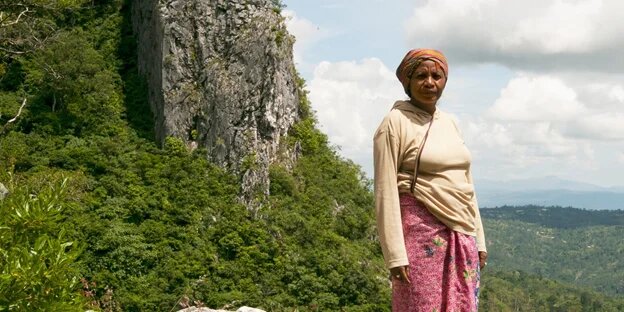
One of the most famous cases where WEHRDs rights were violated was the case of Mama Aleta Baun and the Mollo Ancestral Forest (East Nusa Tenggara). Mama Aleta Baun was an iconic pioneer of eco-resistance. When marble mining corporations invaded Pegunungan Mollo, an ancestral forest, and desecrated vital water springs, Mama Aleta empowered and mobilized indigenous women.[18]
Starting with a peaceful defense, which evolved into a months-long site occupation, hundreds of women sat weaving traditional clothes atop the marble rocks. This mobilization then led to severe corporate backlash.[19] Mama Aleta and her fellow defenders were subjected to retaliatory, with fabricated charges of defamation, property destruction, and incitement brought before local police.[20]
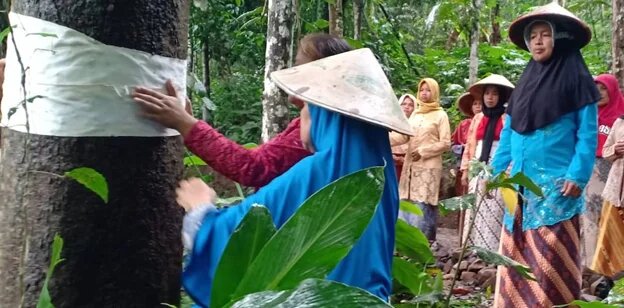
Aside from Mama Aleta, the Wadon Wadas, a grassroots women’s collective in Wadas Village, Central Java, that has consistently mobilized the resistance against a state-backed corporate plan to open a massive andesite stone quarry also serves as a landmark case. The planned quarry, intended to supply materials for the nearby Bener Dam National Strategic Project (PSN), directly threatens agricultural lands and local water sources.[21] Their peaceful assemblies, prayers, and artistic protests were faced with severe state repression, including violent security crackdowns and arbitrary detentions.[22]
Thailand
Thailand addressed its strategic litigation by amending its Criminal Procedure Code by introducing Sections 161/1 and 165/2.[23] Section 161/1 gives courts the explicit authority to summarily dismiss a criminal defamation lawsuit at the filing stage if it is proven that the plaintiff filed the case in bad faith or to intimidate a public interest advocate.[24]
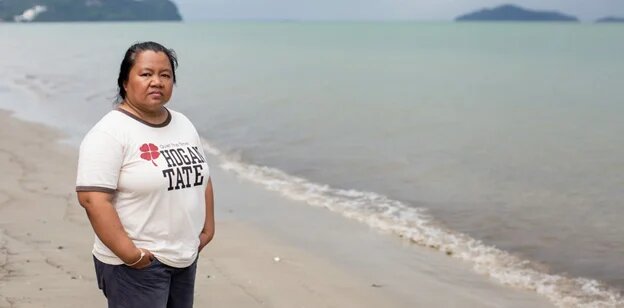
One notable example of WEHRD’s brave mobilization is reflected in the prolonged legal struggle by Sor Rattanamanee Polkla and the Khon Rak Ban Kerd Collective in Loei Province. In this case, human rights lawyer Sor Rattanamanee Polkla, together with the Community Resource Centre (CRC) represented 165 villagers – most of whom are women activists from the Khon Rak Ban Kerd group who were targeted by a gold mining corporation.[25]
When the community protested against environmental contamination caused by the mining operations, the corporation responded by filing more than a dozen criminal defamation lawsuits, recognized as Strategic Lawsuits Against Public Participation (SLAPPs).[26] Despite this, Sor successfully initiated a counterclaim compelling the corporation to provide health compensation to affected villagers and securing a court-ordered mandate for environmental rehabilitation of the village.[27]
The Philippines
The Philippines has developed procedural remedies to address such cases, specifically through the Rules of Procedure for Environmental Cases (A.M. No. 09-6-8-SC) also known as The Writ of Kalikasan.[28] This framework allows a defendant to raise a SLAPP defense at an early stage by filing a motion to dismiss.[29] The court is then required to conduct an expedited a summary hearing, where the burden shifts to the corporation to prove that its suit is not intended harass or silence the defender[30] Furthermore, the Writ of Kalikasan also provides a distinctive constitutional remedy, safeguarding the right to a balanced and healthful ecology.[31]
Writ of Kalikasan is a legal remedy in the Philippines that protects the constitutional right to a balanced and healthful ecology. It allows individuals and groups to seek court action against large-scale environmental harm affecting two or more cities or provinces.
The abduction of two coastal activists Jonila Castro and Jhed Tamano, was one of the significant cases against WEHRDs in the country. The two women were organizing fishing communities opposing against the destructive reclamation projects in Manila Bay, when they were violently abducted and disappeared by state security forces.[32] This extreme act, together with the widespread red-tagging, highlights the dual strategy employed by corporate-state alliances in the Philippines. On one hand, formal legal mechanisms – such as the courts – are used to exhaust and delegitimize environmental defenders through prolonged legal battles.
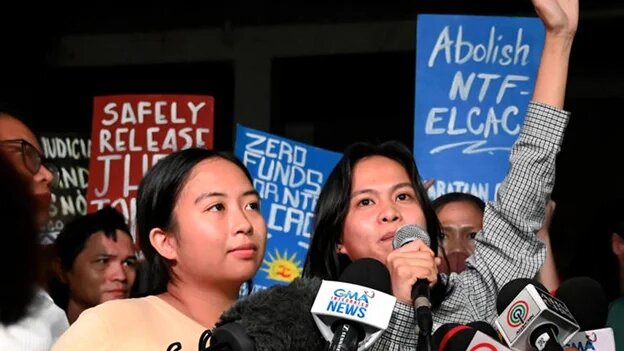
On the other, coercive and extrajudicial methods, including paramilitary tactics, are deployed to silence or eliminate them physically.[33] Weeks of domestic and international protests then led to the release from custody for the two activists after two weeks in captivity.[34] Their release was a result of a frank government press conference that accused the military for their abduction, which contradicted to the official claims that they had voluntarily surrendered.[35]
Turning the ASEAN Environmental Declaration into National Action to Protect WEHRDs
The adoption of the ASEAN Declaration on the Right to a Safe, Clean, Healthy, and Sustainable Environment in October 2025 is a significant milestone in Southeast Asia. Despite its non-binding characteristic, it serves as a powerful collective political statement at the regional level. However, this Declaration needs to be equipped with a robust and progressive Regional Implementation Plan and a dedicated Regional Focal Point specifically mandated to monitor and ensure the protection of Indigenous communities and Women Environmental Human Rights Defenders (WEHRDs).
Despite its non-binding characteristic, it serves as a powerful collective political statement at the regional level.
This oversight mechanism should be pursued, despite ASEAN’s historical commitment to the principle of non-interference and the lack of a supranational judiciary body to enforce compliance. Ultimately, the true test of this framework lies in its implementation at the national level, which requires member states to translate these regional mandates directly into binding domestic legislation and national action plans.
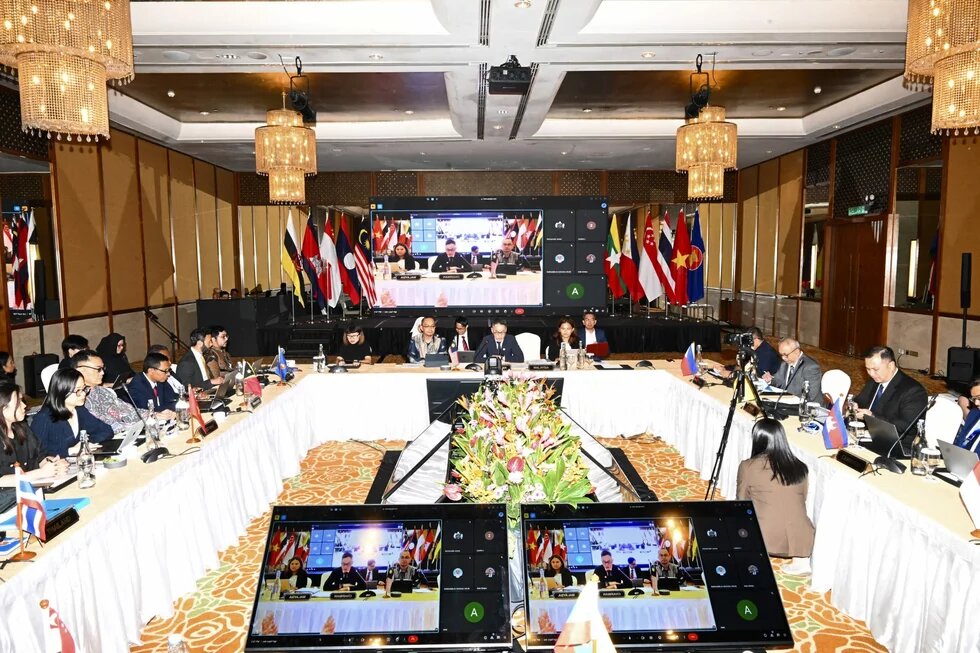
Moreover, this declaration also needs to reevaluate the current existence of GDP-focused growth models in the region, shifting the paradigm toward an eco-centric, rights-based human development approach. Additionally, there needs to be an assessment of how the existing Anti-SLAPP regulations in Indonesia, Thailand, and the Philippines can be more effectively implemented to protect environmental human rights defenders, in order to dismantle the structural violence, criminalization, and weaponized Strategic Lawsuits Against Public Participation (SLAPPs) targeting WEHRDs across the three countries.
By translating the 2025 regional standards into binding national frameworks and leveraging a coordinating regional focal point, ASEAN can bridge the gap between progressive text and grassroots reality, transforming abstract environmental rights declarations into concrete legal protections for the women defending the region's ecosystems.
__
Prilia Kartika Apsari is environmental lawyer, LL.M. graduate from Columbia Law School, and a fellow at Environmental Law Alliance Worldwide (ELAW) with extensive experience in environmental law, climate justice, and regional policy advocacy in Southeast Asia.
Disclaimer: This published work was prepared with the support of the Heinrich Böll Stiftung. The views and analysis contained in the work are those of the author and do not necessarily represent the views of the foundation. The author is responsible for any liability claims against copyright breaches of graphics, photograph, images, audio, and text used.
References
[1]Admin, “What is the Triple Planetary Crisis?”, https://unfccc.int/news/what-is-the-triple-planetary-crisis, accessed June 23, 2026.
[2]UN Human Rights Council, Report of the Special Rapporteur, A/HRC/40/60, para. 20.
[3]Vandana Shiva, Staying Alive: Women, Ecology, and Development (London: Zed Books, 2020), pg. 54-58.
[4]Ariel Salleh, Ecofeminism as Politics: Nature, Marx and the Postmodern (London: Zed Books, 2017), 115.
[5]Matthias Schmelzer, The Hegemony of Growth: The OECD and the Making of the Economic Growth Paradigm(Cambridge: Cambridge University Press, 2016), 102.
[6]Ibid., pg. 114.
[7]Ariel Salleh, Ecofeminism as Politics: Nature, Marx and the Postmodern, 2nd ed. (London: Zed Books, 2017), 141.
[8]Simone de Beauvoir, The Second Sex, trans. Constance Borde and Sheila Malovany-Chevallier (New York: Alfred A. Knopf, 2010), 7.
[9]Vandana Shiva, Staying Alive: Women, Ecology, and Development (London: Zed Books, 2020), 38.
[10]Ariel Salleh, Ecofeminism as Politics: Nature, Marx and the Postmodern, 120.
[11]Steve Lerner, Sacrifice Zones: The Front Lines of Toxic Chemical Exposure in the United States (Cambridge: MIT Press, 2010), 2-5 (Adapted for Southeast Asian context).
[12]Global Witness, Standing Firm: The Land and Environmental Defenders on the Frontlines of the Climate Crisis (London: Global Witness, 2023).
[13]International Commission of Jurists (ICJ), Strategic Lawsuits Against Public Participation (SLAPPs) targeting Human Rights Defenders in Southeast Asia, Briefing Note (Bangkok: ICJ, 2020), 11.
[14]Marsya Mutmainah Handayani, Julio Castor Achmadi, and Prilia Kartika Apsari, "Berbagai Wajah Fenomena SLAPP di Indonesia," Jurnal Hukum Lingkungan Indonesia 8, no. 1 (2021): pg. 168-174 https://doi.org/10.38011/jhli.v8i1.369.
[15]Ibid.
[16]Republic of Indonesia, Law Number 32 of 2009 on Environmental Protection and Management, State Gazette No. 140 (2009), Art. 66.
[17]Constitutional Court of the Republic of Indonesia, Decision Number 119/PUU-XXIII/2025 on the Judicial Review of Article 66 of Law No. 32/2009 (Jakarta: MKRI, 2025).
[18]The Goldman Environmental Prize, “Aleta Baun” https://www.goldmanprize.org/recipient/aleta-baun/, accessed May 30 2026.
[19]Mongabay, “Anti-Mining Activist from Indonesia Wins Top Green Honor”, https://news.mongabay.com/2013/04/anti-mining-activist-from-indonesia-wins-top-green-honor/, accessed May 31, 2026.
[20]Ibid.
[21]Ibid.
[22]Ibid.
[23]Kingdom of Thailand, Act Amending the Criminal Procedure Code (No. 34), B.E. 2561 (2018), Sections 161/1 and 165/2.
[24]Ibid.
[25]Admin, “Sor Rattanamanee Polkla: We are Lawyers, we are law-users, but we are also law makers”, https://www.lawyersforlawyers.org/sor-rattanamanee-polkla-we-are-lawyers-we-are-law-users-but-we-are-also-law-makers/, accessed May 30 2026.
[26]Ibid.
[27]Ibid.
[28]Supreme Court of the Philippines, Rules of Procedure for Environmental Cases, A.M. No. 09-6-8-SC (April 2010), Rule 6 (Strategic Lawsuit Against Public Participation).
[29]Ibid., Rule 6, Section 2.
[30]Ibid., Section 4.
[31]Ibid., Rule 7 (Writ of Kalikasan).
[32]Admin, “Defamation Charges Dropped Against Filipino Environmental Defenders Jhed Tamano and Jonila Castro”, https://globalwitness.org/en/press-releases/defamation-charges-dropped-against-filipino-environmental-defenders-jhed-tamano-and-jonila-castro/, accessed May 29 2026.
[33]Ibid.
[34]AFP, “Two Activists Freed in Philippines After Being Abducted by Military”, https://www.aljazeera.com/news/2023/9/21/two-activists-freed-in-philippines-after-being-abducted-by-the-military, accessed June 21 2026.
[35]Ibid.


