
A women-centered safe space is the foundation of any feminist support system. In the heart of Bangkok, International Women’s Day wasn’t just a date on the calendar; it was a living, breathing practice of sisterhood. Leading feminist practitioners gathered to share a vision: "How do we build spaces where we aren’t just sidelined, but are the beating heart?"
From the frontlines of legal feminist support to the decks of underground DJ booths, many powerful stories within Bangkok’s inspiring feminist community, sharing their journey.

The warm afternoon sun shone over a small, not-so-secret bar in the heart of Bangkok on International Women’s Day. Inside the dim room, the atmosphere thrummed with the overflowing energy of women and queer communities. These young people had come together with one shared vision: to dream collectively of a new world where they are not sidelined but its beating heart.
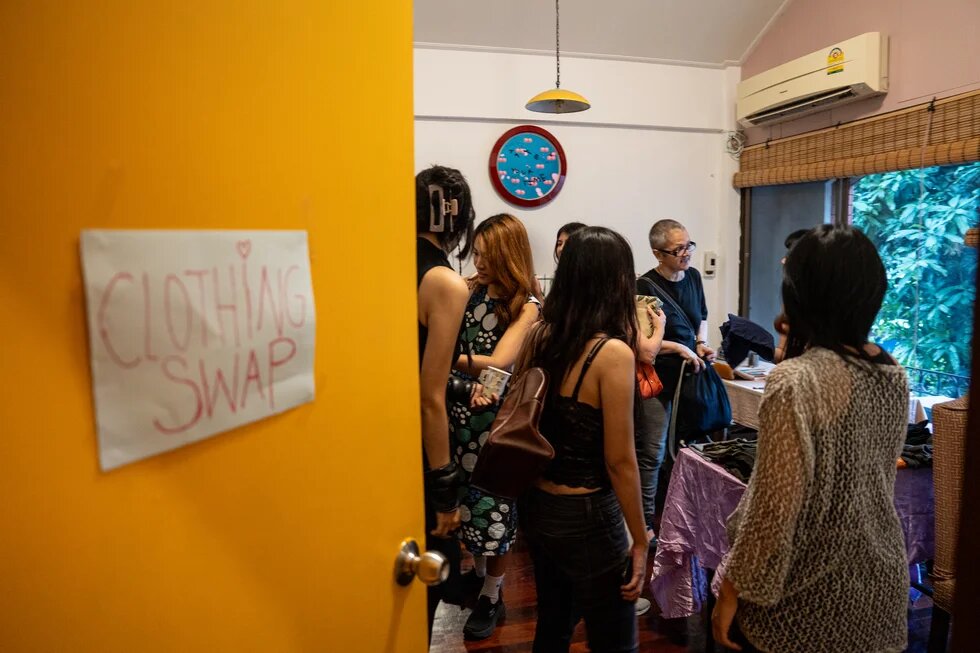
Chatters and laughters flowed over lemon loaves and herbal tea. In a dedicated corner, attendees browsed pre-loved clothes brought by their peers. Voices wowing and cheering echoed in the room as participants swapped pieces and introduce to each other.
Soon the main program was about to commence. This wasn't a lecture, there were no experts on a podium. These were women —leaders, organizers, artists, creators, and dreamers–who see the power of “Sisterhood” and dedicate their works to make it a living reality.
The conversation began with three storytellers who transformed their personal beliefs into a safe space for the community:
- Noon (Thararat Panya): founder of Feminist Legal Support, lawyer and activist who leads legal and policy
- MJ (Didtita Simcharoen): Co-founder of all-women dj collective Sam Mae Krua, who connects people through music and connection-centered gatherings.
- Fongbeer (Putsalanda Matchasoi): entrepreneur and advocate for women's sexual health and the courage to proudly embrace one's own body.
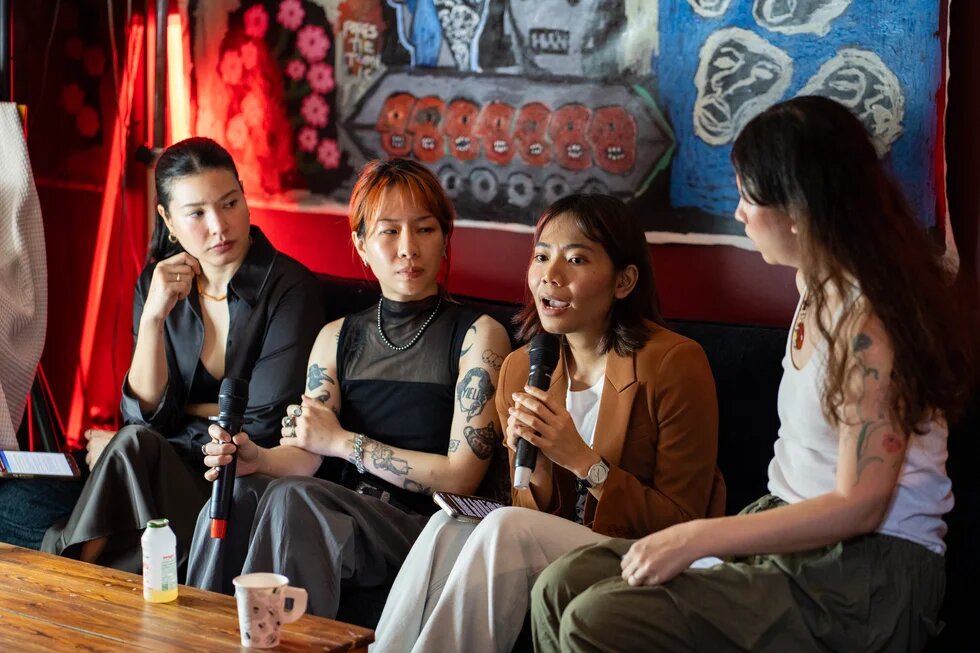
Noon opened the dialogue by laying bare the systemic hurdles gender-based violence survivors face. In a justice system that can often feel brutal and indifferent, she noted that many survivors are left feeling silenced, powerless, or paralyzed by self-doubt. Noon emphasized that a feminist safe space is not just a comfort—it is a vital pre-emptive infrastructure. To seek justice and eventually heal, a survivor must first feel heard and believed. For Noon, the community is the first line of defense; it provides the strength necessary to face a system that was not built with them in mind.
MJ recounted on the origins of the Sam Mae Krua collective, which began with a simple desire for joy and music. However, this spark reflected a stark reality: the underground scene remains overwhelmingly male-dominated. Recognizing the wealth of talent among women and queer DJs, MJ chose to build her own stage rather than wait for an invitation. She also spoke on "Swasdi Tuesday," a monthly gathering designed for deeper connection. By centering low-intensity, collaborative acts like cooking and sharing music, she fosters an organic camaraderie that evolves into a space where shared struggles can be discussed without pressure. While acknowledging the current exclusive and curated nature of this gathering, MJ views it as a necessary starting point. “I started small as it is within my capacity, and it is an evolving practice that we in the community are learning together. Feminist safe spaces don’t need to look like an institution, practices can look different depending on your circles.
Fongbeer shared the journey behind So pure and Studio Lams, projects born from the frustration of facing "taboo" labels around sexual health. Refusing to let curiosity be stifled by shame, she built her platforms as defiant, judgment-free zones.
“Building trust is of utmost importance. I do it by putting myself out there first, openly talking about my stories and showing people that there is a real person behind these channels, who shares the same experiences with them, and who they can confide with on these topics.”
For Fongbeer, normalizing conversations about pleasure, sexual wellbeing, and bodily autonomy is the goal behind everything she does. Her work is rooted in the hope that by speaking the "unspeakable," we can finally replace fear with a proud, informed embrace of our own bodies.
Those conversations reminded us that "Having a space to speak our truth is not a luxury, it is a necessity. When we share our experiences about our bodies, that's when we reclaim our power"
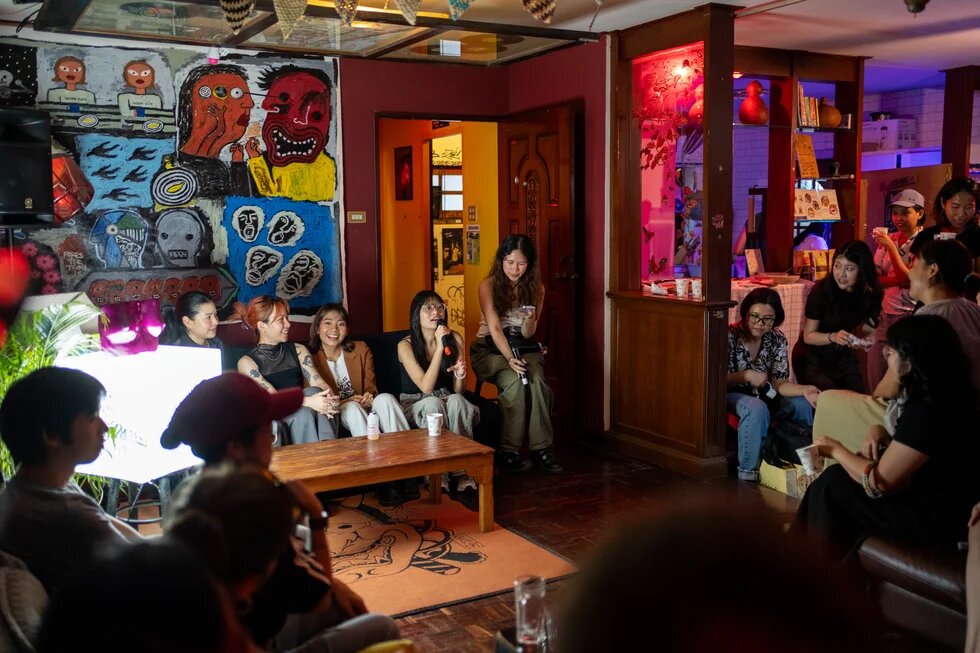
As the talk continued, it shifted to an open and invigorated dialogue. No stiff Q&A session was had; instead, attendees took turn to share their aspirations, their struggles against patriarchal oppression, and their contributions for collective empowerment and community building.
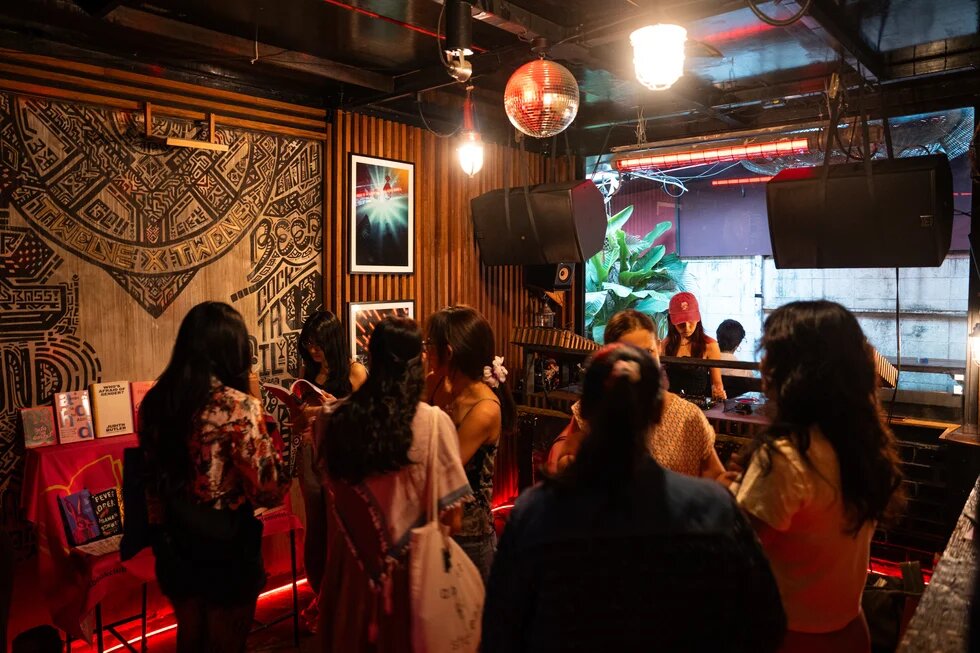
The event concluded with continued casual networking and music provided by DJs Jayja, Ackerlady, and closing the night with KiKate.
To all women and souls fighting against societal constraints, "When we come together, we are strong."
May you find happiness, may you possess freedom, and may you have the courage to break down the boundaries and limitations that confine you, to step out of all bondage.
Happy International Women's Day. The bonds of sisterhood have been formed and will remain and continue to grow.
__
Kannika Yodnin has worked at the Heinrich Böll Foundation Southeast Asia since 2023 and heads the Democracy and Participation Program. Her responsibilities include supporting human rights defenders as well as LGBTIQ and feminist initiatives throughout Southeast Asia.
Didtita Simcharoen is a translator and writer closely involved with Thailand-based human rights organizations, including Heinrich Böll Foundation Southeast Asia. Her main focus is freedom of expression, gender equality, and political rights. She is a co-founder of Sam Mae Krua, a DJ collective aiming to showcase underrepresented talents of women and queer artists.
Disclaimer: This published work was prepared with the support of the Heinrich Böll Stiftung. The views and analysis contained in the work are those of the author and do not necessarily represent the views of the foundation. The author is responsible for any liability claims against copyright breaches of graphics, photograph, images, audio, and text used.


