
Article
In the 2024-2025 crop year, Vietnam’s coffee industry brewed a historic milestone with a record export turnover of $8.4 billion, surpassing the period by $3 billion and affirming its dominant position on the global Robusta map. Yet behind the "sweetness" of these billion-dollar figures lies a bitter reality. Coffee farmers in the Central Highlands – the nation’s coffee capital have been continuously battling extreme weather conditions in recent years, from severe early-season droughts to destructive late-season floods. Sustaining the “Robusta King” throne now depends not only on market strength but on resilience in the face of climate volatility, ecological stress, and the growing pressure to adapt production systems to an increasingly unpredictable environment.
This article is part of web-dossier "Brewing Resilience: Coffee and Climate Change in Southeast Asia"

A coffee bean’s journey
The history of Vietnamese coffee is an interesting journey of ups and downs. Coffee beans arrived with the French in 1857, but it took more than half a century of testing before Buôn Ma Thuột (Đắk Lắk) was officially chosen in 1914 as the "sanctuary" for Robusta trees (Coffea canephora). Thanks to the advantage of basalt-red soil and a cool climate, by 1922, Buôn Ma Thuột was covered in vast coffee plantations. Initially, this dark, thick drink was mainly exported to France or served for the upper class. Over time, however, coffee culture seeped deep into Vietnamese life.
After the war ended and Vietnam was reunified, especially following the economic Renovation (Doi Moi) milestone in 1986, coffee cultivation truly broke through. In Đắk Lắk and other Central Highlands provinces like Gia Lai and Lâm Đồng, vast specialized farming areas were continuously expanded. In the global marketplace, Vietnam quickly rose to become the world's second-largest producer and the "King of Robusta Exports," holding about 40% of the global market share.
Currently, Vietnam's coffee area has reached over 720,000 hectares, of which approximately 90 to 95 percent is Robusta concentrated in the Central Highlands, and the remaining 5 percent is Arabica grown in Northern mountainous provinces (Sơn La, Điện Biên), Lâm Đồng, and Quảng Trị. In Đắk Lắk alone, coffee about 35 percent of Gross Regional Domestic Product (GRDP) and accounts for 85 percent of export turnover, while also being the direct livelihood for 60 percent of farming households. Therefore, even minor climate variations in the Central Highlands can have immediate consequences for global coffee supply and for the livelihoods of millions of people working across the coffee sector.
"Golden season" and the unpredictable weather
A recent report by the Vietnam Coffee – Cocoa Association (VICOFA) states that the 2024–2025 crop year was truly a "golden season," as green coffee bean prices remained above 110,000 VND/kg (4.17 USD) throughout the harvest. Total output was estimated to reach over 1.7 million tons, generating $8.4 billion in turnover. However, towards the end of the season, intermingled with the record numbers was growing concern about sustainable development as weather conditions became increasingly extreme.
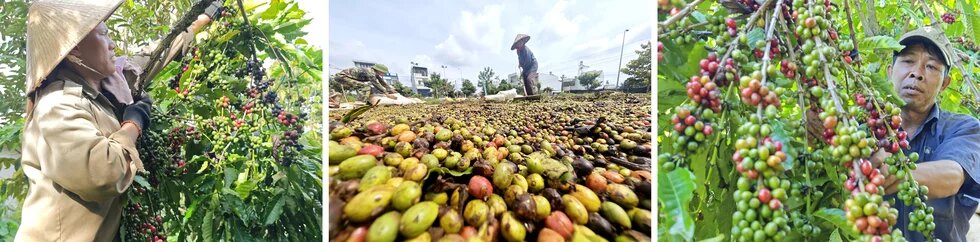
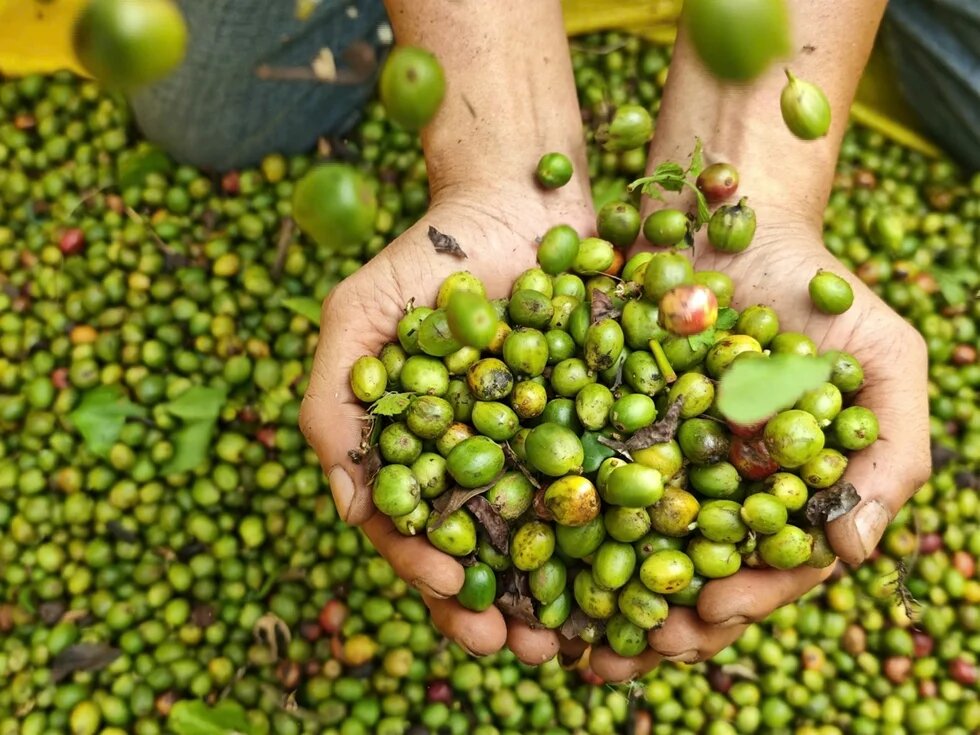
In November 2025, just as Central Highlands farmers entered the peak harvest, severe floods battered the region. At a coffee farm in Krông Buk commune (Đắk Lắk), Ms. Lê Thị Liên, a coffee farmer looked painfully at the "brown gold" falling around the roots, "We waited years for good prices, only to be heartbroken seeing the fruits dropped. Persistent rain made the fruit waterlogged and cracked, and hired labor costs doubled or tripled, significantly eroding profits".

Facing new challenges, the Vietnam Coffee – Cocoa Association (VICOFA) has identified 3 pillars of sustainable development:
First, it will cooperate closely with international organizations such as 4C Services (Certification for Climate, Conservation and Communities), IDH (the Sustainable Trade Initiative), Rainforest Alliance, and Forest Trends to build a transparent, low-emission supply chain. The focus is on supporting enterprises in accessing green finance, participating in the carbon credit market, and strictly complying with the European Union Deforestation Regulation (EUDR).
Second, it will petition the Ministry of Agriculture and Environment to establish a national brand strategy for Vietnamese Robusta coffee. At the same time, standardize the set of international benchmarks for Robusta and specialty Robusta (Fine Robusta) to increase value instead rather than pursue sheer volume.
Third, the association proposes promoting commissioned scientific research for institutions such as the WASI Institute. This would maximize resources to breed new Robusta varieties and genetic lines capable of withstanding extreme drought and resisting pests, creating a "natural shield" against climate change.
In low-lying areas such as Krông Bông and Yang Mao communes (Đắk Lắk), the situation was even more tragic. Ms. Đinh Thị Ngọc, owner of a coffee farm by the Ea Găm stream, recounted helplessly: "Flash floods swept through the garden, water flowed like a stream, causing the fruits to fall. On this one hectare, I usually harvest 3 tons of beans, but this year is considered a loss. I am more worried that the trees, soaked in water for days, are shedding leaves and green fruit, making recovery for the next season very difficult.".
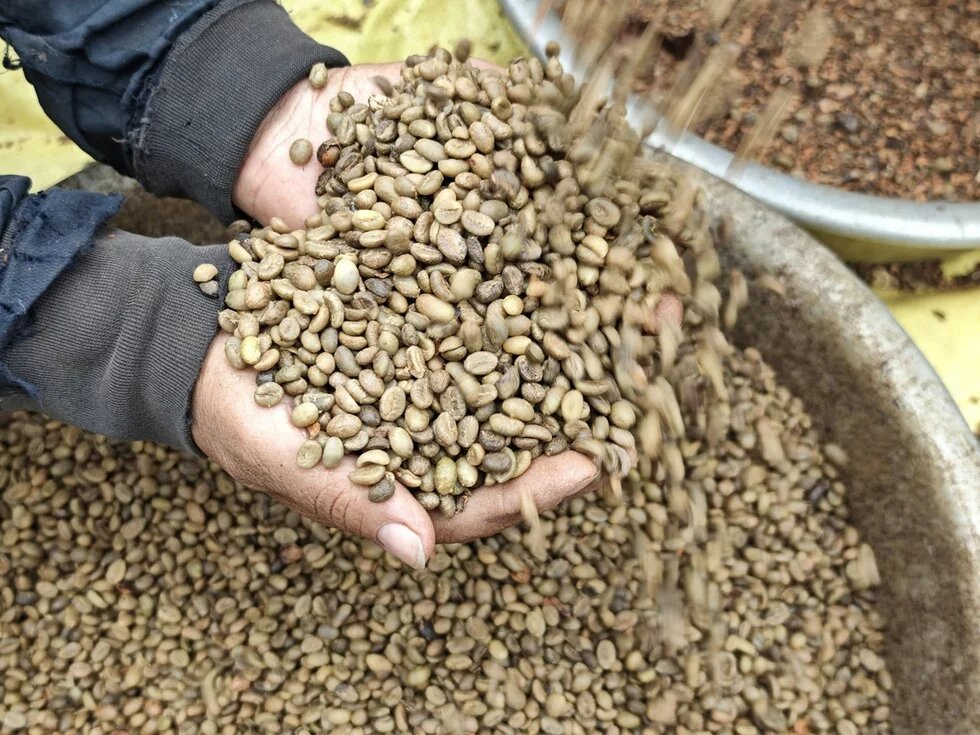
Facing the impact of the weather, Dr. Phan Việt Hà, Deputy Director of the Western Highlands Agriculture and Forestry Science Institute (WASI), commented, "Late rains at the end of the rainy season and the beginning of the dry season cause major obstacles for harvesting. Many gardens are ripe but cannot be picked in time, leading to pests and fruit drop. Rain and wind during this period also significantly affect the drying stage, thereby reducing coffee quality”.
Unpacking the duality of climate threats to the coffee industry
The sun was scorching hot, looking at the coffee garden with withered, dry leaves was heartbreaking. My garden is far from the dam reservoir, I could only irrigate using drilled wells, but the water source also ran dry. - Mr. Lê Minh Tĩnh
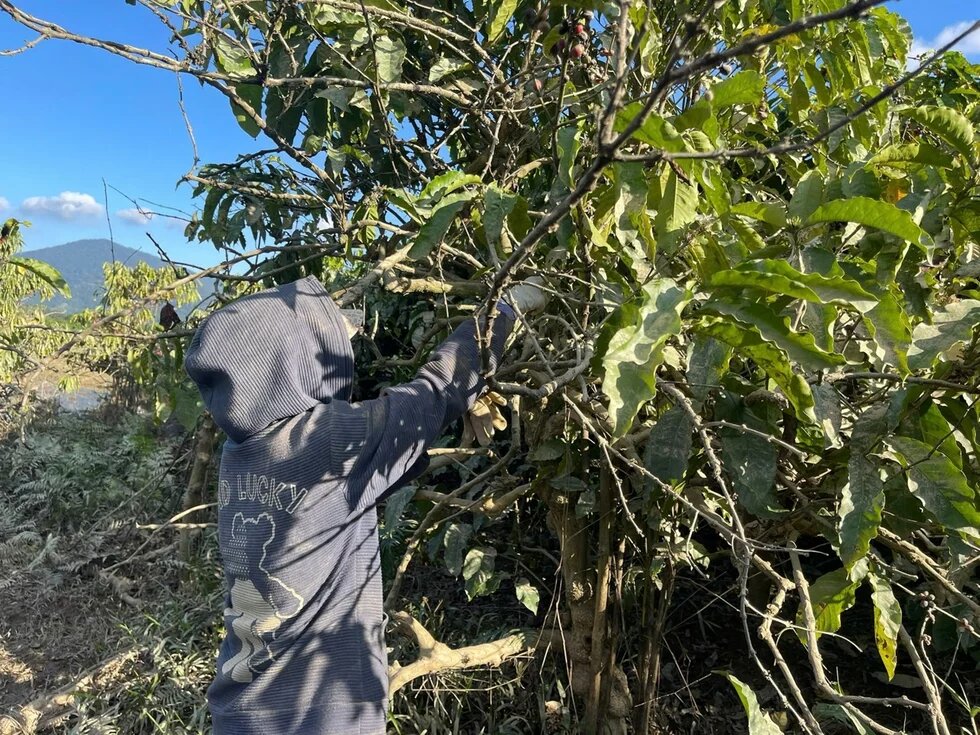
The concerning thing is that the extreme flooding of 2025 are just a slice of the climate change picture. According to Le Lan, et al (2024), the Central Highlands farmers are suffering a "double impact" consisting of early-season drought and late-season floods. Survey data shows that severe drought (usually from February to April, the flowering stage) can reduce yield by an average of 22.7%. Conversely, at the end of the year (September to November), excessive heavy rain causes mold, making another approximate 18.5% of production "evaporate".
In reality, contrasting with the floods at the end of 2025, the 2024 dry season witnessed drought lasting until May, depleting groundwater. "The sun was scorching hot, looking at the coffee garden with withered, dry leaves was heartbreaking. My garden is far from the dam reservoir, I could only irrigate using drilled wells, but the water source also ran dry", said Mr. Lê Minh Tĩnh from Ea Ô commune, Đắk Lắk. His one hectare of coffee trees yielded only two tons of beans, which was a decrease of about 30 percent.
Weather abnormalities also disrupt the biological cycle of coffee tree. Mr. Lý Thông Hạ from Di Linh, Lâm Đồng, shared that prolonged rainy seasons cause growth disorders. The fruit has not yet been harvested, but the tree has already flowered due to high humidity. During harvest, flowers either fall off or bloom unevenly, resulting in empty beans and seriously reducing the yield of the following season
A green revolution for the red soil land
Holding the position of the world’s “Robusta King,” Vietnam’s coffee industry is nevertheless confronting mounting challenges. These range from the impacts of climate change and the depletion of soil and water resources to intensifying market pressures and increasingly stringent international requirements on carbon emissions and traceability. Most notably, the European Union Deforestation Regulation (EUDR) has been postponed for another year, shifting the main compliance deadline to 30 December 2026, and to 30 June 2027 for smaller businesses, with the aim of giving companies and authorities more time to prepare.
This regulation presents a major technical barrier, as Europe accounts for 40 percent of Vietnam's coffee export volume, with countries like Germany, Italy, and Belgium being major importers. Products be grown on deforested land and must demonstrate transparent traceability.
Instead of relying solely on nature's favors, the Vietnamese coffee industry is compelled to transform and adapt. According to Dr. Phan Việt Hà, a comprehensive climate adaptation strategy is required - from replanting varieties to revising farming processes and production thinking. Dr. Hà suggests a "dodge drought, avoid rain" strategy using science: "Localities that often encounter late rain should consider late-ripening varieties like TR14 and TR15. These varieties only ripen in January or February, which helps completely avoid late-season rains and spreads out the season to avoid the main harvest peak, thereby reducing labor pressure.”
Parallel to that is the application of smart farming models that have proven effective. A typical example is the cooperation program (2023–2025) between the National Agricultural Extension Center, WASI, and Binh Dien Fertilizer Company. Through balanced fertilization, Integrated Pest Management (IPM), and water-saving irrigation, farmers have increased profits by 89 - 124 million VND/ha (3,500 - 4,900 USD) while significantly reducing emissions.
Europe accounts for 40% of Vietnam's coffee export volume, with countries like Germany, Italy, and Belgium being major importers.
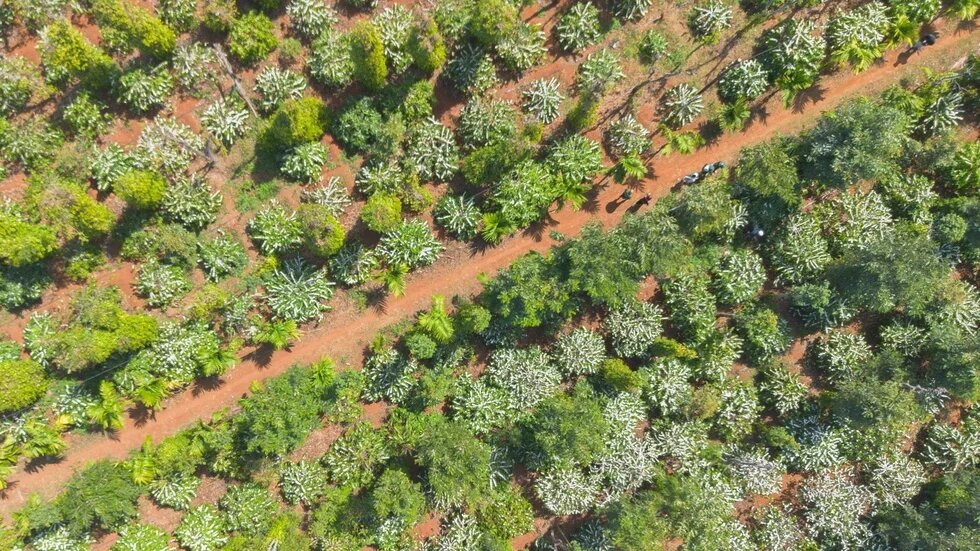
In particular, the intercropping shade trees such as durian, pepper, macadamia has become an effective "ecological shield" in Đắk Lắk. Shade trees help regulate the microclimate, reduce evaporation in the dry season, and stabilize soil in the rainy season. Coffee productivity in the pepper intercropping model is 10-15 percent higher than the monoculture control, while also diversifying farmers’ income sources.
Beyond varieties and techniques, production thinking must also change before the EUDR comes into effect on December 30, 2026. "Most areas favorable for coffee have been planted. Expanding into new areas risks encroaching on forest land, which would violate European regulations. Therefore, instead of developing new plantations, we should focus on replanting old gardens and adopting integrated farming systems. With current favorable coffee prices, prioritizing quality over quantity is the most appropriate direction," Dr. Phan Việt Hà emphasized.
Most areas favorable for coffee have been planted. Expanding into new areas risks encroaching on forest land, which would violate European regulations. - Dr. Phan Việt Hà
Leaders of the WASI Institute also frankly acknowledged that, in terms of quality, Vietnamese coffee remains at an average level, partly due to the habit of mass harvesting and the widespread practice of picking green fruit. Therefore, in the long run, the industry must focus on improving the harvesting stage and encouraging the picking of ripe cherries to enhance coffee quality. Additionally, developing specialty coffee linked with output markets and international coffee chains is also a potential direction to increase the value and brand of Vietnamese coffee.
Conclusion
In conclusion, from its colonial introduction to its rise as a global powerhouse, coffee has profoundly shaped both the landscapes and livelihoods of Vietnam’s Central Highlands. With total export turnover exceeding US$8 billion, coffee has firmly established itself as a pillar of Vietnamese agriculture. However, increasing climate volatility now threatens these achievements, placing farmers and global supply chains under growing strain.
Preserving Vietnam’s position as the world’s leading Robusta producer is essential to maintaining its Robusta King status. This will require a decisive shift toward climate resilient and sustainable farming practices. It also demands higher quality and traceable production, as well as strict compliance with international standards. Only through such a transformation can the Central Highlands’ brown gold continue to enhance its value, secure stable livelihoods for farmers, and build long term resilience for the future.
__
Le Dinh Tuyen is a journalist at Thanh Nien Newspaper covering environment issues in Vietnam and Mekong region.
Disclaimer: This published work was prepared with the support of the Heinrich Böll Stiftung. The views and analysis contained in the work are those of the author and do not necessarily represent the views of the foundation. The author is responsible for any liability claims against copyright breaches of graphics, photograph, images, audio, and text used.
References
Agriculture.vn. (2025, September 8). New coffee varieties elevate Vietnam’s coffee industry. Agriculture.vn. https://agriculture.vn/nhung-giong-moi-nang-tam-cay-ca-phe-1103.html
Cafesba. (2025, October 18). Doi Moi policy boosts Vietnam’s coffee production. Cafesba. https://cafesba.com/node/55
Coffee talk. (2025, November). Sever flooding in Central Vietnam threatens coffee harvest. CoffeeTalk. https://coffeetalk.com/daily-dose/from-origin/11-2025/108848/
Do, M. H. (2023). Case Study: Coffee in Dak Lak Province. Thailand–Vietnam Socio-Economic Panel (TVSEP). https://www.tvsep.de/fileadmin/tvsep/Materials_own/Case_studies/TVSEP_Case_study_1_Coffee_in_Dak_Lak_province_1.pdf
Global Coffee Report. (2025, March 19). Vietnam’s coffee harvest headache. Global Coffee Report. https://www.gcrmag.com/vietnams-coffee-harvest-headache/
H Xiu. (2020, May 29). Dak Lak uses intercropping model to adapt to climate change. VOVWORLD. https://vovworld.vn/en-US/village-life/dak-lak-uses-intercropping-model-to-adapt-to-climate-change-865070.vov
Helena Coffee Vietnam. (2022, January 14). Vietnamese coffee history: Things you never know about Vietnamese coffee. Helena Coffee Vietnam. https://www.helenacoffee.vn/vietnamese-coffee-history/
Hoang, V., Nguyen, A. (2019). PGI Buon Ma Thuot Coffee in Vietnam. In: Arfini, F., Bellassen, V. (eds) Sustainability of European Food Quality Schemes. Springer, Cham. https://doi.org/10.1007/978-3-030-27508-2_14
Koltiva. (2024, December 27). Turning challenges into opportunities: Vietnam’s coffee industry gears up for EUDR regulation compliance amidst delay. Koltiva. https://www.koltiva.com/post/turning-challenges-into-opportunities-vietnam-s-coffee-industry-gears-up-for-eudr-regulation-compli
Le Lan, A., Mushtaq, S., Wang, Q. J., Barlis, A., Deniau, A., Byrareddy, V. M., Huynh, T. A., & Swaans, K. (2024). Are Vietnamese coffee farmers willing to pay for weather index insurance? International Journal of Disaster Risk Reduction, 100, 104185. https://doi.org/10.1016/j.ijdrr.2023.104185
Ministry of Agriculture and Environment. (2025, October 27). Coffee exports hit record high of US$ 8.4 bln. Ministry of Agriculture and Environment. https://en.mae.gov.vn/SMPT_Publishing_UC/KhaiThac/TinTuc/pInTinTuc.aspx?ItemID=9069
Nguyen, D. (2025, November 20). Vietnam coffee: Heavy rain threatens Robusta output in Dak Lak. Bloomberg. https://www.bloomberg.com/news/articles/2025-11-20/vietnam-coffee-heavy-rain-threatens-robusta-output-in-dak-lak
Nguyen, P. L., & Nguyen, M. D. (2019). Drought adaptation and coping strategies among coffee farmers in the Central Highlands of Vietnam. Journal of Agriculture and Environmental Sciences, 8(1), 52–66. https://doi.org/10.15640/jaes.v8n1a6
Qahwa World. (2025, March 19). Vietnam’s coffee harvest hit by climate challenges. Qahwa World. https://qahwaworld.com/news/vietnams-coffee-harvest-hit-by-climate-challenges/
Solidaridad Network. (2024). Coffee producer country profile: Vietnam. https://www.solidaridadnetwork.org/wp-content/uploads/2024/06/The-Grounds-for-Sharing-annex-Vietnam.pdf
Tuổi Trẻ News. (2025, March 12). Vietnam’s coffee industry faces challenges under EU deforestation regulation. Tuổi Trẻ News. https://news.tuoitre.vn/vietnams-coffee-industry-faces-challenges-under-eu-deforestation-regulation-10385181.htm
U.S. Department of Agriculture, Foreign Agricultural Service. (2025, May 19). Vietnam: Coffee Annual (Report No. VM2025-0018).
VietNam Coffee United. (2025, January 14). Dak Lak Coffee: The “Capital” of Robusta in Vietnam. VietNam Coffee United. https://vietnamcoffeeunited.com/dak-lak-coffee-the-capital-of-robusta-in-vietnam/
Vietnam.vn. (2023, June 14). Implementing smart coffee cultivation program in Central Highlands during 2023–2025. Vietnam.vn. https://van.nongnghiepmoitruong.vn/implementing-smart-coffee-cultivation-program-in-central-highlands-during-2023-2025-d354066.html
Viện Khoa Học Kỹ thuật Nông Lâm nghiệp Tây Nguyên (WASI). (n.d.). Trang chủ. Retrieved December 10, 2025, from https://wasi.org.vn/
VnCommEx. (2024). Vietnam Coffee Export Report 2024 – 2025. https://vncommex.com/publication/bao-cao-ca-phe-viet-nam/


