
Article
This year, the Philippines was among several Southeast Asian countries to experience the hottest of summers – one that resulted in school closures and concerns about heat-related illnesses. Locals in the central Philippine village of Talustusan, home to over 600 households on the island province of Biliran, found that their faucets ran dry.

This year, the Philippines was among several Southeast Asian countries to experience the hottest of summers – one that resulted in school closures and concerns about heat-related illnesses. During the extreme heat in March to May 2024, in this country of more than 117 million people, many residents in rural and agricultural communities struggled with drought, which was exacerbated by El Niño.
Locals in the central Philippine village of Talustusan, home to over 600 households on the island province of Biliran, found that their faucets ran dry. They had to queue between 11pm to 2am, and 4am to 7am, to collect water for household consumption the next day.
For many, the irony of their ordeal was all too clear: the sea was all around their hometown, but they didn't have potable water. These photos show how villagers navigated through months of water shortages.
|
|
|
|
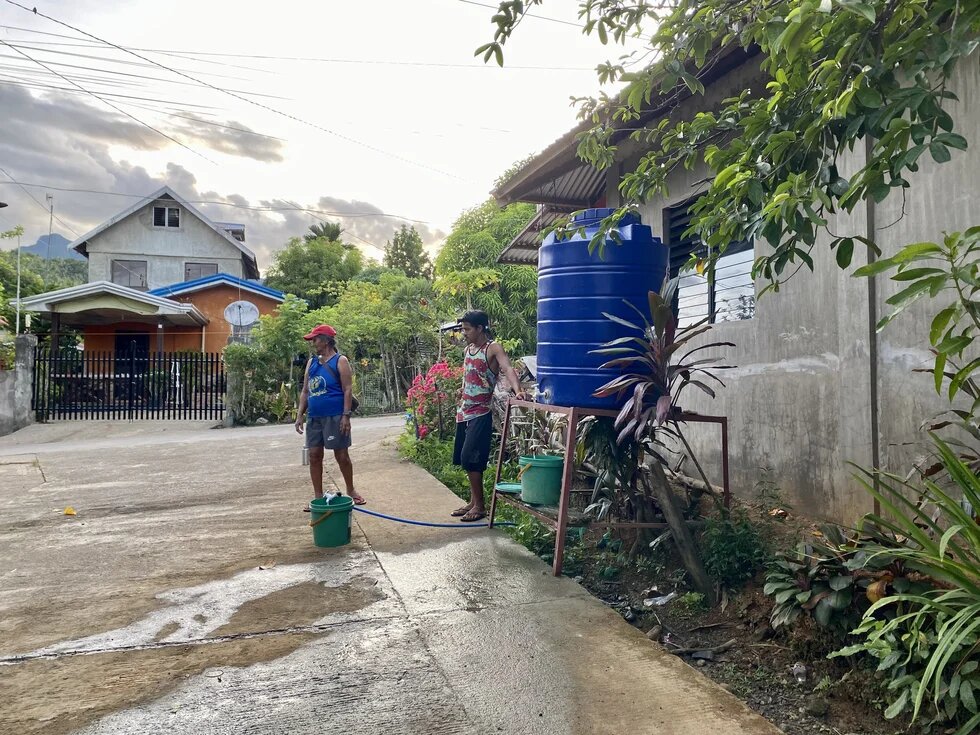
| Residents of Talustusan village fetching water from one of the communal tanks set up by the village council. Some lined up as early as 4 am, before the water supply runs out. (Photo by Daniel Abunales.) | ||
|
|
|
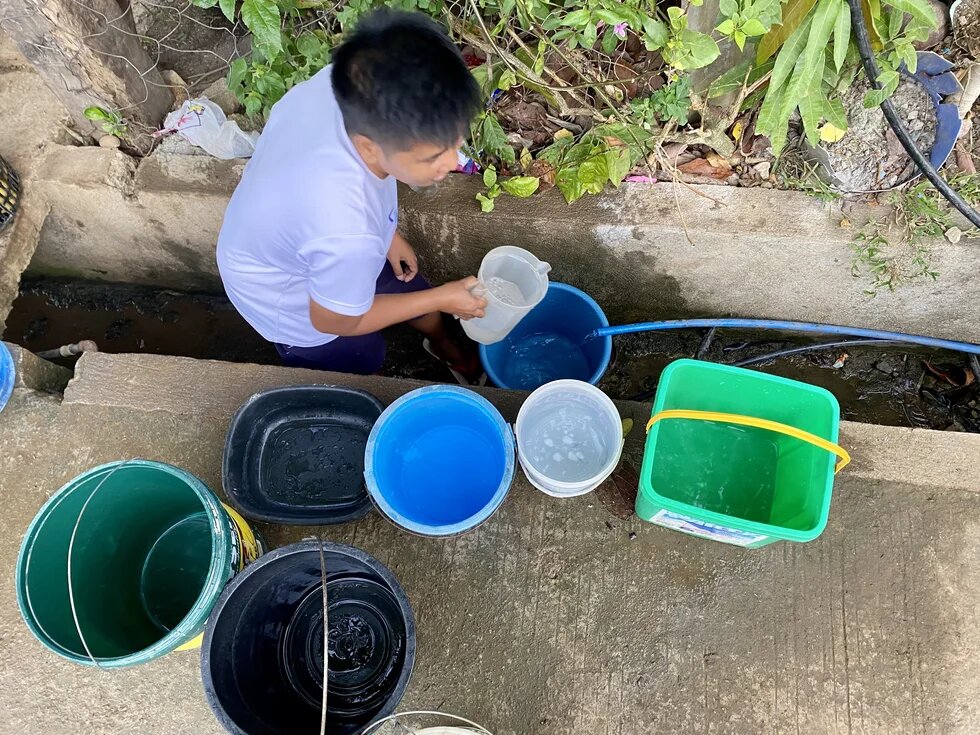
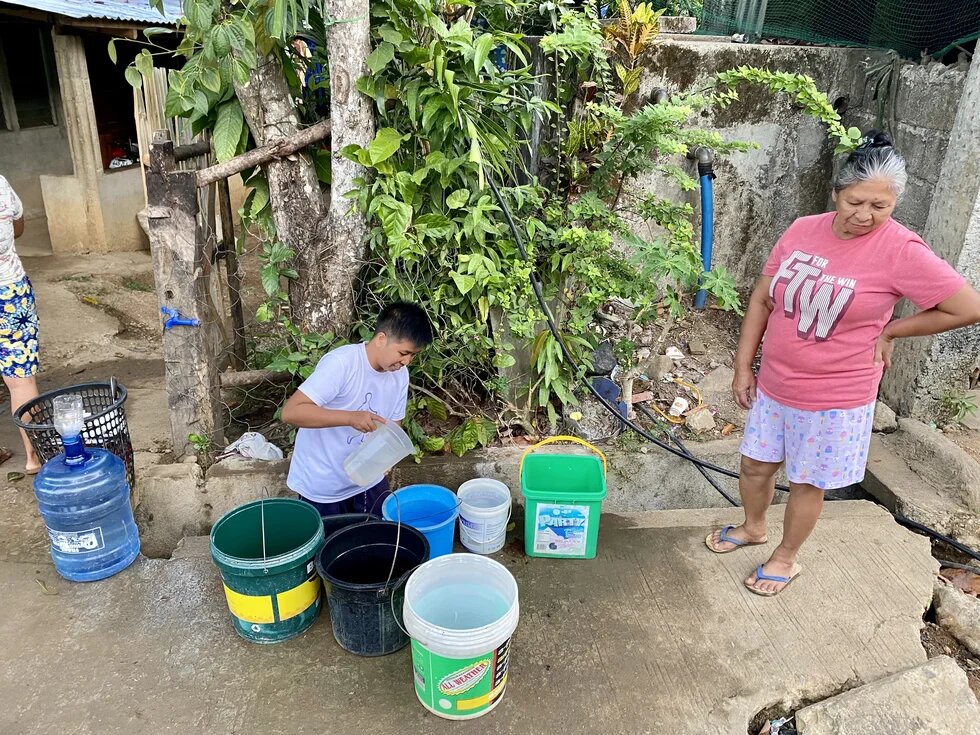
| Some villagers can fetch water from community water pipelines, with at least two areas in the community with pipes of running water. The area shown in the photos, however, only has running water in the early mornings or late evenings. Residents usually leave their pails in queue and come back when there is water. (Photo by Daniel Abunales.) | ||
|
|
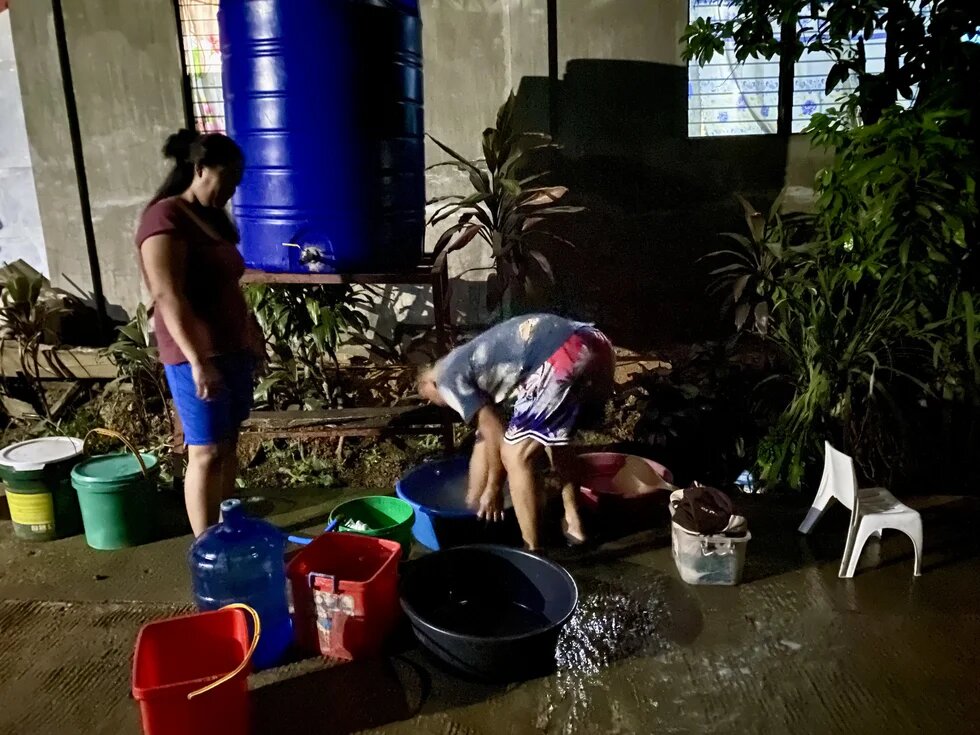
Because the water supply tends to be better in the evenings, residents take to washing their clothes late in the day. Others flock to this communal area very early in the morning, as water supply is low to nothing during most of the daytime. (Photo by Daniel Abunales.)
|
|
|
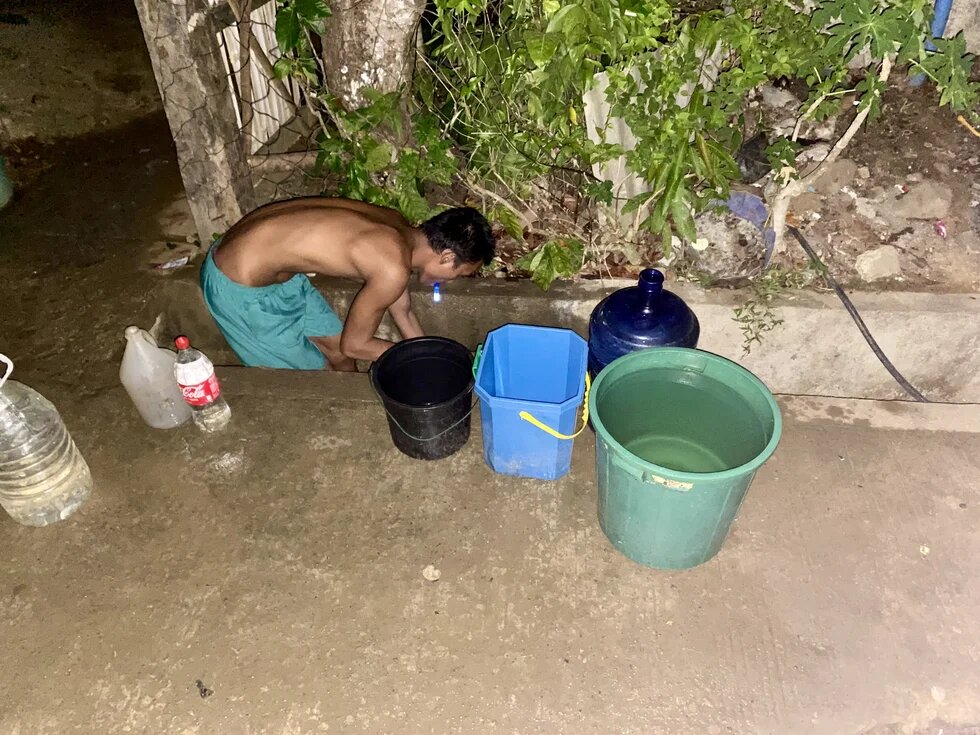
Some residents only have time to collect water at night because they have work during the daytime. Many villagers would have wanted to rest at this time of the day after long hours of work but circumstances force them out to get water. (Photo by Daniel Abunales.)
|
|
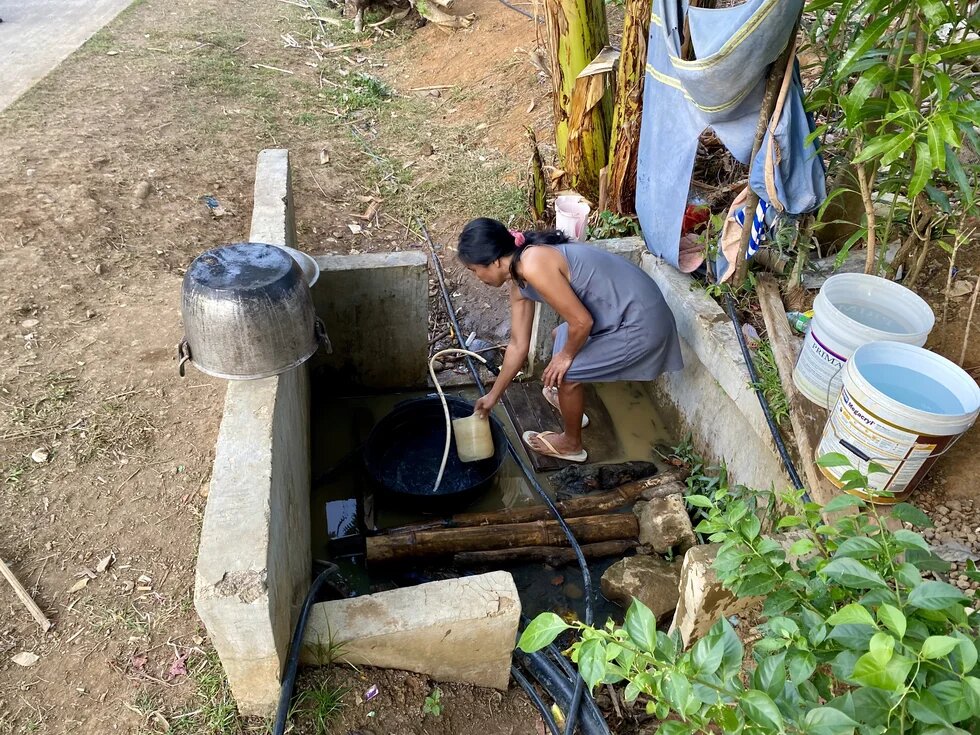
| The water shortage means an additional burden to household chores. Some family members, especially women, would have to bring not only laundry but also dishes to the communal areas to wash. (Photo by Daniel Abunales.) |
|
|
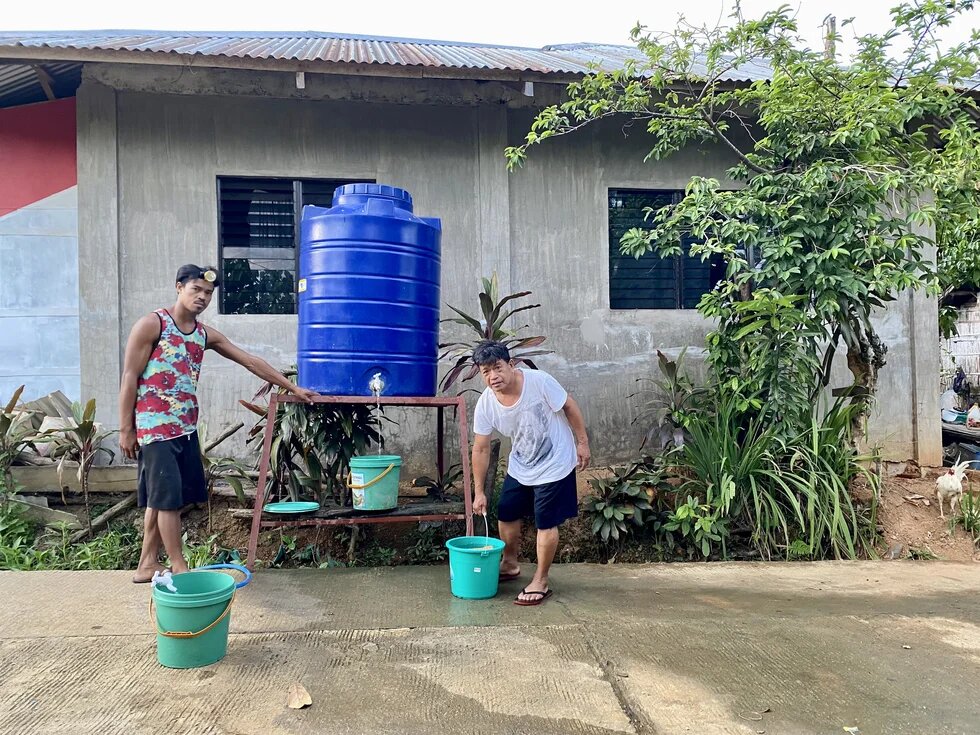
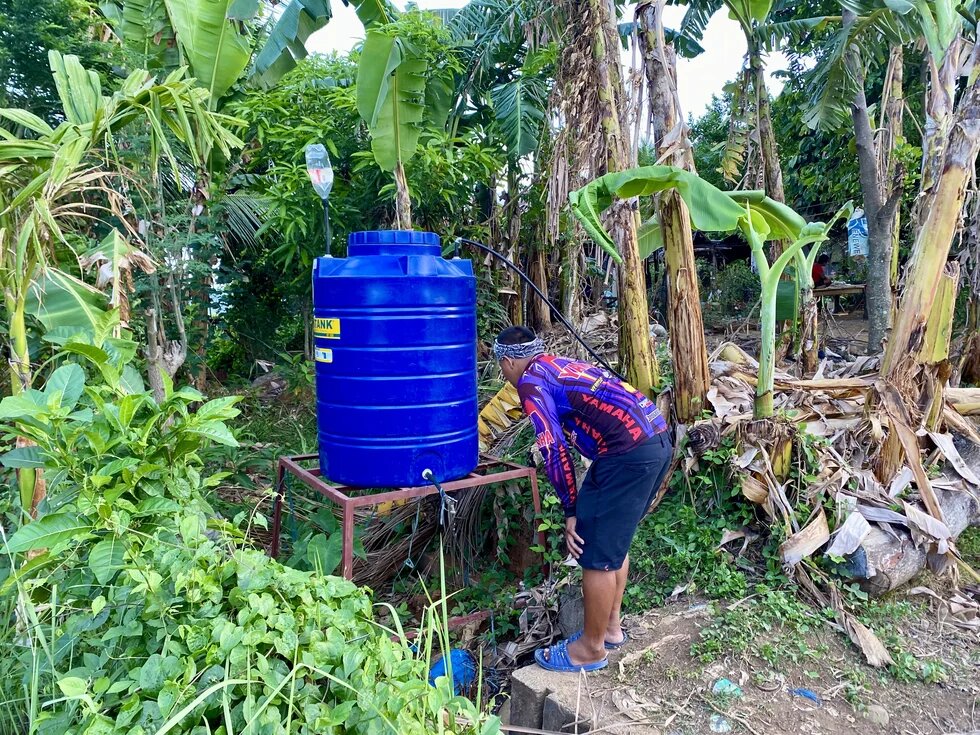
To mitigate the water shortage in the community, the community council set up communal tanks in strategic locations where residents could fetch water. In cases where the water supply is not enough to fill the tanks, the council will use water from the higher areas of the village, where the water supply is much more abundant to fill them up. They would then go around the village and stop at designated areas where villagers could fetch water. (Photo by Daniel Abunales.)
|
|
|
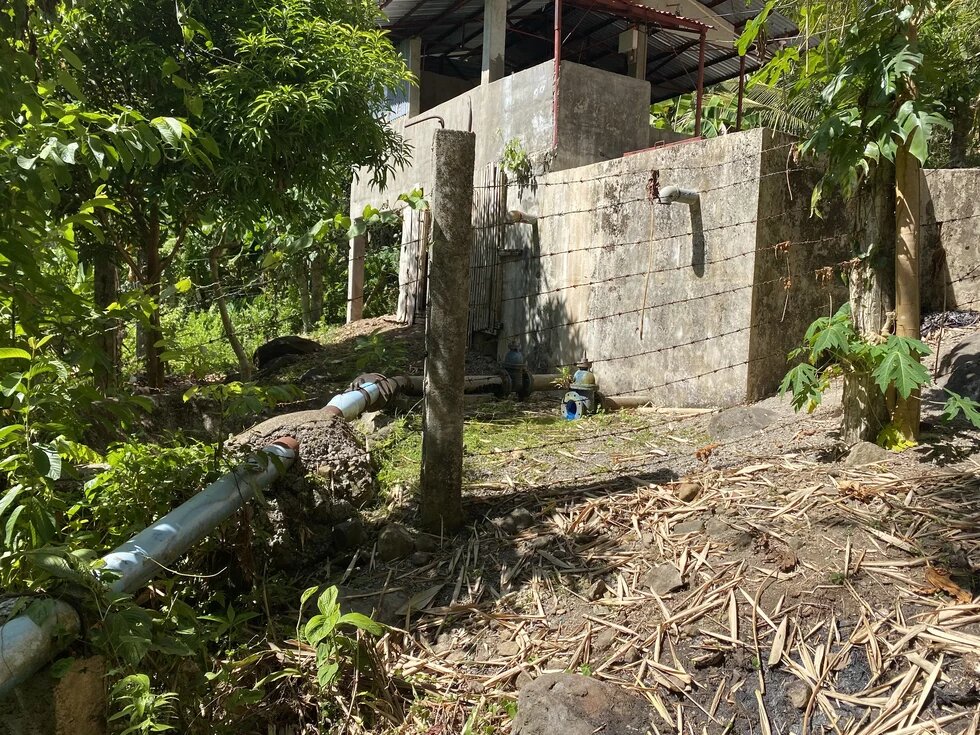
Ironically, Talustusan is abundant in natural springs called tubod. In fact, some have been converted into water reservoirs for communities to use, including for a provincial hospital that is under construction. The water reservoir in this photo used to be a spring where villagers went to wash their clothes, bathe and fetch water. This spring, which the author used to go to as his family owns a rice field 50 meters away, has been a concrete water reservoir since the mid-2000s. (Photo by Daniel Abunales.)
|
|
|
|
|
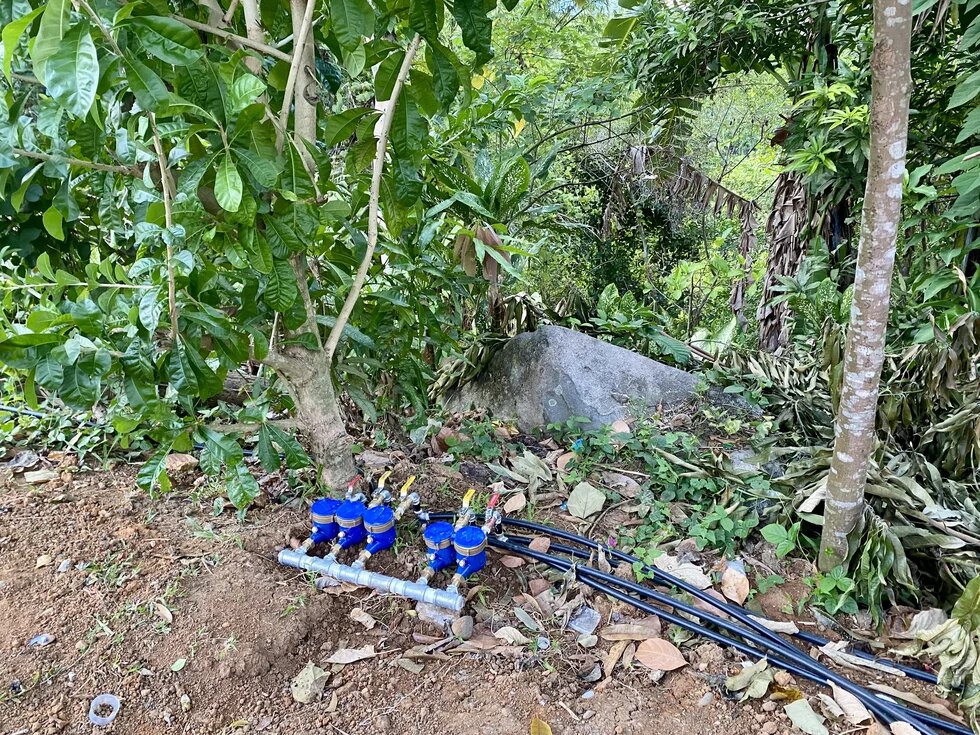
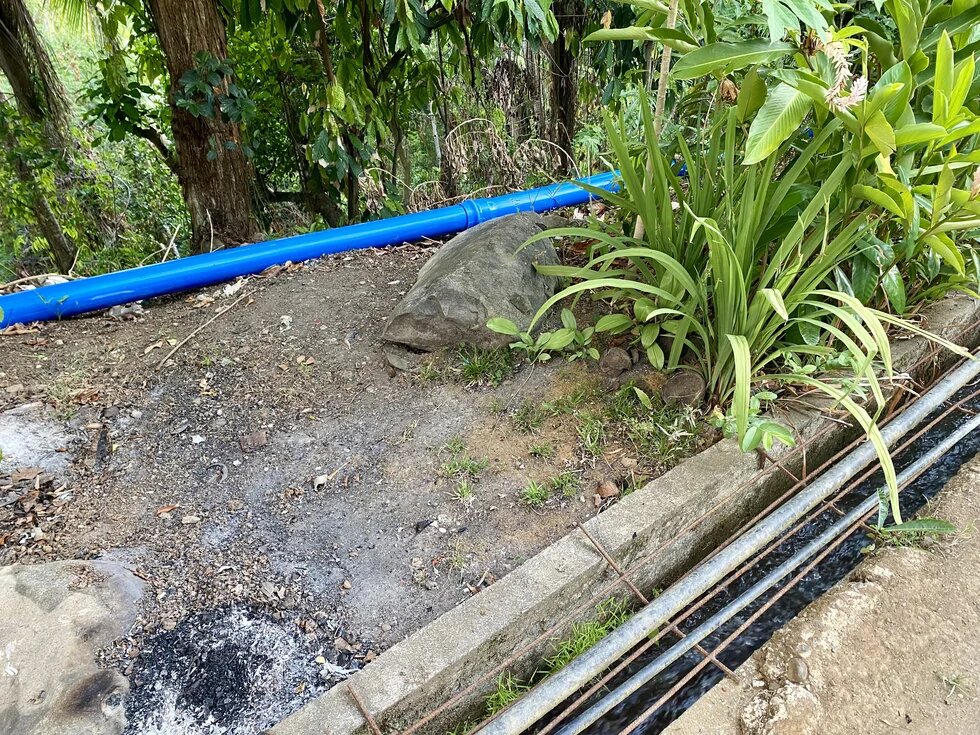
There are at least three water reservoirs in Talustusan run by the Naval Water District (NWD), a government-owned and controlled corporation (GOCC). Local Water Districts were created through the Provincial Water Utilities Act of 1973, to transfer control and operation of water systems for municipalities and nearby communities. Talustusan’s water system, however, is not part of the Naval Water District’s administration. It is managed by the village council, which does not have the capacity to improve water infrastructure. The photo on the left shows water meters for five households that managed to tap into the Naval Water District’s pipeline. While NWD allows residents to use their service, only a few locals are able to afford the cost. The right photo shows the massive pipeline (blue) installed by NWD, while the small black water pipes supplies households in Talustusan. (Photo by Daniel Abunales.)
|
||
|
|
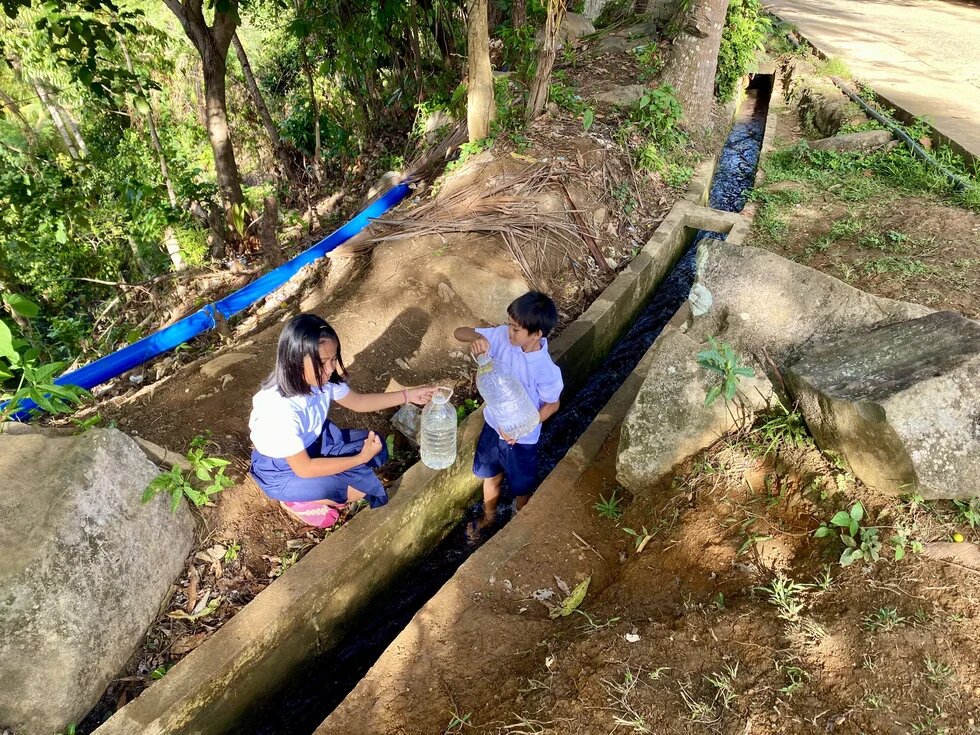
Children fetching water from the community irrigation system so they can water their school garden. The school’s faucet is dry, so the irrigation system at 50 meters away serves as an alternative source. (Photo by Daniel Abunales.)
|
|
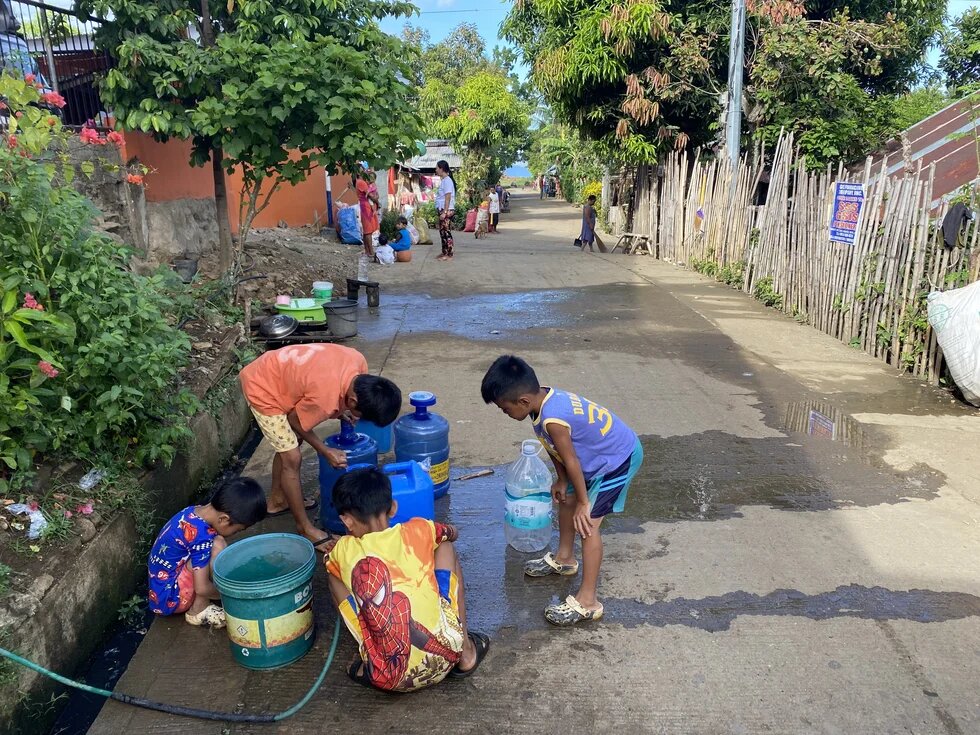
| During school break, some children fetch water for some households. When asked how much they charge per gallon, they responded, “It’s up to them how much they like to pay us.” (Photo by Daniel Abunales.) |

